
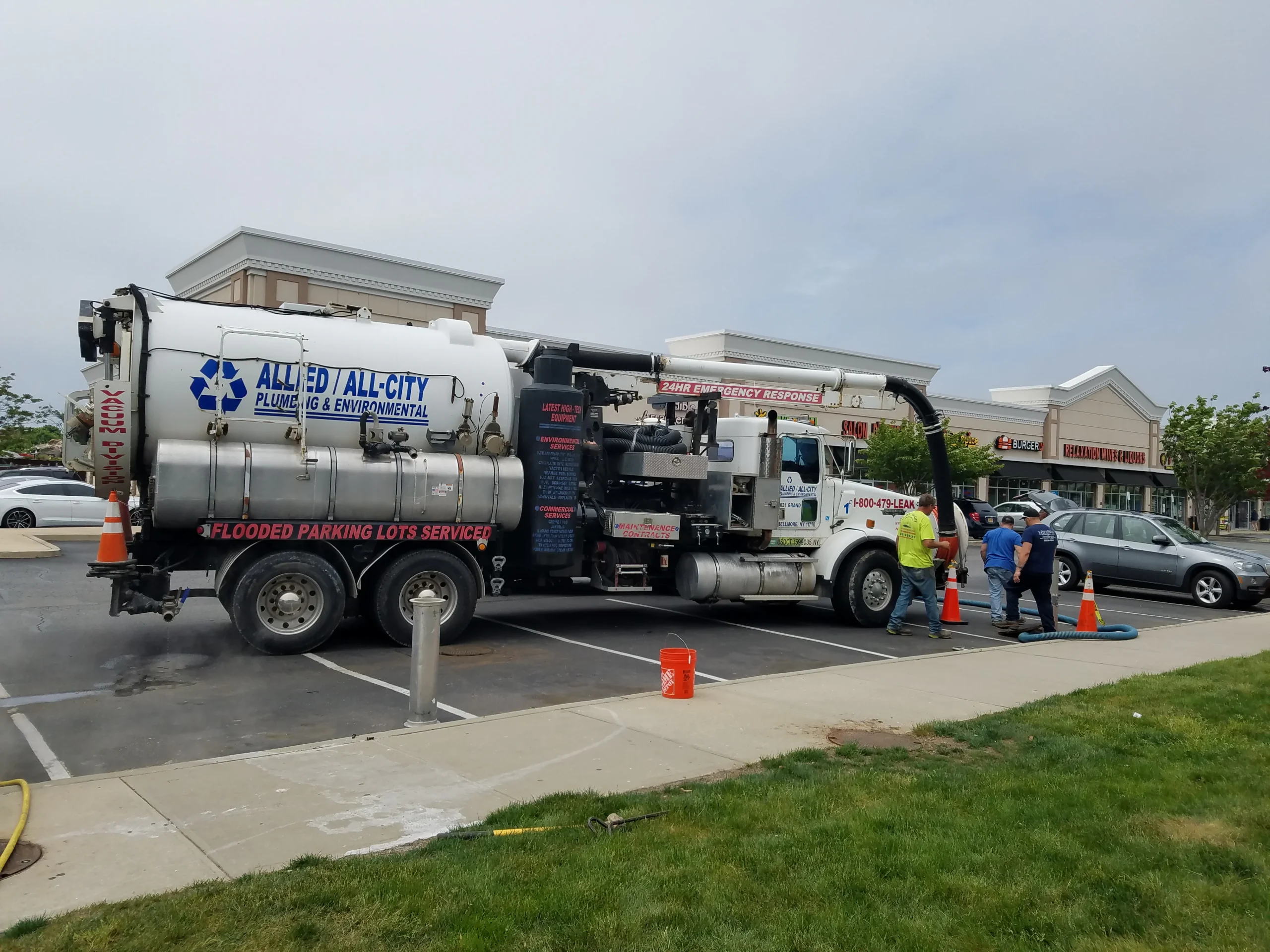
Allied All-City uses horizontal directional drilling to install water lines, sewer lines, and conduit under roads, driveways, and landscaping — no open trench required.
We operate our own horizontal directional drilling rigs, purpose-built for the confined right-of-ways and varied soil conditions found across Long Island.
Our crews hold the certifications required to work in both Nassau and Suffolk counties, including work near roads, utilities, and municipal infrastructure.
Every HDD job is performed by Allied All-City employees — operators trained on our own rigs, not third-party drilling crews working under a different company's name.
We've been navigating Long Island's underground for years — knowing where utilities run, what soil does, and how to drill accurately without incident.
When open trenching would mean cutting through a road, destroying a driveway, or uprooting a mature landscape, HDD gives you a path to the same result without any of that collateral damage.
Every benefit above is delivered on every job we take.
Get a Free QuoteOur licensed crew serves Nassau and Suffolk County with same-day availability and transparent pricing on every job.
We mark utility conflicts, plan the bore path, and determine the right equipment and pipe specification for the job.
The drill rig bores a pilot path underground. We then ream the bore to the correct diameter for the product pipe.
The new pipe or conduit is connected and pulled back through the bored path, completing the installation with minimal surface disturbance.
HDD is suitable for a wide range of underground utility installations. The most common on Long Island are water service lines, sewer laterals, and electrical or telecommunications conduit. We also handle gas conduit boring in certain applications. The method works with HDPE, PVC, ductile iron, and various conduit materials. If you have a specific line type you need installed and aren't sure whether HDD is appropriate, call us — we're happy to evaluate the job and tell you whether it's a good fit for the drilling method or whether another approach makes more sense.
Modern HDD rigs use guidance systems that allow the operator to track the drill head's position in real time as it bores underground. The level of accuracy is quite high — experienced operators can steer the drill along a planned path and hit a target point within inches. That said, accuracy depends on soil conditions, depth, and bore length. For most residential and commercial applications on Long Island, the geometry involved is well within reliable HDD tolerances. We plan every bore path carefully before we start, which is the most important step in ensuring a clean installation.
Long Island's soil varies significantly — sandy and loose in some areas, clay-heavy and dense in others, with glacial deposits and rocky layers that can appear without warning. Allied All-City's operators are experienced working in Long Island's specific subsurface conditions and understand how to adjust drilling fluid mixtures, ream speeds, and pullback force to handle what's down there. In some cases, specific soil conditions may affect the approach or equipment selection, which is why a proper site assessment before drilling begins is always part of our process.
In most cases, yes — particularly when the work is near or under public roads, sidewalks, or within a municipal right-of-way. The permit requirements vary by town and county, and work near Suffolk or Nassau County roads may involve a separate approval process from the county Department of Public Works. Allied All-City is familiar with the permit landscape across Long Island and can help coordinate the necessary approvals. We're certified to work in both Nassau and Suffolk counties, which is a prerequisite for much of this type of permitted work.
It depends on the length and depth of the bore, the pipe diameter, and site conditions. A straightforward residential bore — crossing a driveway or a two-lane road to connect a water or sewer line — might take a single day. Longer or more complex installations, particularly those with multiple bore segments or requiring significant site setup, can take two to three days. We give customers a realistic timeline estimate during the planning phase. What we can say generally is that HDD typically eliminates the extended restoration work that follows open trenching, which often makes the overall project timeline shorter.
Yes, with proper planning. Before any bore begins, we require utility marking through 811 (New York's Dig Safely NY service) so all known underground utilities in the work area are located and flagged. We incorporate those locations into our bore path planning to maintain safe clearances. Our operators monitor the drill head's position throughout the bore and adjust as needed. While no underground work can guarantee zero risk from unmarked utilities — which do exist on older Long Island properties — HDD combined with thorough pre-bore utility locating is considerably safer than open trenching in congested utility corridors.