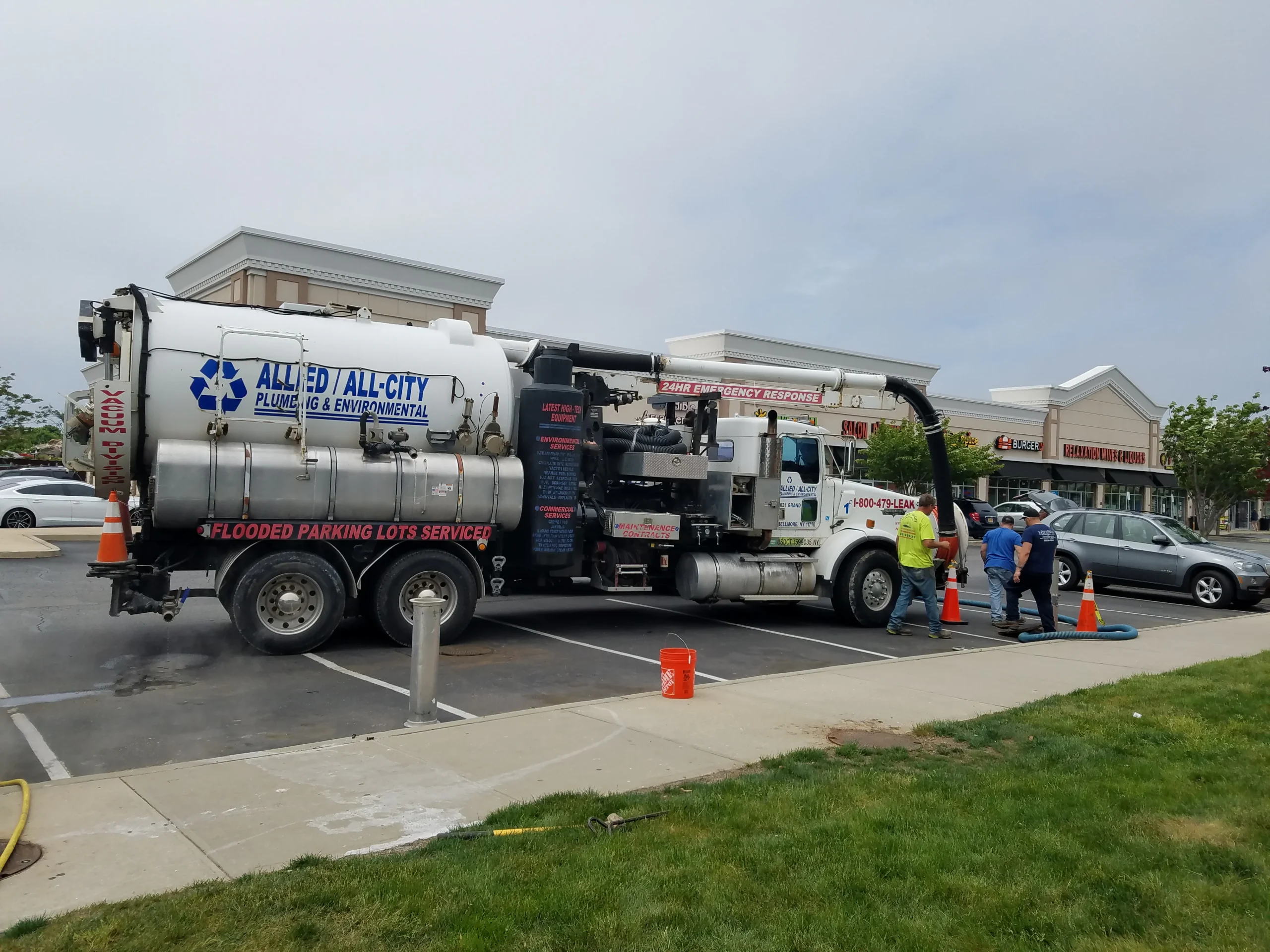
When digging blind isn't an option, Allied All-City's hydrovac service exposes buried lines safely and precisely across Nassau and Suffolk Counties.
Our own trained crews handle every hydrovac job — no third parties, no handoffs, no surprises on the work site.
We hold proper certifications for excavation work in both Nassau and Suffolk Counties, keeping your project fully compliant.
Utility emergencies don't wait for business hours. Our hydrovac crews are available around the clock, every day of the year.
Family-owned and deeply familiar with Long Island's underground infrastructure — we've worked in these soils and around these utilities for years.
Hydro excavation dramatically reduces the risk of utility strikes, property damage, and costly project delays — making it the smart choice for any dig near buried lines.
Every benefit above is delivered on every job we take.
Get a Free QuoteOur licensed crew serves Nassau and Suffolk County with same-day availability and transparent pricing on every job.
We review the excavation area, locate known utility markings, and position the hydrovac unit for efficient access.
Pressurized water breaks up the soil precisely while the vacuum system immediately removes slurry to the debris tank.
Once exposed, utilities are verified, measured, and documented — giving your project team the accurate information it needs.
Hydro excavation is used on a wide range of projects — from small residential utility locates to large-scale municipal infrastructure work. Contractors use it for potholing before any significant dig, utility companies use it to expose and assess buried lines, and property owners use it when they need excavation near existing systems they don't want to damage. On Long Island specifically, it's common near gas service lines, water mains, drainage infrastructure, and in areas where underground utilities are dense or poorly mapped. If you're digging anywhere near buried services and want to avoid a costly mistake, hydrovac is usually the right call.
Yes — it's actually the preferred method specifically because it eliminates the mechanical contact that makes traditional digging dangerous near gas and electrical infrastructure. High-pressure water and vacuum removal don't generate sparks, and there's no metal blade or bucket that can slice through a conduit or gas main. That said, proper setup, utility marking, and operator experience all matter. Allied All-City's crews are trained to work safely near active utilities, and we follow all applicable safety protocols for each job. No digging method eliminates all risk, but hydro excavation reduces it substantially compared to conventional alternatives.
It depends significantly on the scope of work. A single pothole to verify one utility location might take an hour or two. Slot trenching across a commercial site or multiple daylighting exposures along a utility run could take a full day or more. The hydrovac process is actually faster than many people expect — water breaks up soil quickly, and the vacuum removes it continuously, so there's no manual loading or repeated machine repositioning. Allied All-City will give you a realistic timeframe after reviewing the site details, so you can plan your project schedule accordingly.
Yes. One advantage of hydrovac equipment is that heated water can be used to break through frozen ground — something that stalls conventional excavation methods entirely during winter months. This makes hydro excavation a practical option year-round in climates like Long Island, where ground frost can complicate winter utility work. Allied All-City operates throughout the year, and our equipment is configured to handle the seasonal conditions that come with working in the northeast. If you have a time-sensitive project that can't wait for spring, hydrovac is often the most viable way to proceed.
The slurry — the mixture of water and excavated soil — is vacuumed into a debris tank on the hydrovac truck. From there, it can either be returned to the excavation once the work is complete (if the material is suitable for backfill) or transported off-site for disposal. Allied All-City handles material transport and disposal as part of our service. We'll discuss the appropriate approach based on your project needs, the nature of the excavated material, and any applicable regulations for disposal in Nassau or Suffolk County.
Calling 811 — New York's "Call Before You Dig" service — is a legal requirement before any excavation, regardless of the method being used. As the property owner or project manager, it's typically your responsibility to initiate that call, which triggers utility companies to come out and mark their underground lines. Allied All-City strongly recommends completing this step before we arrive on site. That said, utility markings are not always 100% accurate, which is exactly why hydro excavation is valuable — it lets us verify and expose what's actually there, even when the marks don't tell the whole story.