Underground utility work doesn't have to mean tearing up your property. Here is what Long Island homeowners should know about directional drilling.
Share:
Summary:
There’s a particular kind of dread that sets in when a plumber tells you your sewer line or water main needs to come out. Your mind goes straight to the same place: the driveway, the oak tree you’ve had for thirty years, and the stone walkway your father-in-law laid by hand. Traditional excavation doesn’t discriminate, as it takes all of it.
That’s the conversation we’ve been having with Long Island homeowners for over 40 years, and it’s why we recommend trenchless directional drilling most often. Not because it’s newer, but because it’s better, and on a densely developed island where every square foot of your property matters, that distinction is everything.
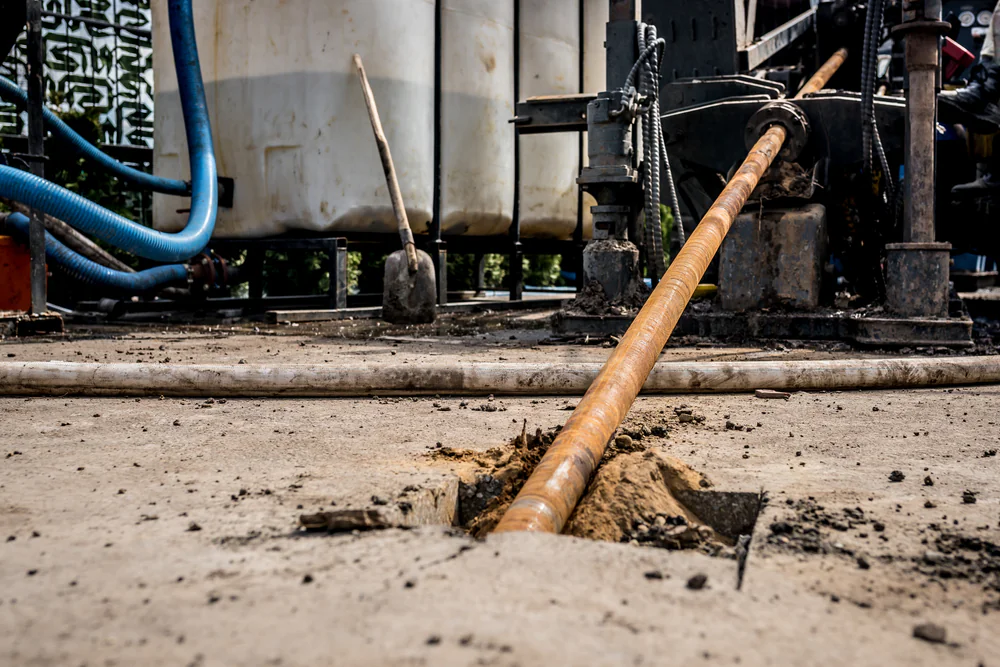
Trenchless directional drilling, also called horizontal directional drilling or HDD, is a method of installing underground utility lines without digging an open trench from one end to the other. Instead, a drill rig bores a precise path underground, guided by a locating system that tracks the drill head in real time. Once the bore path is complete, the new pipe or conduit is pulled back through it.
The ground disturbance happens at only two small access points: one where the drill enters and one where it exits. Everything in between, including your driveway, your landscaping, your irrigation lines, and your mature trees, stays where it is.
HDD has been in commercial use since 1971, and the technology has grown more precise and capable in the decades since. What we’re doing today on Long Island is the product of more than 50 years of refinement.
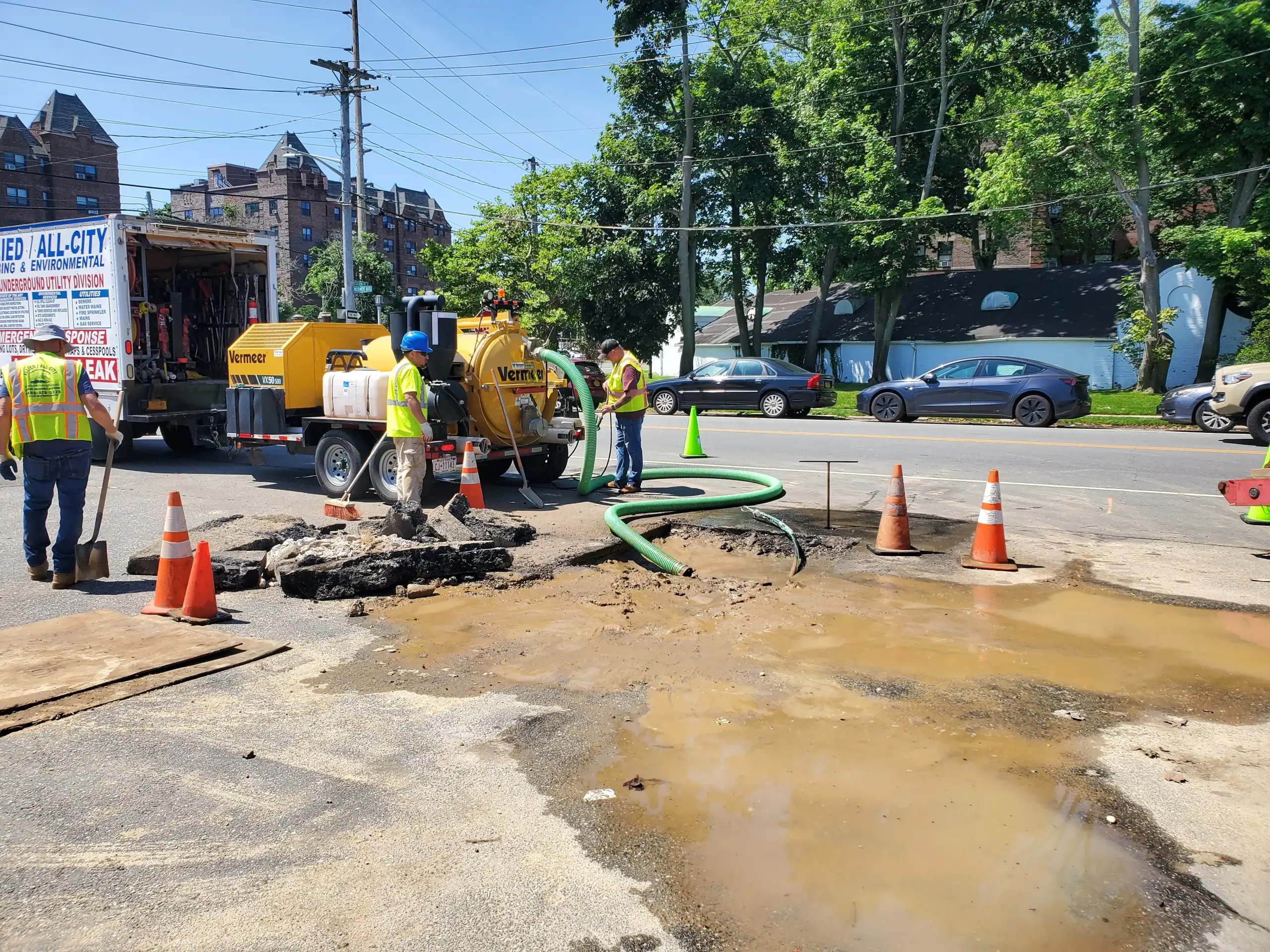
This is one of the most common points of confusion we run into. A lot of homeowners assume directional drilling is strictly a sewer repair method. It’s not. The drill creates a bore path, and what goes through that path depends entirely on what you need.
Water mains are one of the most frequent applications on Long Island, especially in Nassau County’s older neighborhoods where cast iron and galvanized steel lines from the 1950s corrode from the inside out and lose pressure. We can pull a new HDPE water line through a bored path in a single day, and the new pipe will outperform the old one for the next 50 years or more.
Sewer laterals are another major application. If your line is cracked, offset, or being crushed by root intrusion, which is extremely common in tree-canopied neighborhoods across Nassau County, directional drilling gives us a clean path to install new pipe without touching the root systems above. The new HDPE pipe is fused into a single continuous run with no joints, meaning roots have nothing to infiltrate going forward.
Gas lines, electrical conduit, fiber optic cable, and telecommunications lines can all be installed the same way. If you’ve been thinking about running a gas line to an outdoor kitchen, a water line to a pool house, or conduit to a detached garage, directional drilling is how you do it without tearing up the yard you’ve spent years building. We see this frequently in South Shore communities and the Hamptons, where properties have significant outdoor investments that no one wants to sacrifice for a utility run.
For commercial properties, such as retail centers on Sunrise Highway, multi-family buildings, restaurants, and industrial facilities, the same logic applies at a larger scale. Utility installation and infrastructure upgrades that would otherwise require closing parking lots, disrupting tenants, and managing weeks of open excavation can often be completed with minimal surface impact using directional drilling.
Long Island isn’t a uniform place to drill. The geology changes significantly depending on your location, affecting every decision we make before a drill enters the ground.
On the South Shore, including communities like East Rockaway, Oceanside, and the barrier island towns, the soil is sandy and heavily influenced by proximity to the bay. Water tables in these areas can sit just two to four feet below grade, making traditional open-cut excavation complicated. Groundwater intrusion turns a trench into a problem. Directional drilling sidesteps that entirely, boring through the saturated zone without exposing it.
Move inland toward the North Shore communities of Roslyn, Great Neck, and Manhasset, and the soil shifts toward denser clay. Clay holds its shape better during a bore, but it requires different drilling fluid formulas and equipment settings than sandy coastal soil. Knowing the difference before we mobilize isn’t a minor detail. It’s the difference between a clean, on-schedule job and a project stalling halfway through.
Then there’s the infrastructure age problem, which is specific to Long Island in a way that’s easy to underestimate. Nassau County’s suburban buildout happened primarily in the 1940s through the 1960s. The sewer laterals and water mains installed to service those neighborhoods are now 65 to 75 years old. Clay pipe joints tight in 1958 have shifted and cracked for decades. The sinkholes opening up in Baldwin from a collapsing sewer main weren’t flukes, but visible signs of what’s happening underground in communities across the county.
When a homeowner calls us because their drains are slow or they’ve noticed a wet spot in the yard that won’t dry out, we’re not just looking at a single pipe. We’re looking at infrastructure living most of its useful life and signaling that it’s time for a change. Trenchless directional drilling is how we handle that replacement without compounding the disruption.
Want live answers?
Connect with a Allied All City Inc. expert for fast, friendly support.
This is the question that doesn’t get asked enough, and it’s the most important one. “Trenchless” isn’t a single technique. It’s a category including three distinct methods, and the right one depends on what is happening with your pipe, your soil, and what’s above ground.
We offer all three: directional drilling, pipe bursting, and pipe lining. That matters because a contractor with only one method will always recommend that method, regardless of whether it fits the situation. When we have all three available, the diagnosis drives the recommendation rather than the equipment inventory.
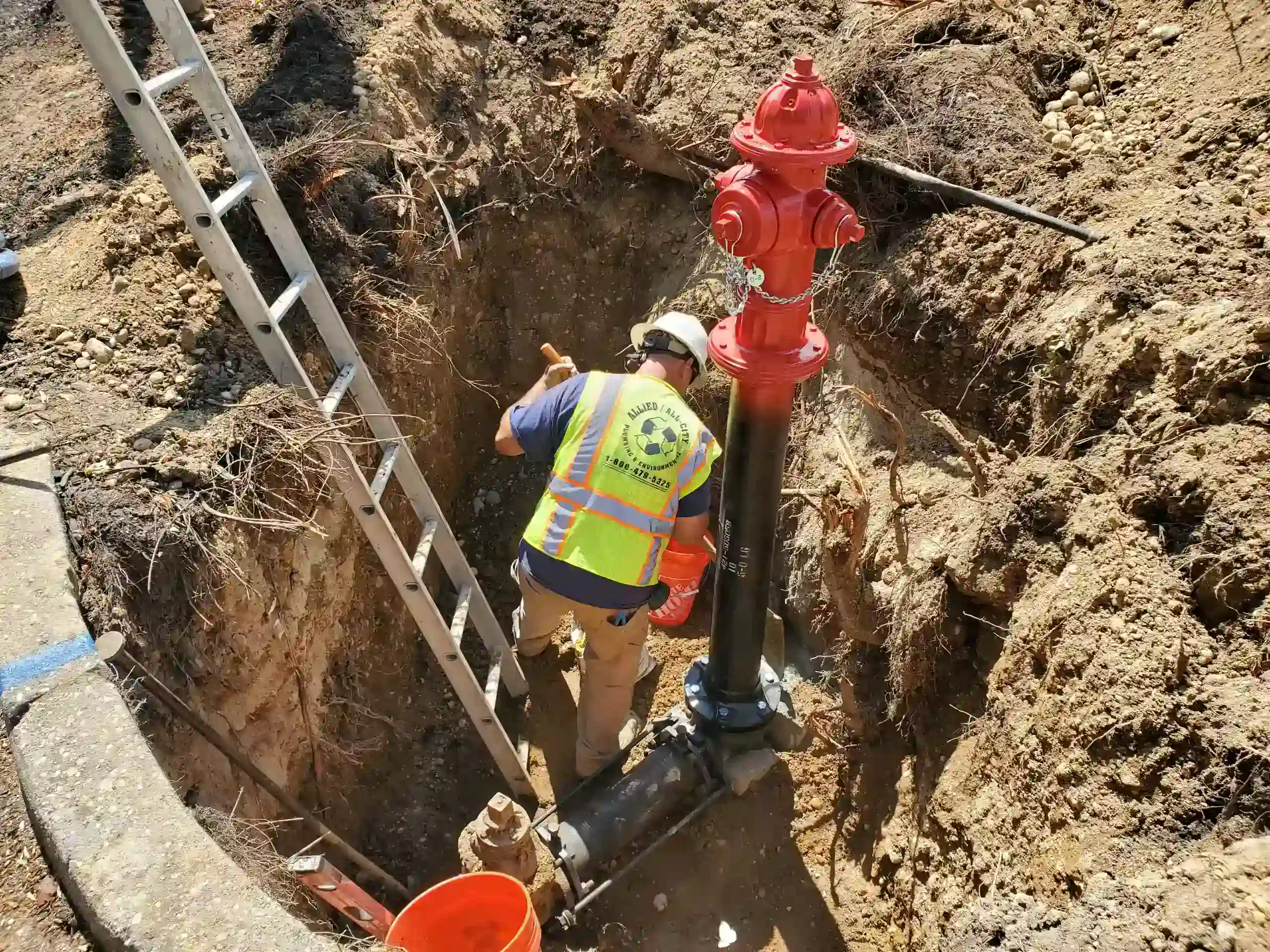
Pipe lining, technically called cured-in-place pipe or CIPP, works by inserting an epoxy-saturated liner inside an existing damaged pipe and curing it in place. It’s a strong solution when the pipe’s structural integrity is mostly intact and damage is limited to cracks, minor root intrusion, or joint deterioration. The original pipe becomes the mold for a new one, and the whole process happens without excavation. If your sewer lateral is aging but still largely in position, lining is often the fastest and least invasive path.
Pipe bursting takes a different approach. A bursting head is pulled through the old pipe, fracturing it outward while simultaneously pulling a new HDPE pipe into the space left behind. It’s ideal when the existing pipe has failed structurally but still follows a desired path, meaning the new pipe can follow the same route underground. Bursting works well when the pipe is collapsed or too deteriorated to line, but the alignment remains usable.
Directional drilling is the right choice when there’s no viable existing pipe to work with, either because you’re installing a new utility line where none existed before or because the old pipe has shifted, offset, or collapsed so severely that its path can’t be followed. It’s also the method we use when the bore path needs to navigate around obstacles the old pipe didn’t encounter, or when installation requires crossing under a driveway, parking lot, or landscaped area at a specific depth and angle.
On Long Island, we often see situations where a homeowner needs a new sewer connection to a municipal line, particularly in Suffolk County communities transitioning away from cesspools, and there’s no existing lateral to work from. That’s a directional drilling job from the start. The same applies to new gas line extensions, new water service installations, and conduit runs for electrical or telecommunications. When starting fresh underground, directional drilling is how you do it without opening the surface.
Will directional drilling work in winter on Long Island?
Yes, and this is a genuine advantage that doesn’t get talked about enough. Long Island winters produce frozen or near-frozen ground conditions making traditional open-cut excavation difficult, slow, and expensive. Directional drilling operates in conditions shutting down conventional excavation crews. If your water main fails in January, you don’t have to wait until March for a permanent fix.
What happens if the drill hits another utility line?
This is the concern we hear most often, and it’s legitimate. Before any drill enters the ground on our jobs, we complete a full utility locating and mapping process. Every existing gas line, electrical conduit, water main, and communication cable in the bore path is identified and marked. We also run a camera inspection of the existing pipe before starting. We’re not guessing where your utilities run, as we know and plan the bore path around them.
Is trenchless directional drilling less expensive than digging a trench?
The honest answer is that when you account for the full cost, it usually is. The pipe work itself may be comparable, but traditional excavation comes with a second invoice for restoring everything destroyed. Repaving a driveway, replacing irrigation lines, removing and replanting mature landscaping, and rebuilding a stone walkway add up fast, especially in Nassau County communities where landscaping and hardscaping investments are significant. Studies looking at real project data find that trenchless methods reduce surface restoration costs by 70 to 85 percent compared to open-cut excavation.
Do I need a permit for directional drilling work in Nassau or Suffolk County?
Yes, underground utility work in both counties requires proper permits and must comply with county-specific codes and health department requirements. Nassau County and Suffolk County each have licensing and permitting standards that are not interchangeable. We hold current certifications for plumbing, sewer, and environmental work in both counties, and we pull all required permits before any project begins. If a contractor can’t confirm they’re licensed in your specific county, that’s a problem worth taking seriously before signing anything.
The underground infrastructure on Long Island is aging, and the replacement cycle is underway. The data and our daily field observations across Nassau and Suffolk County show aging pipes failing at an accelerating rate.
The good news is that the technology to handle it without tearing your property apart is proven and refined over decades. Finding a contractor who knows this island, its soil, its counties, and its codes matters, alongside having all three trenchless methods available so your recommendation is based on your situation rather than an equipment inventory.
If you’re dealing with a failing sewer line, a water main needing replacement, a new utility run, or a slow drain getting worse, we’re ready to take a look. Allied All City has been doing this work on Long Island for over 40 years, relying on our own crews, our own equipment, and both county certifications. Give us a call, and we’ll start with an honest assessment of what is happening underground.
Article details:
Share:
Continue learning: