Your sewer line runs under the lawn, driveway, and trees you care about. Here's how to choose a trenchless pipe lining contractor who leaves them standing.
Share:
Summary:
Someone just told you the sewer line needs work, and then they said the word “trench.” If you live in Levittown, Bethpage, Massapequa, or anywhere else in Nassau County where the lots are modest and every square foot of lawn and paving matters, that word lands hard.
Here’s the good news. Trenchless pipe lining can repair a failing sewer line without digging up the whole run. But “trenchless” gets used loosely, and not every contractor handles it the same way. Below are three tips that help you protect your yard, starting with a look at what’s sitting on top of your pipe.
Think about the path your sewer lateral takes from the house to the street. In a lot of Nassau neighborhoods, that path crosses a driveway, a paver walkway, a front lawn, and the root zone of a mature oak or maple. In older homes it can even run under a slab floor.
Many of those laterals are original to the house. Across the post-war developments in places like Levittown, Bethpage, Westbury, and Hewlett, clay, Orangeburg, and cast iron pipe were common, and by now much of it is well past its service life.
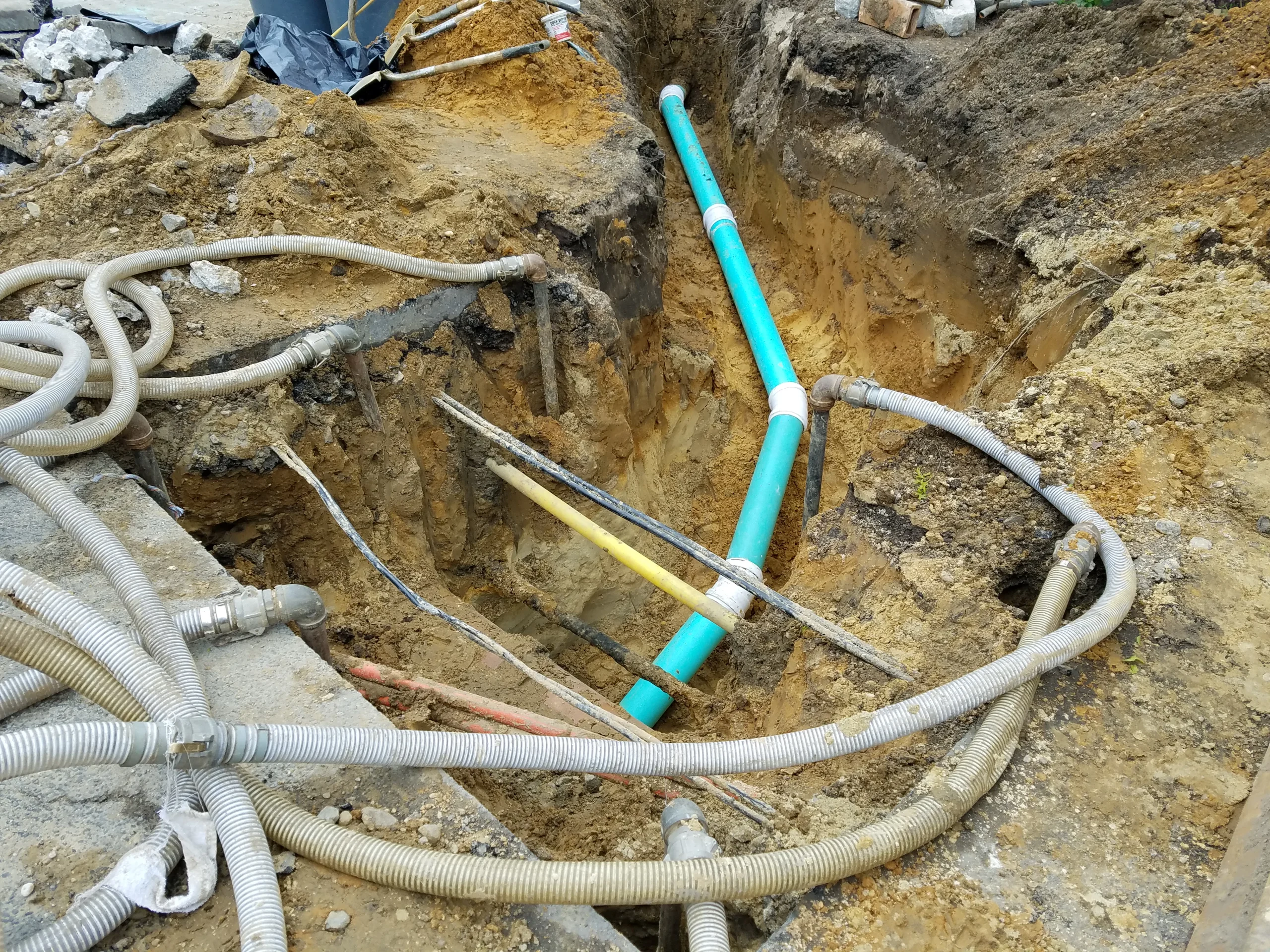
A traditional repair means opening a trench, often four to six feet deep, along the full length of the pipe. Trenchless pipe lining works differently. We put a resin-saturated liner into the existing pipe through a cleanout or a small access point, then cure it in place so it forms a new, smooth pipe inside the old one.
Start with the contractor who wants to see inside your pipe before saying anything about the fix. A camera inspection tells you where the pipe is cracked, where roots have gotten in, and whether the line has sagged or shifted. Ask to see the footage, not just hear a summary of it.
This matters because lining isn’t right for every pipe. A collapsed section, a badly offset joint, or a run with several tight fittings in a row can defeat a liner. When that happens mid-job, the repair can turn into an emergency dig, which is the exact outcome you hired a trenchless company to avoid.
Roots are one of the most common reasons sewer lines fail on Long Island. Oaks and maples are good at finding the joints in old clay and cast iron pipe. We clear the roots first, then line the pipe so the joints that let them in are sealed.
Local soil plays a part too. In parts of Nassau, such as the Nassau Shores area, the soil is heavy clay that shifts as it freezes and thaws, and that movement cracks old pipe, often right under driveways and landscaped beds.
That’s why we start with the camera. We carry equipment for lining, pipe bursting, directional drilling, and conventional excavation, so the recommendation follows what the footage shows rather than what’s on the truck. If lining fits, we’ll say so. If it doesn’t, you’ll hear that too, before any work starts.
Trenchless doesn’t mean zero digging, and be a little wary of anyone who tells you otherwise. Lining typically works from existing cleanouts or small access points, but sometimes a pit is needed at one or both ends of the run. Industry sources put the disturbed surface at roughly 5 to 10 percent of what an open trench would tear up, which is a big difference, though it isn’t nothing.
So ask the specific questions. Where will each access point go? How big will it be? What’s growing or paved there now? And who handles the restoration afterward? A good contractor can answer all four before you sign.
Driveways are the most common worry we hear. When a line runs underneath one, we can usually work from either side, so there’s no saw cutting, no repaving, and no waiting for new concrete to cure. For tight spots we also own a vacuum excavator, which lets us open a small, precise access point instead of a wide one.
Restoration is where reviews tell you the most. One customer on a water main job said the dirt, grass, and pavers were “replaced perfectly,” and another noted there was no sidewalk damage at all. Look for that kind of detail about the cleanup, not only the repair.
Sometimes the thing you’re protecting is inside the house. A Merrick homeowner was told by everyone else that her kitchen floor would have to be broken up. We lined the pipe instead. She was upfront that it wasn’t the cheapest option, but said it was worth it to keep her home intact.
Want live answers?
Connect with a Allied All City Inc. expert for fast, friendly support.
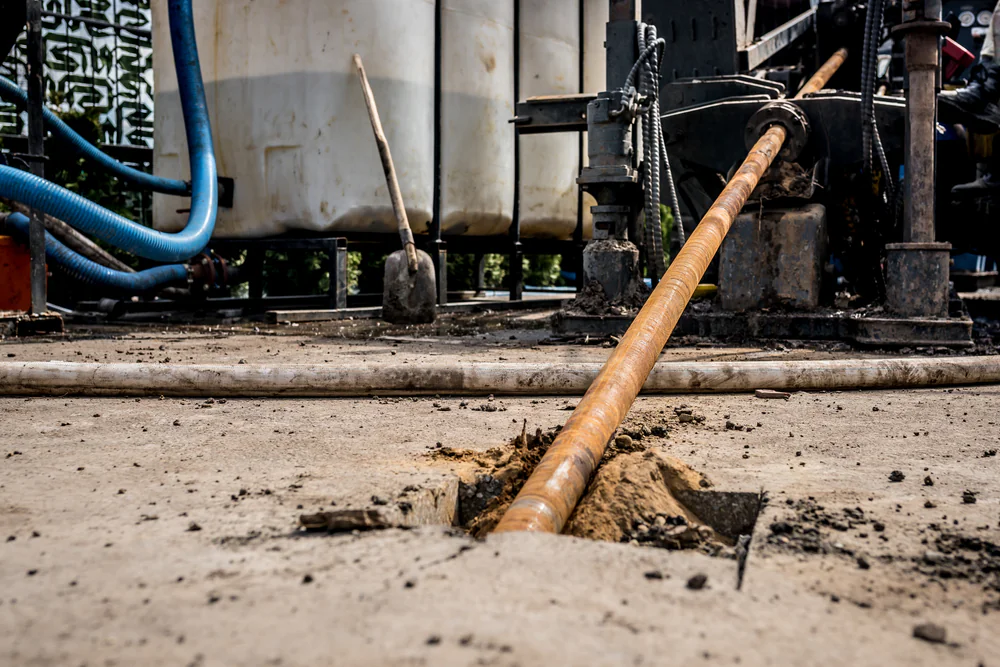
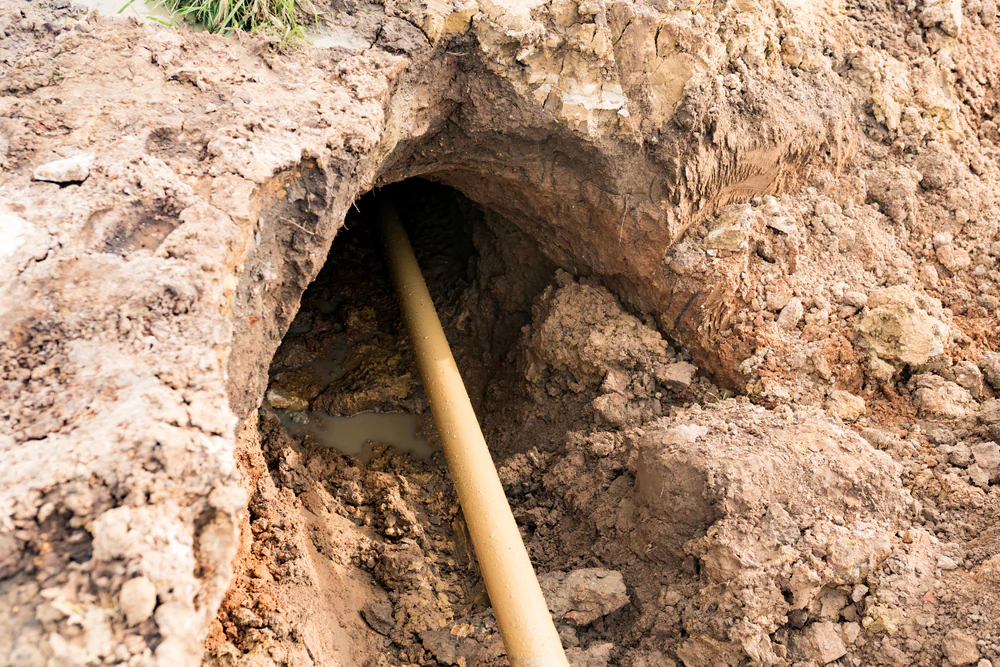
“Trenchless” is a family of methods, and each one suits a different yard problem. Lining repairs a pipe that’s damaged but still mostly in line. Pipe bursting is for pipe that’s too far gone: we pull new HDPE pipe through the old path, breaking the old pipe apart as we go. Directional drilling runs new water mains and gas lines underground between small entry and exit points, which helps when the route crosses a driveway or a prized tree.
Here’s why that matters for you. A contractor with only one method tends to recommend that method. Because we offer all three trenchless options plus conventional excavation, the choice comes down to your pipe and your property.
Start with the paperwork. Ask for the license, the liability insurance, and the workers’ compensation certificate, and make sure the credentials are right for your county. Nassau County has its own plumbing licensing framework, separate from New York State’s, and work done without the proper county credentials can fail inspection or void a permit. We’re licensed and insured in both Nassau and Suffolk counties, and we handle the permits, inspections, and documentation ourselves. Permit rules and fees can vary from one town or village to the next, so it helps to have someone who deals with them regularly.
Next, ask who will actually be in your yard. We don’t use subcontractors, so the crew you meet is the crew doing the work. Customers have described our crews as neat, clean, on time, and good at explaining what’s happening as they go.
Then get the scope in writing. A news story out of Colorado shows why: a homeowner paid $26,000 for what the contract described as new pipe, and the camera footage showed the job was mainly a liner. The argument came down to how many feet were covered and what exactly was being replaced. Your contract should state the footage, the method, the access points, the restoration, and the warranty.
On that last point, most trenchless linings carry a manufacturer warranty, so ask to see the actual terms. And ask for a camera look afterward, so you can see the finished pipe for yourself.
How long does it take? Most residential lining jobs wrap up in one to two days, and many finish within a day. That includes cleaning the pipe first, so your bathrooms and laundry aren’t out of commission for long.
Can you line a sewer pipe that runs under my driveway? In most cases, yes. We typically reach it from either side, so the driveway stays untouched. The camera tells us whether the pipe underneath is a good candidate.
Do I need a permit in Nassau County? For most sewer work, yes, and the requirements and fees vary by town or village. We take care of the permitting and inspections for you, so you aren’t chasing paperwork between Hempstead, Garden City, and Freeport offices.
Can it fix tree root damage? Yes, as long as the roots are cleared first. Once the line is clean, the liner seals the cracks and joints where roots got in. If a big oak or maple is the culprit, the camera will show us how bad it is. Root intrusion is especially common on Long Island because of our mature tree canopy and the clay soil that shifts seasonally.
Is winter a bad time for this? It’s often a better time than for digging. Frozen ground makes an open trench harder and slower, which is one reason Long Island homeowners choose trenchless in the colder months.
What will it cost? That depends on footage, depth, access, and the condition of the pipe, which is why any number given over the phone before a camera inspection is a guess. We’d rather look first and then put a clear scope and price in front of you. What it should include is the repair, the permits, and the restoration.
To keep your yard intact, you need three things from the company you hire: a camera inspection that proves lining is the right fix, a plain answer about where the access points go and who restores them, and a contractor whose license, insurance, and written scope hold up. Trenchless pipe lining can protect your driveway, pavers, trees, and floors, but only when it’s matched to the right pipe and done by a crew that has the other methods ready if the footage says otherwise.
If you’re staring at a sewer problem and a lawn you’d rather keep, Allied All City is ready to take a look. We’ll inspect the line, show you what we find, and tell you honestly whether lining, bursting, or digging is the better move for your property.
Article details:
Share:
Continue learning: