Before you can protect your sewer line, you have to know where it actually goes. Here's how Suffolk County homeowners can spot trouble early and keep options open.
Share:

Summary:
Most people don’t think about their sewer line until a drain gurgles, a basement floor drain backs up, or a neighbor’s front yard turns into a trench. By then, the options have usually narrowed. If you own a home on Long Island, especially in Suffolk County, a little attention now can save you a lot of digging later. As a plumbing services provider that has worked on lines in both Nassau and Suffolk for more than 50 years, we’ve noticed that the owners who stay ahead of problems are the ones who know what they’re actually maintaining. So that’s where we’ll start.
Here’s a question we hear more than you’d expect: where does your sewer line actually go? In much of Nassau County, the answer is a municipal main under the street. In Suffolk, plenty of homes send their wastewater to a septic tank or a cesspool in the yard instead, and that changes what maintenance looks like.
If you bought the house a few years ago and never asked, start there. Look for the cleanout, usually a capped pipe near the foundation or in the basement. Then check your closing paperwork or ask your town or village which system you’re tied to. A line headed for a main needs different care than one headed for a cesspool, and guessing wrong is how small problems get expensive.
If your Suffolk County home is on a septic system or cesspool, the pipe is only half the story. What it feeds matters just as much. A tank or cesspool that’s full or failing pushes trouble back up the line, so a slow drain in the bathroom can turn out to be a problem out in the yard. That’s why we treat cesspool pumping, drywells, and catch basins as part of sewer line care. We install and service all of them, along with grease traps for commercial kitchens.
Day to day, the habits are unglamorous but they work. Keep grease out of the sink, even when it’s liquid and looks harmless. Skip wipes labeled “flushable,” because they don’t break down like toilet paper and they’re a common reason we get called to a stubborn clog. Go easy on chemical drain openers, too. They rarely fix whatever is really causing the backup, whether that’s roots or a crack, and they can be rough on older pipe.
Pay attention to the warning signs. Gurgling when another fixture drains, a sewage smell near the yard, a patch of lawn that stays soggy, or a drain that clears with a snake and slows down again a week later are all your system telling you something. Ask us how often your particular setup should be pumped and checked rather than relying on a rule of thumb you read online. Household size and system age change the answer.
If your house was built decades ago, the pipe under your yard probably was too. In the older Huntington neighborhoods we work in, it’s common to find 50- or 60-year-old cast iron lines, clay sections that have shifted or cracked, and mature oak and maple trees whose roots have been working on the joints for years. Roots don’t need a big opening. They find a small seam, slip in after moisture, and keep growing until the line is partly blocked.
So start with a simple question: what year was your house built? Plenty of Long Island homes date to the post-war building boom, and clay and cast iron were common choices in that era. If the house is that age and nobody has ever looked inside the line, a camera inspection is the most useful thing you can do. It shows you the actual pipe instead of leaving you to guess from symptoms.
Roots can often be cleared before they do lasting damage. We handle jetting and clog removal, and a line that’s cleaned and then inspected tells us whether you have a maintenance issue or a structural one. Spring and summer are when root growth picks up. It’s also smart to scope the line before you buy a house, because a sewer line that’s quietly failing won’t show up on a walkthrough.
Want live answers?
Connect with a Allied All City Inc. expert for fast, friendly support.
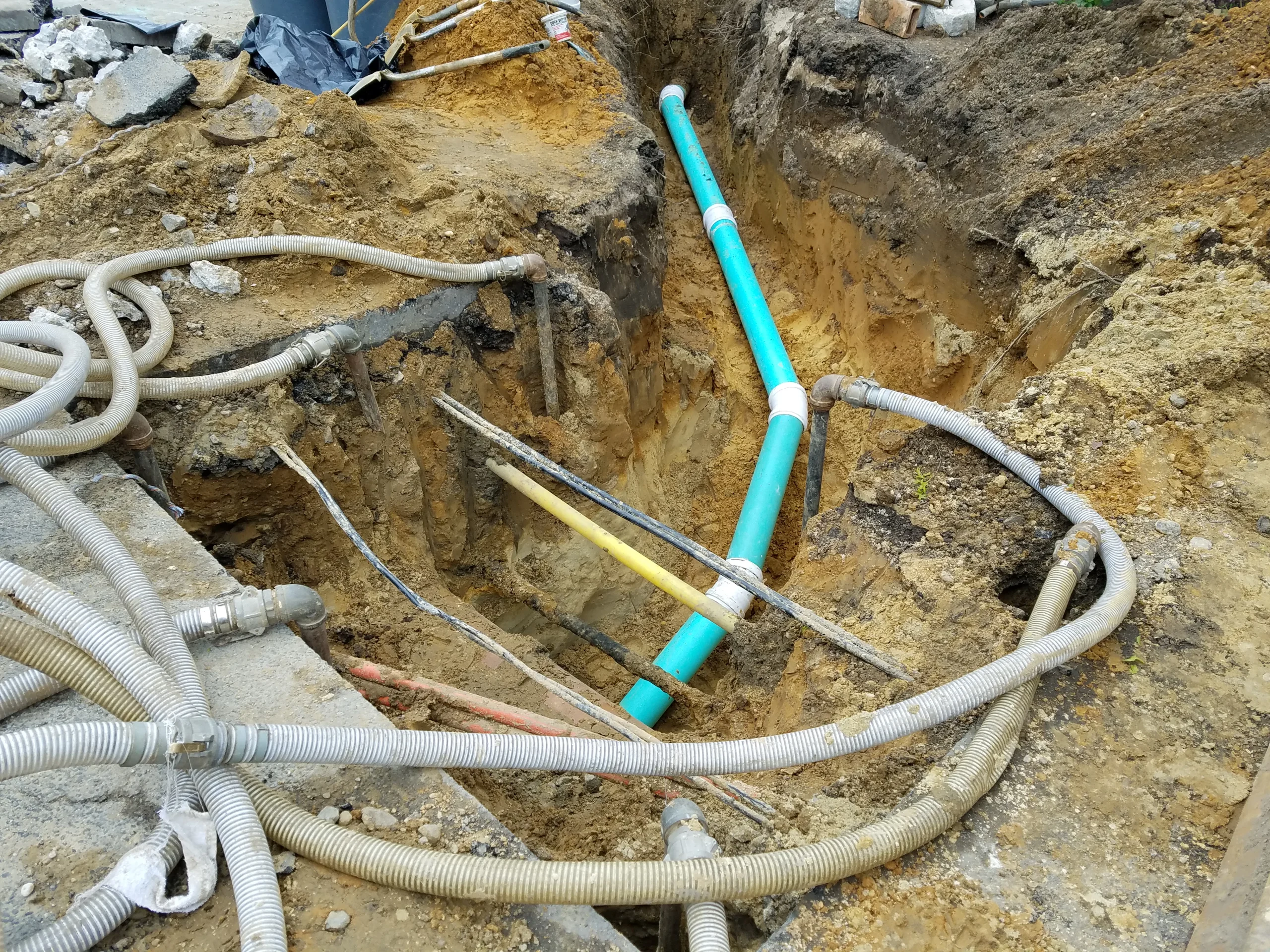
Maintenance goes a long way, but it can’t fix a cracked or collapsing pipe. At some point the question shifts from how to keep this line healthy to how to repair or replace it without wrecking the yard. Traditional repair means an open trench, usually four to six feet down. Anyone with finished landscaping on Long Island knows what that does to pavers, a driveway, or a sprinkler system.
Trenchless work changes the math. Instead of one long trench, we typically need just a couple of small access pits. The catch is that it works best when a problem is caught at the right stage, which is the real reason early inspection matters. A line that gets looked at while it’s still intact leaves you more choices.
We do all three trenchless methods, and part of our job is telling you honestly which one your pipe needs.
Trenchless pipe lining works inside the pipe you already have. After cleaning and a camera inspection, we place a resin-saturated liner in the old line and let it cure, so you end up with a new pipe inside the old one. It’s a good fit when the existing pipe is cracked, rooty, or worn but still in place. It can’t rescue a pipe that has collapsed or shifted badly out of line, which is another reason not to wait.
Trenchless pipe bursting is for when the old pipe has run out of road. A bursting head breaks up the old line, whether it’s clay, cast iron, or another older material, while pulling a new pipe through the same path. It does need an entry pit and an exit pit, so you’ll still see some digging, just a fraction of a full trench.
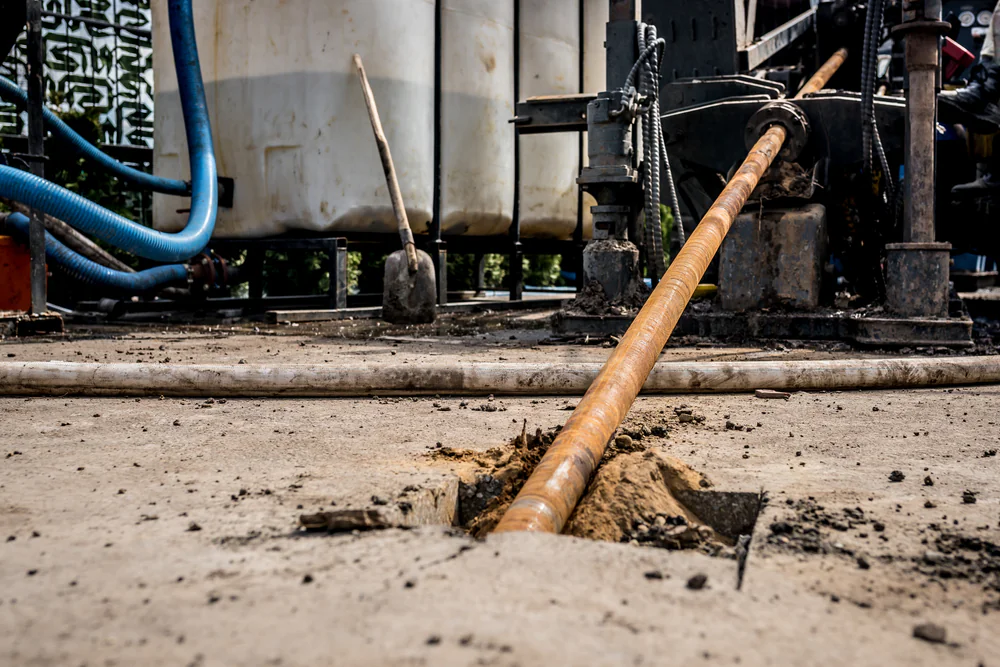
Directional drilling is a different tool. It steers a new line along a bored path, which makes it useful for water lines that have to get under a driveway, walkway, or landscaping without tearing it all up.
Sometimes a spot repair or a conventional dig is still the right call. We’d rather tell you that after reviewing the footage than sell you a method that won’t hold. Done well, trenchless repair should last for decades, and that’s as specific as anyone should get before seeing your actual pipe.
A good inspection starts with locating the line and the cleanout, then running a camera through the pipe and recording what it sees. You should be able to watch the footage with the technician, see the roots or the crack or the offset for yourself, and hear in plain language what each one means. If anyone quotes you a repair without showing you why, ask to see the video first.
After that, you should get a written scope and a price you can read before work begins. Our pricing is upfront, and you shouldn’t feel pushed for payment details before anyone has even seen the pipe.
Two questions come up almost every time. Who’s responsible for the line? In most cases the homeowner owns the lateral running from the house toward the main, but rules vary by town and village in Suffolk County, so confirm with your local authority. And will insurance cover it? Standard homeowners policies often exclude sewer line failure unless you’ve added an endorsement, so check your policy before you assume.
One more thing worth asking any plumber on Long Island: who is actually doing the work? Our technicians are in-house. We use no subcontractors, just our own crew and equipment, licensed and insured in Nassau and Suffolk. That means the people who diagnose your line are the ones accountable for fixing it. Ask to see a current license and certificate of insurance from anyone you hire. We’re glad to show ours.
The short version: find out whether your home runs to a main or a cesspool, learn where your cleanout is, keep grease and wipes out of the pipes, and don’t wait for a backup to find out what’s under your yard. Pipe age and roots decide a lot on Long Island. Catching trouble early is what keeps lining or bursting on the table instead of a trench across your lawn.
If you’d like someone to look at your line, Allied All City is a family-owned plumbing services provider based in Copiague, and we’ve worked on Suffolk and Nassau homes for more than 50 years. Call us on the Suffolk line at 631-658-5117 and we’ll set up a camera inspection and tell you straight what we see. Every job is backed by our 100% satisfaction guarantee.
Article details:
Share:
Continue learning: