Curious how a sewer line gets replaced without a trench? Here's what happens on the day, what stays untouched, and how to tell if your pipe qualifies.
Share:
Summary:
If your sewer line runs under the garage floor, the driveway, and the shrubs you planted twenty years ago, you’ve probably put off dealing with it. That’s understandable. Nobody wants to picture heavy equipment tearing through all of that. Trenchless pipe bursting is the reason that picture doesn’t have to be your only option. Below, we answer the questions Long Island homeowners ask us most: what it is, what really happens on the day, whether it will wreck your driveway, and how we decide if it’s right for your pipe. Let’s start with the basics.
Trenchless pipe bursting replaces an old underground pipe without opening a trench along its whole length. We dig a small access pit at each end of the run and pull a cone-shaped head through the old pipe. The head breaks the old pipe outward into the surrounding soil, and a new pipe follows right behind it along the same path. That new pipe is usually seamless HDPE, a tough plastic fused into one continuous length, so there are no joints for roots to find.
One quick clarification, because the terms get mixed up. Pipe bursting is a planned replacement method. A burst pipe is an emergency, like a freeze-up in January. We handle both, but this page is about replacing a failing line on purpose, on your schedule, before it picks the timing for you.
Before anything gets pulled through the ground, we run a camera through your line. The footage shows what the pipe is made of, where it has collapsed or shifted, and whether bursting is the right call at all. We also locate the utilities nearby, because we need to know what else is in the ground before we pull anything through it.
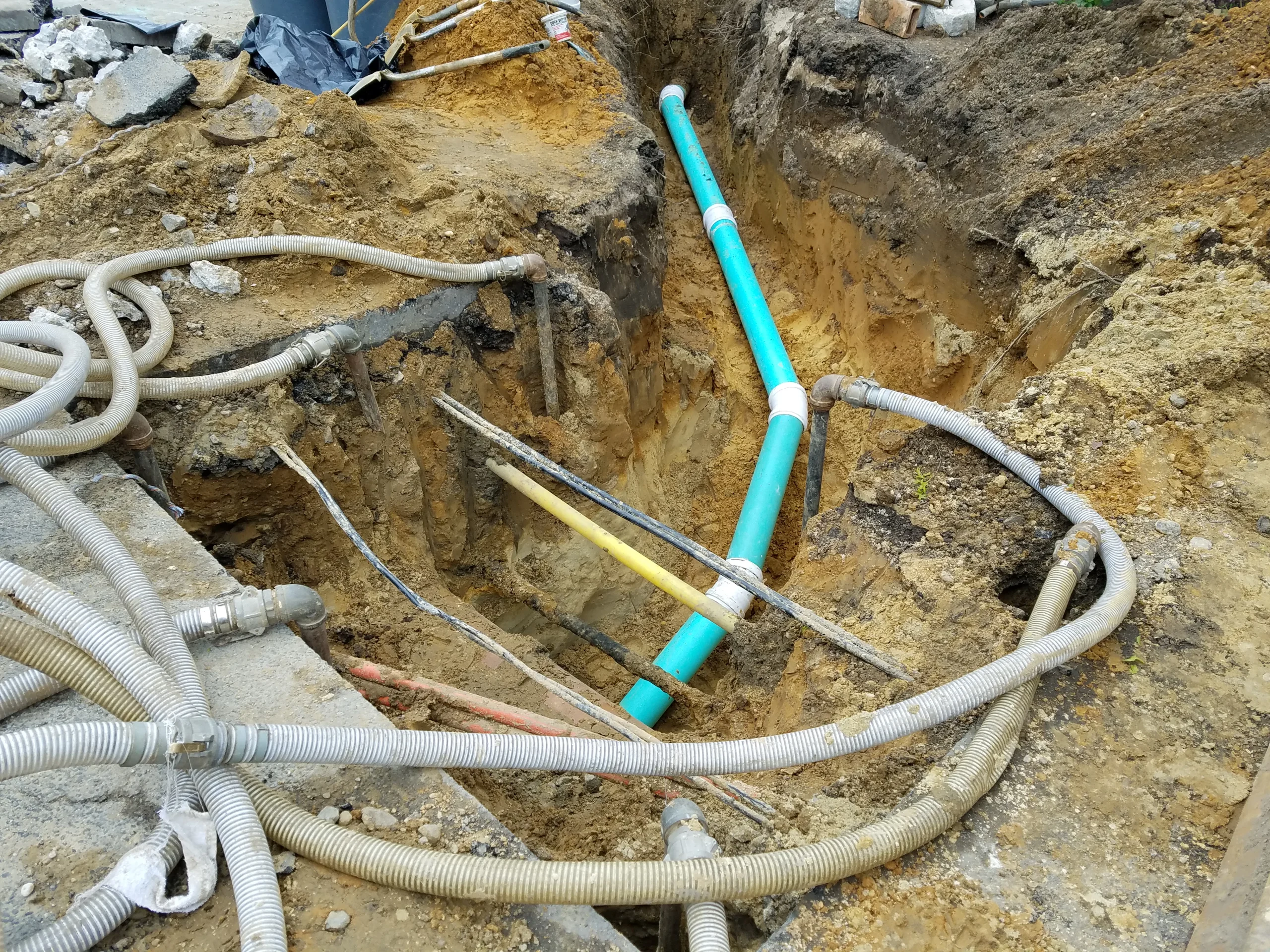
Next come the two pits, and where they go matters more than most people expect. One Bethpage homeowner had a line running under his garage floor, his driveway, and his landscaping. One small excavation near the sidewalk and an opening at the basement wall were enough to get the new line in. We walk you through the pit locations before the day starts, so nothing about it is a surprise.
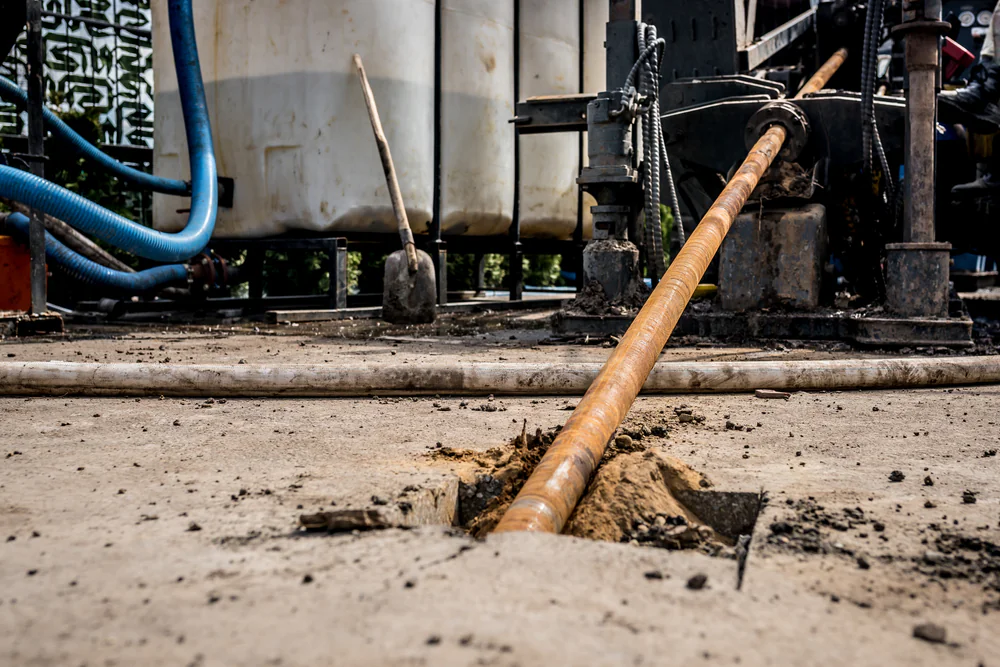
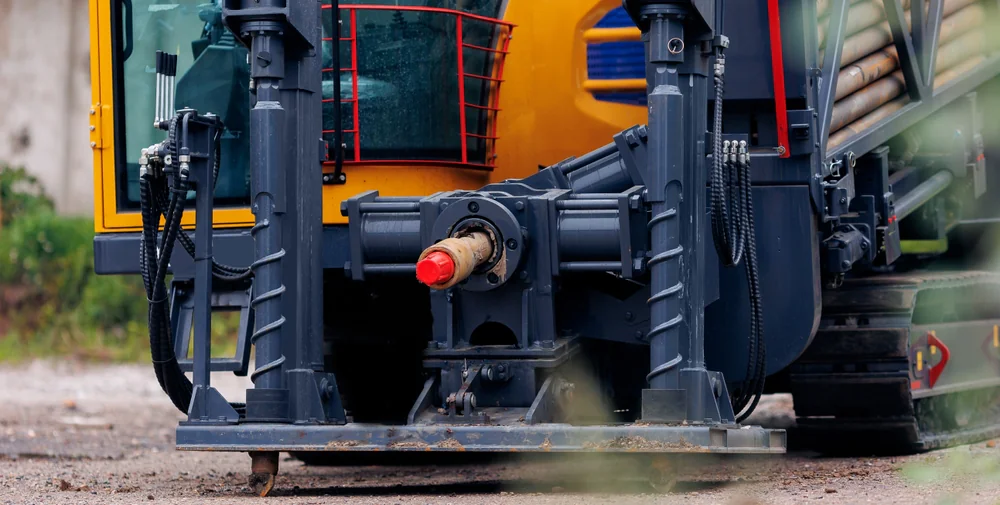
Then a cable is run through the old pipe and attached to the bursting head, and a hydraulic machine pulls it along. As the head moves, it fractures the old clay, cast iron, or concrete outward, and the new HDPE pipe, already fused together above ground, is drawn in behind it. The new pipe is the same size as the old one, and sometimes larger, so you don’t give up capacity the way you can with a liner.
Finally, we reconnect the new line at both ends and restore the access areas. We also handle the permits, inspection, and documentation. Plenty of these jobs wrap up in a single day, but we’d rather tell you what yours looks like after we’ve seen the camera footage than promise a clock. If you’re wondering how long your toilets and water will be affected, ask us when we schedule, and we’ll plan around it with you.
It’s the question that comes right after “what is it,” and it deserves a straight answer. Trenchless pipe bursting is far gentler on your property than a trench, but it isn’t zero-impact. You’ll still have two small pits. Everything between them—including the slab, the driveway, the walkway, and the plantings—stays where it is. A conventional repair often means a trench four to six feet deep, and the Bethpage homeowner we mentioned had put off his job for years because of exactly that cost and mess.
Then there’s the worry about nearby pipes and your foundation. Bursting pushes the broken pieces of the old pipe into the soil around the line, which is why we locate neighboring utilities first. If we can’t protect a water or gas line running close by, we won’t burst. We’ll tell you why, and we’ll recommend another approach.
Trees come up a lot too, and they should. Mature oaks and maples line the streets in Garden City, Westbury, Merrick, and Rockville Centre, and roots are one of the most common reasons older lines fail in these Long Island neighborhoods. A fused HDPE pipe gives roots no joints to work into. We can’t promise roots will never matter, but we can take away the easiest way in.
We’ll also be upfront about soil. Very rocky ground or loose, saturated soil can complicate a burst, and we’d rather say so before the day than during it.
Want live answers?
Connect with a Allied All City Inc. expert for fast, friendly support.
The camera makes this decision, not us. Pipe lining builds a new pipe inside the old one. It works well when the existing pipe is still continuous but has cracks, roots, or leaking joints, and it shrinks the inside diameter slightly. Bursting replaces the pipe entirely, so it’s the better fit when sections have collapsed, joints have shifted badly, or the pipe is too far gone to line.
We do both, along with trenchless directional drilling for new water, gas, irrigation, or conduit lines that need to pass under a lawn or driveway. When digging truly is the better option, we’ll say that as well. Because we aren’t tied to one machine, the recommendation follows your pipe, not our equipment.
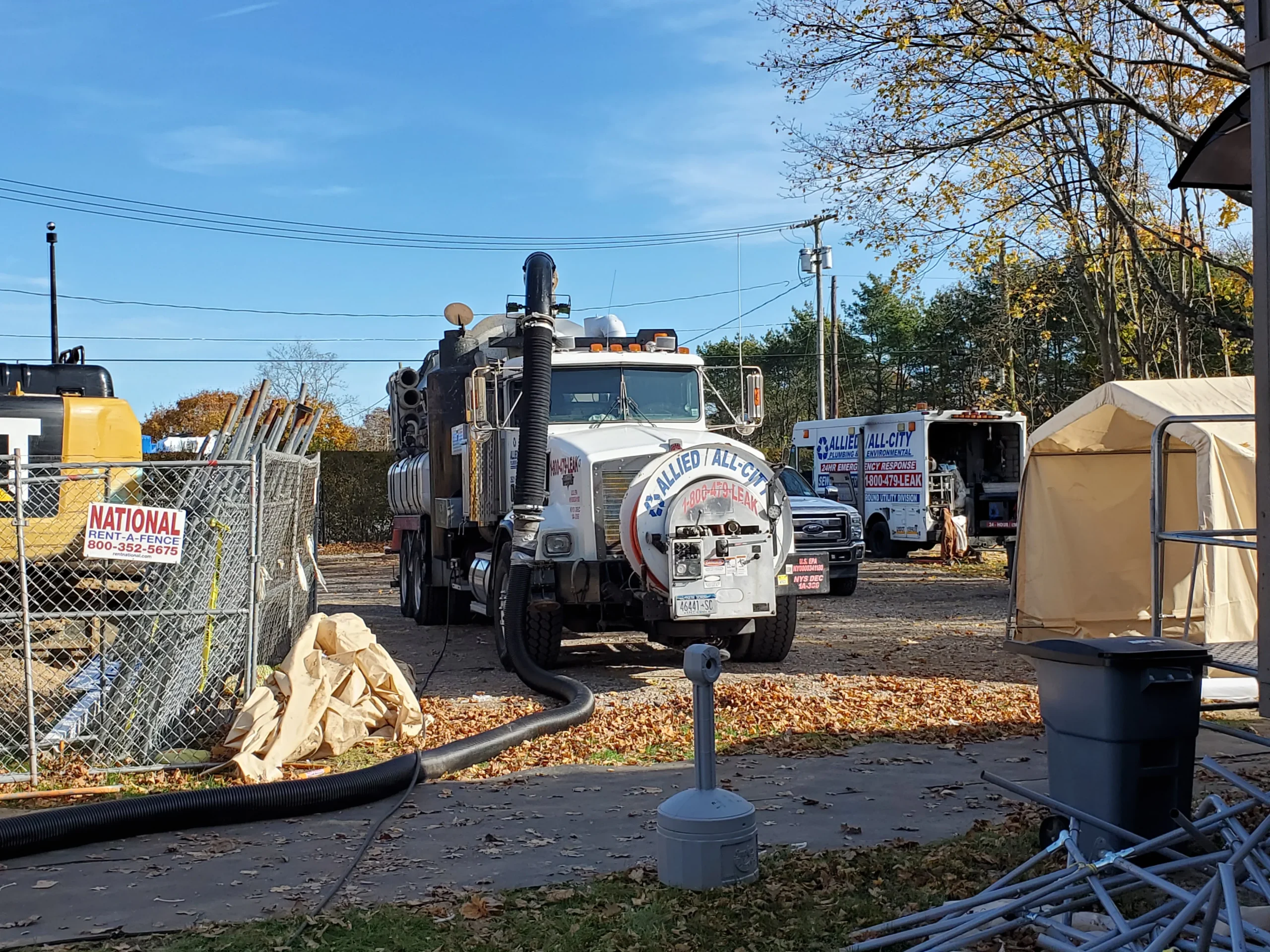
Because snaking clears the blockage. It doesn’t repair the pipe. Much of Nassau County and western Suffolk was built out between the 1940s and the 1970s, including the Levittown-era neighborhoods, and many of those homes still have the original clay tile or Orangeburg laterals. Clay cracks and slips at the joints. Orangeburg, a pressed-fiber pipe, can squash into an oval and eventually collapse. Add roots looking for water, and you get a line that clogs again a few weeks after every visit.
If you’ve had the main snaked more than twice, that’s usually the pipe telling you something. Paying to chase the clog each time adds up, and it never fixes the cause. A camera inspection shows you the actual damage on screen, so you’re deciding with real information instead of a guess.
Two details are worth knowing here. First, the lateral running from your house to the street main is generally your responsibility, not the town’s. Many Long Island homeowners find that out only when it fails. Check your homeowner policy or any service plan you carry before you assume it’s covered. We’ve seen a customer get help with an insurance claim for a new water main after years of repeat snaking, so it’s worth asking.
Second, not every Long Island property has a sewer line at all. Much of Suffolk relies on cesspools or septic systems, and that’s a different job with different rules. Tell us which one you have when you call, and we’ll point you the right way. We work on both.
We don’t publish a flat price, and you should be wary of anyone who does without seeing your pipe. The cost depends on how long the run is, how deep it sits, where the pits can go, whether other utilities are in the way, and what permits and inspections your town requires. Restoration matters too. When you compare a trenchless job to a conventional dig, count what it takes to put the driveway, slab, and landscaping back. Trenchless is often cheaper once that’s included, but it depends on the job, and we won’t tell you otherwise.
What we can promise is a free estimate with upfront pricing and no hidden fees, based on what the camera shows. Ask for the scope in writing. Make sure your estimate says which method is being used, what pipe material goes in, and exactly what’s being replaced.
On lifespan, the polyethylene pipe industry’s conservative estimate for HDPE is 50 to 100 years. That’s a design figure, not a guarantee, so ask any contractor, us included, for warranty terms in writing. Before you sign with anyone, ask who’s doing the work. We use no subcontractors, so the crew that inspects your line is the crew that replaces it.
Here’s the short version. Pipe bursting replaces your old line through two small pits, not a trench. A camera decides whether it’s the right method. Repeated snaking in an older Nassau or Suffolk home usually means the pipe itself is the problem. And a clear, written scope protects you whichever contractor you choose.
If your line runs under something you’d rather not dig up, you don’t have to keep putting it off. Allied All City is a family-owned, licensed and insured plumbing company that has served Long Island for decades. Call us, and we’ll look at your pipe on camera, explain what we see, and tell you honestly whether bursting, lining, or digging makes sense.
Article details:
Share:
Continue learning: