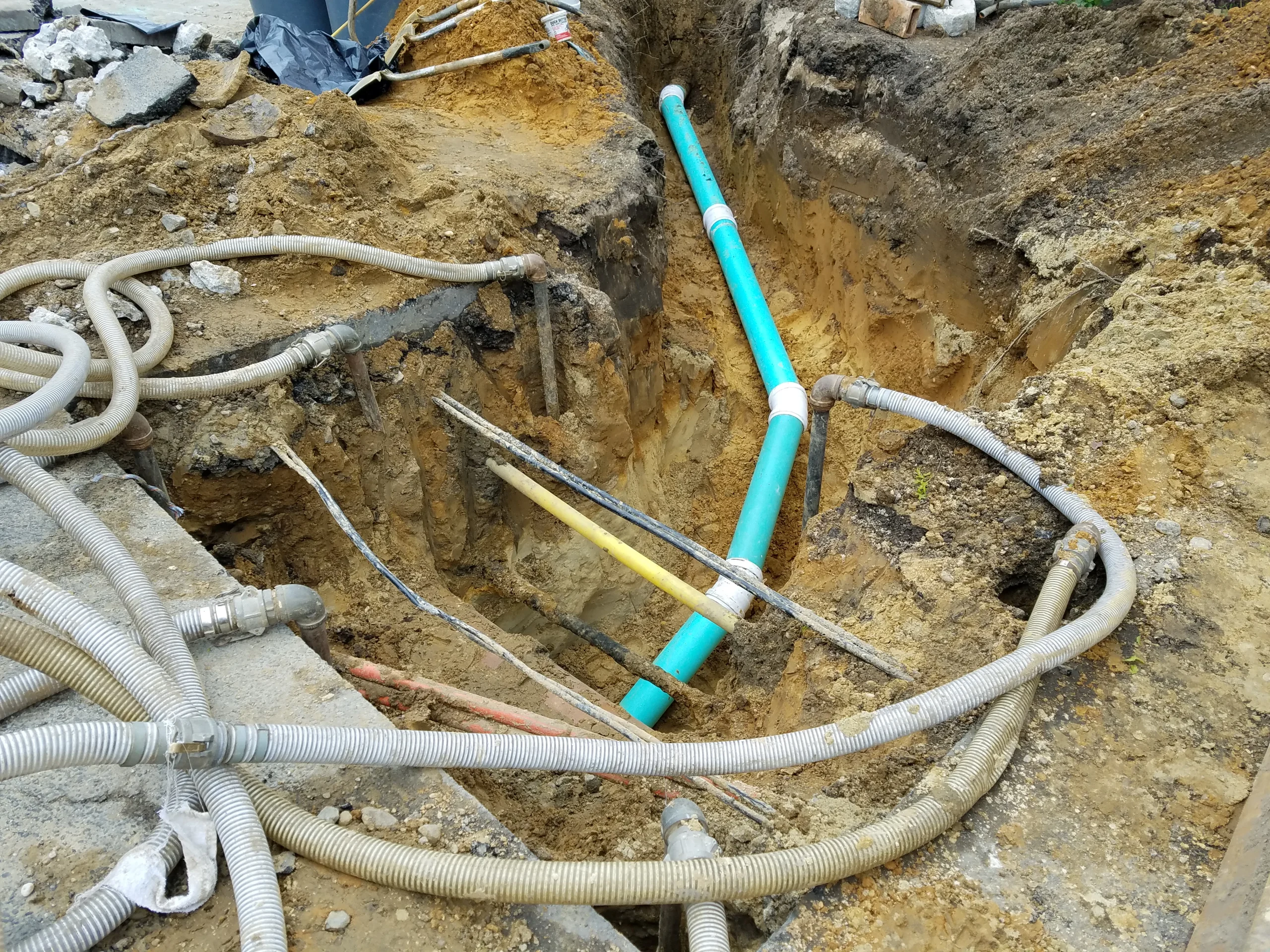
If you've been quoted for excavation, there's something you should know first. Trenchless pipe bursting changes the math entirely. Here is how it works.
Share:
Summary:
You got a quote. Maybe it was for excavation, involving a crew, a backhoe, a week of your life, and a number that didn’t include putting your yard back together afterward. So now you’re here, wondering if there’s another way. There is. Trenchless pipe bursting has been around long enough to be proven and is now the preferred method for full sewer line replacement when the pipe is too far gone to rehabilitate from the inside. This post covers how it works, when it applies, and what makes it a different experience, especially for Long Island homeowners dealing with pipes installed before most of us were born.
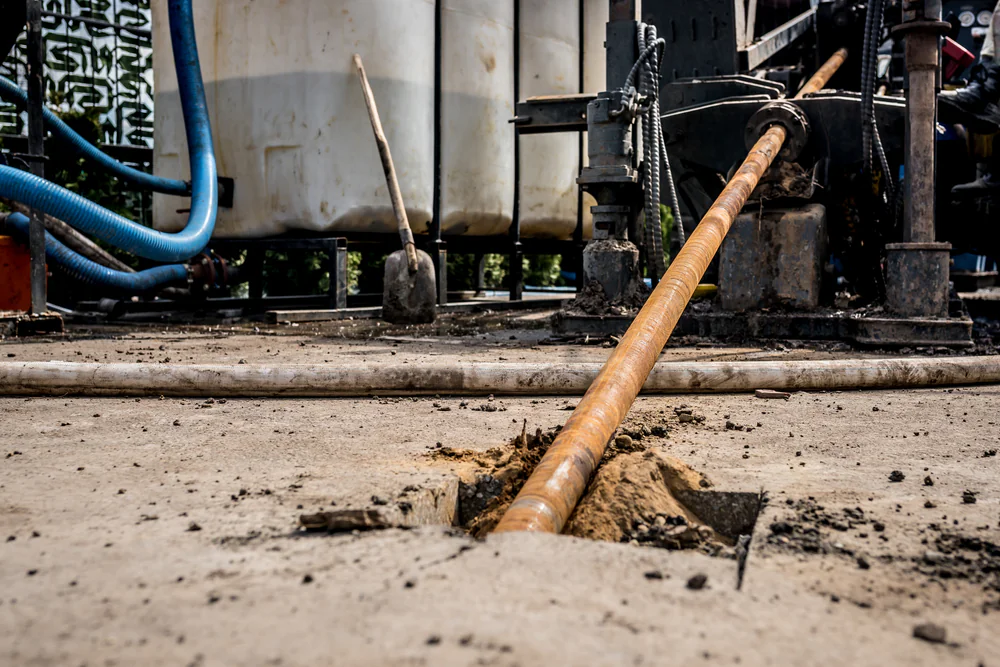
Pipe bursting is a method of replacing an underground pipe without digging a trench along its entire length. Instead of excavating down to the pipe from end to end, two small access points are created, one at each end of the pipe being replaced. From there, a hydraulic bursting head is pulled through the existing pipe via a cable and winch. As it moves through, it fractures the old pipe outward into the surrounding soil and simultaneously pulls a new pipe in behind it.
The new pipe consists of high-density polyethylene, or HDPE. Sections are heat-fused above ground before the pull begins, creating a single continuous, joint-free pipe. There are no seams and no underground connection points that can shift, crack, or let roots in. The whole run is replaced in one pass.
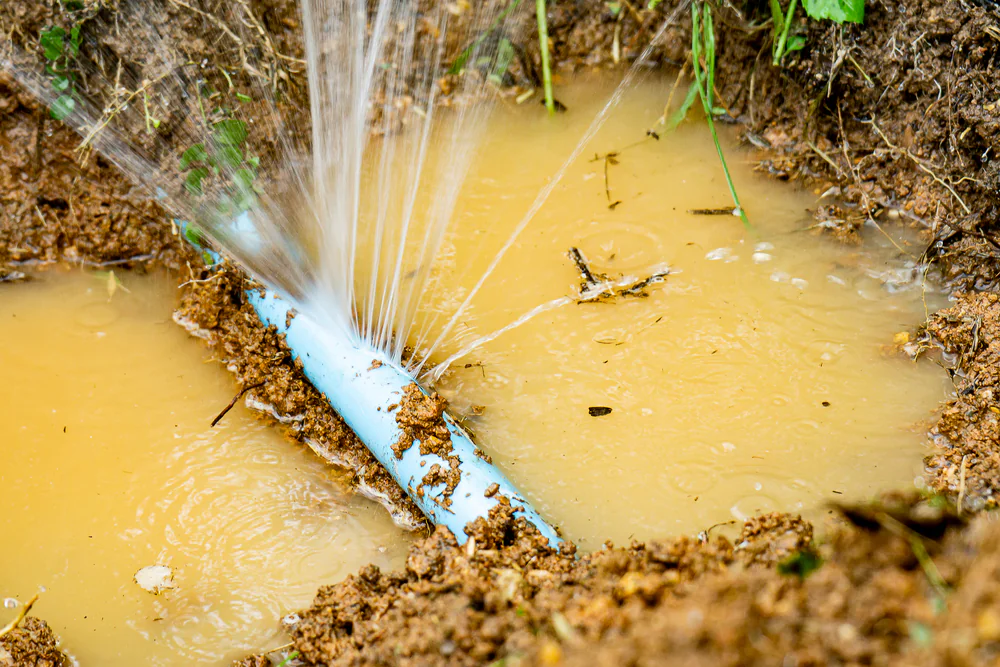
One of the most common questions we hear is if pipe bursting will work on someone’s specific pipes. The short answer is almost always yes, and that matters a lot on Long Island, where the housing stock tells a specific story.
The post-World War II building boom turned communities like Levittown, Massapequa, Bellmore, Bay Shore, and Huntington into some of the most densely developed residential areas in the country. The pipes running beneath those homes were installed in the 1950s, 1960s, and 1970s, consisting mostly of clay and cast iron. Those materials were standard at the time, but they are now 60 to 75 years old, well past their useful service life, and showing it.
Here’s the thing about pipe bursting: it was specifically developed for this kind of situation. The bursting head is designed to fracture clay, cast iron, PVC, and concrete outward into the surrounding soil. The old pipe doesn’t need to be intact or in any particular condition. It just needs to exist as a path for the bursting head to follow. That’s a meaningful distinction from pipe lining, which requires the existing pipe to still have enough structural integrity to hold a liner in place.
So if your home is older, if you’ve been told your pipes are clay or cast iron, or if a camera inspection has shown serious deterioration, pipe bursting is worth understanding before you agree to anything else. The material underground for six decades isn’t a barrier. In many cases, it’s the exact reason pipe bursting is the right call.
We also run a camera inspection before recommending any method. What the camera shows determines our suggestion, rather than what’s easiest or most profitable to sell. If lining is sufficient, that’s what we’ll tell you. If the pipe needs to be replaced entirely, we’ll show you why.
This is probably the question we get most often once someone learns that trenchless options exist. Both pipe bursting and trenchless pipe lining are no-dig methods that avoid excavation. But they solve different problems, and confusing the two can lead to the wrong recommendation, leading either to spending more than necessary or choosing a method that won’t hold up.
Trenchless pipe lining, also called CIPP (cured-in-place pipe), works by inserting an epoxy-saturated liner into the existing pipe and curing it in place. The result is essentially a new pipe formed inside the old one. It’s an excellent solution when the existing pipe is structurally sound enough to act as a mold, meaning it’s cracked or corroded but still largely intact and holding its shape.
Pipe bursting is for situations where the pipe is too far gone for lining to work. Collapsed sections, severe joint offsets, extensive root damage compromising the pipe wall, or advanced deterioration leave no reliable surface for a liner to bond to. These are the conditions pointing toward pipe bursting rather than lining.
There’s also a capacity consideration. Pipe lining reduces the interior diameter of the pipe slightly because the liner adds material to the inside. Pipe bursting, on the other hand, can install a same-size or larger pipe than what was there before. For older Long Island homes with undersized sewer laterals causing recurring backups, that’s not a minor detail, but rather the difference between a repair solving the problem and one merely managing it.
The honest answer to the question of which option you need is that you can’t know without a camera inspection. The camera goes in, we see what is happening underground, and the recommendation follows from that. We offer all three trenchless methods, including pipe bursting, pipe lining, and directional drilling, ensuring there’s no incentive to steer you toward one over another. The right method is the one the camera supports.
Want live answers?
Connect with a Allied All City Inc. expert for fast, friendly support.
Trenchless pipe bursting is a useful technology anywhere aging infrastructure exists. But Long Island presents a particular combination of factors making it more relevant here than in most other markets, and understanding those factors helps explain why so many homeowners in Nassau and Suffolk County ask about it.
It starts with the pipes themselves, continuing with the trees growing above them, the water table sitting below them, the property values surrounding them, and the regulatory environment governing work done on them. Each factor changes the math on excavation in ways that aren’t always obvious until you look at a quote.
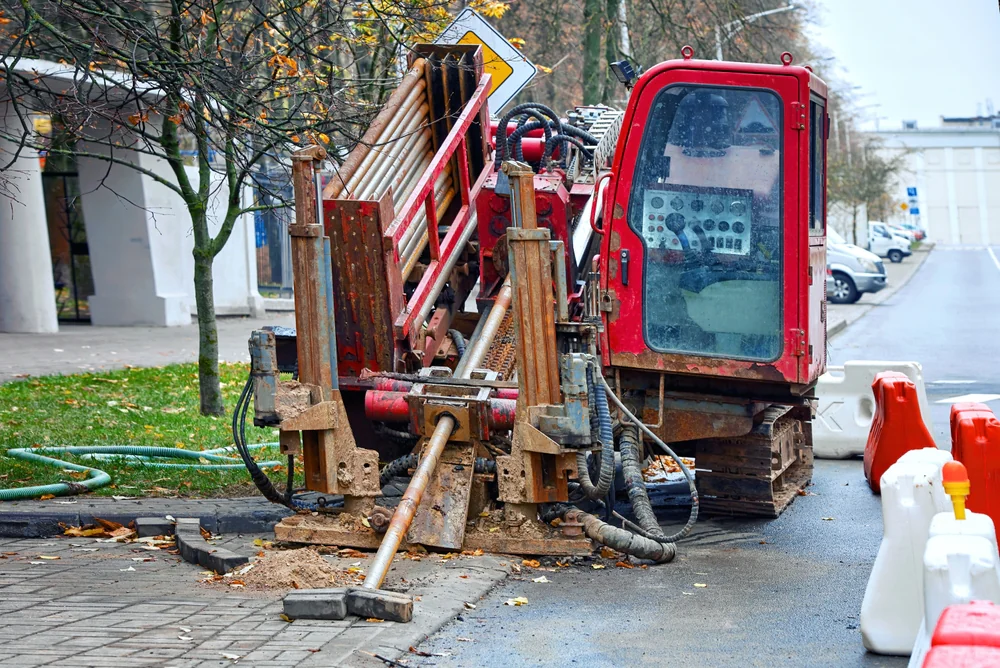
Long Island’s mature tree canopy is one of the most underappreciated factors in sewer line failures across the island. Older neighborhoods in Nassau County, such as Merrick, Wantagh, Bellmore, and Hicksville, are lined with oak, maple, and elm trees growing for 50 or 60 years. Their root systems extend far beyond what’s visible above ground, following water and nutrients directly into aging clay pipes through the smallest crack or joint gap. Once roots enter a sewer lateral, they grow. Annual snaking clears the symptom. Pipe bursting eliminates it because HDPE pipe is joint-free and root-resistant, leaving nothing for roots to enter.
Then there’s the water table. Along Long Island’s South Shore, including communities like Bay Shore, Babylon, Massapequa, and Merrick, the water table sits close enough to the surface that a traditional excavation trench can flood before work even begins. That complicates the job, extends the timeline, and adds costs not showing up in the original quote. Trenchless pipe bursting avoids the water table problem entirely because the access points are small and the pipe is installed without opening the ground along its full length.
Freeze-thaw cycles add another layer. Long Island winters are real, and the repeated stress of ground freezing and thawing accelerates joint separation and cracking in older pipes. Spring is often when damage becomes undeniable, as a pipe managing through fall suddenly fails to handle ground movement from the thaw. We see a consistent uptick in calls after winter, and in most cases, the pipe has been deteriorating for years. The freeze simply made it impossible to ignore.
All of this sits beneath some of the most valuable residential real estate in the country. Nassau County lots are dense. Homeowners invest in their landscaping, driveways, and hardscaping. The cost of restoring a yard after traditional excavation isn’t just an inconvenience, but a real number belonging in any honest comparison between digging and going trenchless.
How long does pipe bursting take? Most residential jobs on Long Island complete in a single day. You’re not looking at a week-long construction project or days without working plumbing. The access points are small, the equipment is compact, and the process moves quickly once setup is done. Larger or more complex installations may run two to three days, but that’s the exception for a typical sewer lateral replacement.
Will it work under my driveway or near my pool?
Yes. The pipe is replaced underground without opening the surface along its length. Your driveway, patio, pool deck, or any other surface structure above the pipe line stays intact. This is a primary reason trenchless pipe bursting suits Long Island properties well, where valuable surface structures sit directly above the pipe.
How long will the new pipe last?
HDPE pipe has a service life of 50 years or more. It’s joint-free, corrosion-resistant, and doesn’t give roots anything to grab onto. The installed pipe improves significantly upon what it replaces, serving as a permanent upgrade rather than a temporary patch.
Is trenchless pipe bursting more expensive than digging?
The pipe work itself is often comparable. What changes is everything that comes after. Traditional excavation means restoring whatever was above the trench, such as landscaping, driveways, sidewalks, and topsoil. Those costs are real and separate from the plumbing work. When you add them in, trenchless frequently comes out ahead. On Long Island, where properties are dense and landscaping is mature, restoration costs after excavation can easily exceed the cost of the pipe work itself.
Do I need a permit for this work in Nassau or Suffolk County?
Yes, and this is worth paying attention to. Nassau County and Suffolk County each maintain separate licensing and permit requirements for plumbing and sewer work. Not every contractor holds the county-specific credentials required to operate legally in both. We do, and we handle the permitting process as part of the job.
If you’ve already been quoted for excavation, that quote isn’t wrong, but it isn’t the only option. Pipe bursting is a proven, EPA-recognized technology, and on Long Island, where pipes are old, lots are dense, and landscaping is worth protecting, it often proves to be the better fit.
The most important step is a camera inspection. That’s where the actual condition of your pipe becomes visible, documented rather than estimated or assumed. Everything else follows from what the camera shows.
We’ve been doing this work on Long Island for over 40 years across Nassau and Suffolk County, utilizing our own licensed crews and equipment. If you have questions about your situation qualifying for trenchless pipe bursting, Allied All City Inc. is a straightforward call away.
Article details:
Share:
Continue learning: