Most Long Island homes are sitting on pipes that are decades past their prime. Here is what you need to know before the problem finds you.
Share:
Summary:
There’s a version of this story that plays out constantly across Long Island: a homeowner notices a slow drain, maybe a gurgling toilet, maybe a faint smell they can’t quite place. They ignore it for a few weeks. Then a few months. Then one night, sewage backs up into the basement and suddenly they’re looking at a repair that could have been caught early, and handled for a fraction of the cost.
We’ve seen it more times than we can count. And the frustrating part is that most of it is preventable. Not with expensive equipment or constant maintenance, but simply with a basic understanding of what’s happening under your yard and what to watch for.
New York State has the oldest owner-occupied housing stock in the country, boasting a median age of 64 years. On Long Island, that number is especially meaningful. The bulk of Nassau and Suffolk County’s residential neighborhoods were built during the post-World War II suburban boom, starting with Levittown in 1947 and spreading east through the 1950s, 60s, and into the 70s.
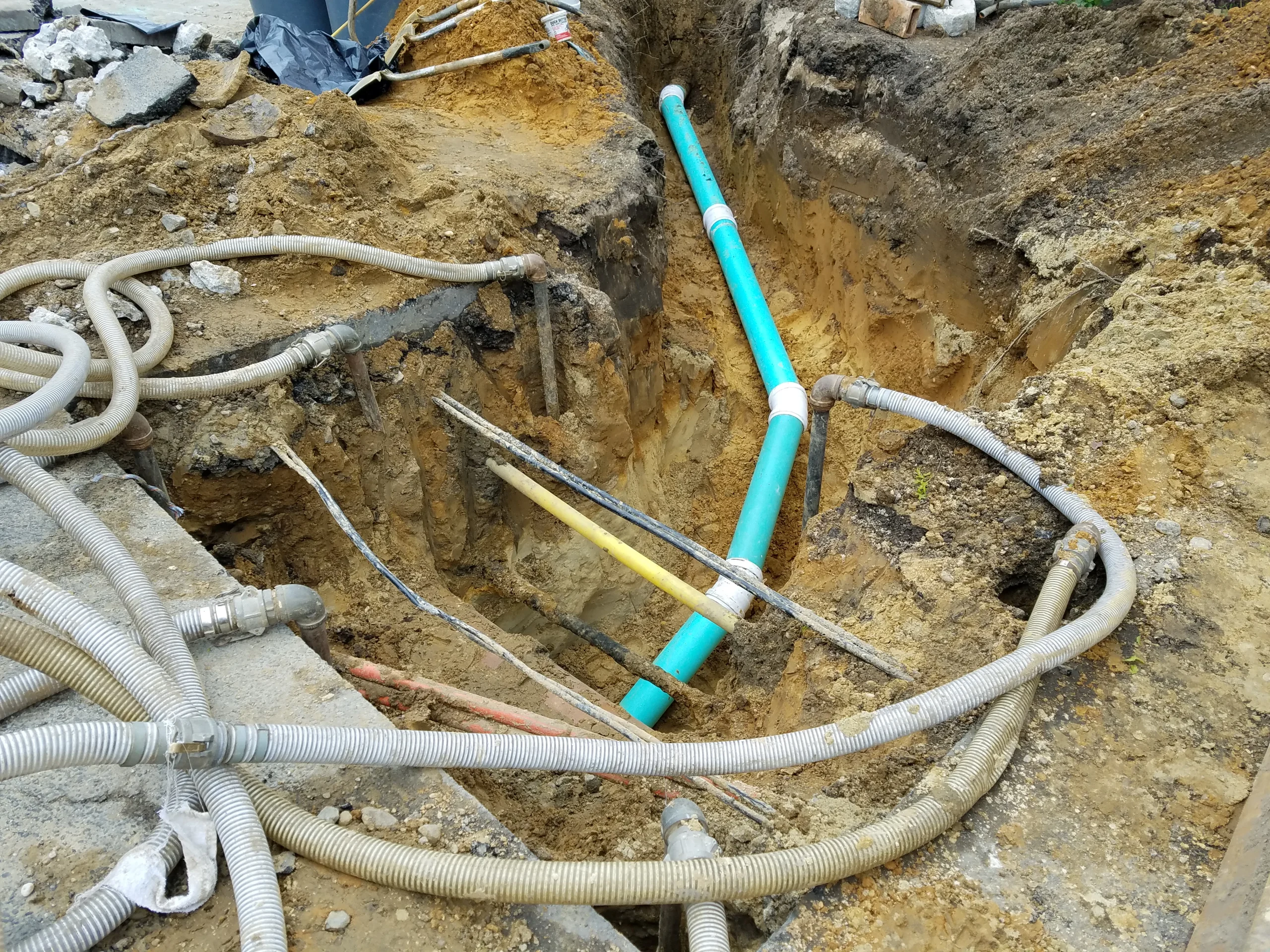
Those homes were built with the materials that were standard at the time: cast iron drain pipes, clay tile sewer lines, and in many cases, Orangeburg pipe, which is a compressed paper-and-tar product widely used after the war and now notorious for collapsing under its own weight. These materials have a functional lifespan of roughly 50 to 75 years. For a lot of Long Island, that clock has already run out.
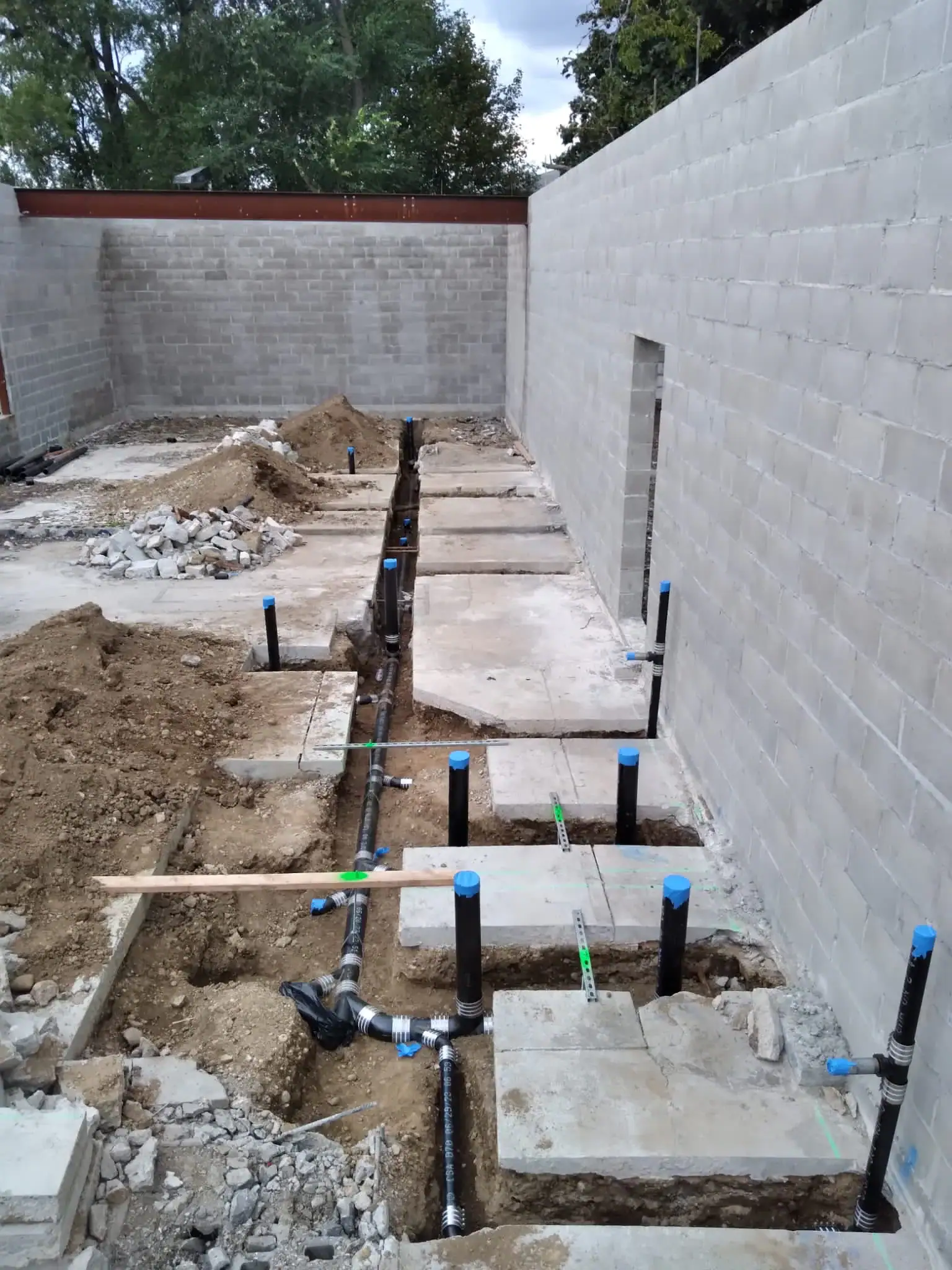
The thing about underground pipe failure is that it’s mostly invisible. A sewer line can be cracked, root-invaded, or partially collapsed and still drain, right up until it doesn’t. By the time a homeowner notices something is wrong, the damage has usually been building for months or years.
What are the signs? Slow drains that keep coming back even after snaking. Toilets that gurgle when you run water elsewhere in the house. A soggy patch in the yard that doesn’t dry out after rain. A smell you can’t trace to anything inside. These aren’t random annoyances, but rather your plumbing system trying to tell you something.
Tree roots are one of the biggest culprits on Long Island specifically. The mature oaks, maples, and other trees lining streets in communities like Massapequa, Roslyn, and Sayville were planted alongside those post-WWII homes in the 1950s and 60s. Those root systems are now 60 to 70 years old, and they are actively seeking out water, which means they’re finding their way into cracked clay and cast iron sewer lines all across both counties.
Coastal communities face an additional layer of complexity. Homes in Freeport, Long Beach, and Oceanside deal with groundwater pressure and storm surge exposure that accelerates pipe deterioration. After Superstorm Sandy in 2012 and Hurricane Ida in 2021, we saw firsthand how much stress those events put on aging underground infrastructure, along with how many problems they uncovered that had been quietly developing for years.
The honest answer to the question of how to know if your pipes are failing is that you often don’t know without looking. A camera inspection is the only way to see the actual condition of your underground lines. We run a camera through the pipe, show you what’s there, and then talk about what, if anything, needs to be done. No guessing, no recommending repairs based on symptoms alone.
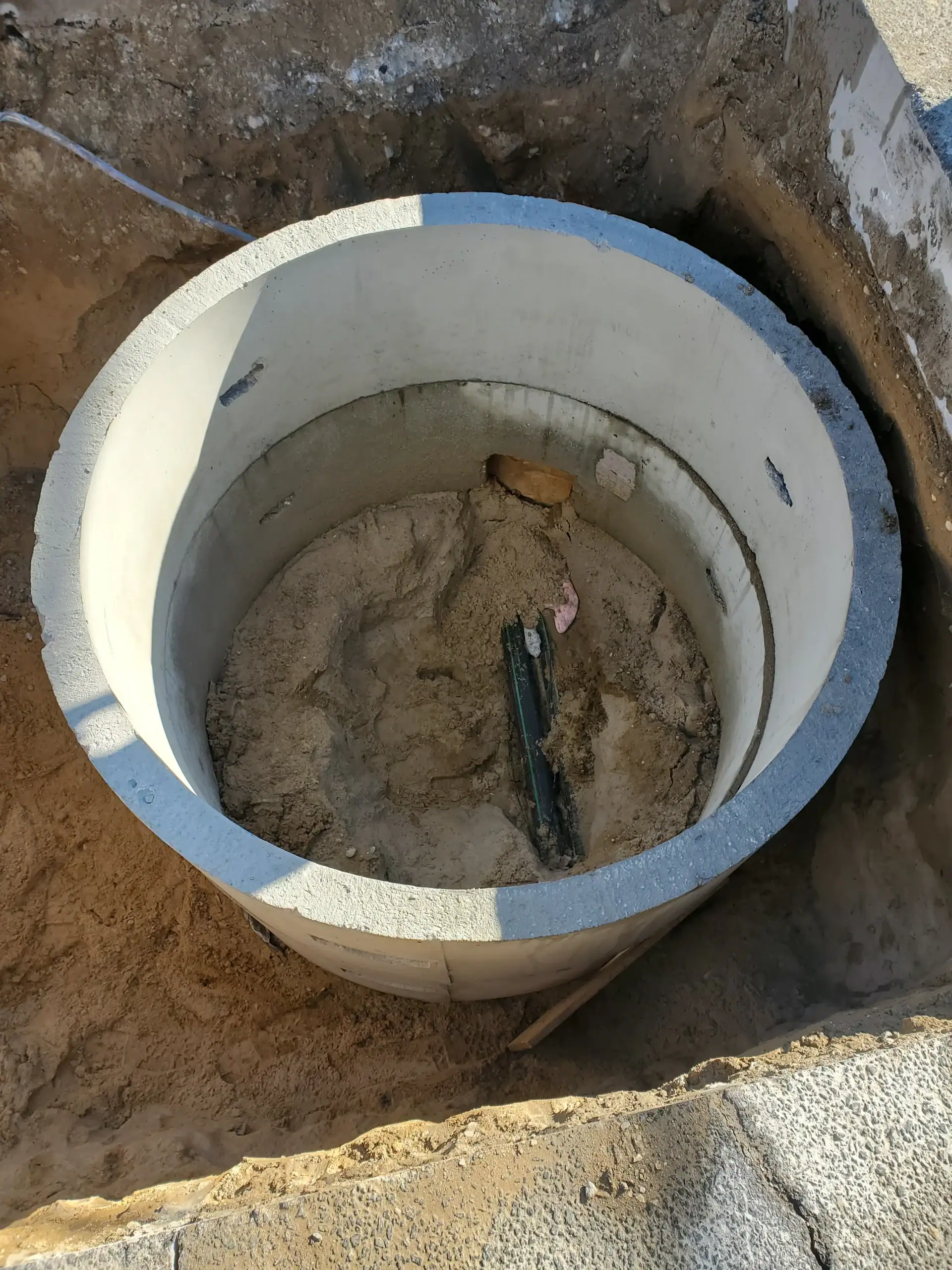
This is something that often catches homeowners off guard, especially people who bought an older home in Suffolk County without fully understanding what they were inheriting. A large portion of Suffolk County is not connected to municipal sewer systems. Instead, many homes rely on cesspools, which are underground chambers that collect and partially treat wastewater before it disperses into the surrounding soil.
Cesspools have a lifespan, and many of the ones serving Suffolk County homes were installed at the same time the houses were built in the 1950s and 60s. When a cesspool reaches the end of its useful life, it doesn’t always fail dramatically. It can start backing up slowly, cause wet spots in the yard, or produce odors that homeowners attribute to other things.
Regular cesspool pumping is the most straightforward way to extend the life of an existing system and catch problems before they become emergencies. But there’s also a bigger picture here, as New York State has been pushing forward with regulations that will eventually require many Suffolk County properties to upgrade from cesspools to more advanced treatment systems. If you’re in a community being evaluated for sewer connection, such as Babylon, Brentwood, or East Patchogue, it’s worth understanding what that transition looks like and what your options are.
We handle cesspool pumping, septic maintenance, and sewer connection work across Suffolk County. If you’re not sure what system your home is on or what condition it’s in, that’s the kind of question we can help you answer. A quick inspection now is a lot easier than an emergency call at 10 p.m. on a Tuesday.
Want live answers?
Connect with a Allied All City Inc. expert for fast, friendly support.
If you’ve been researching sewer or water line repair, you’ve probably seen the phrase “trenchless” used as if it describes a single technique. It doesn’t. There are three distinct trenchless technologies, and they’re not interchangeable. Using the wrong method for the wrong situation doesn’t just waste money, but it can also mean the repair fails or misses the actual problem entirely.
Understanding the difference isn’t about becoming an expert. It’s about knowing enough to ask the right questions when someone gives you a quote, and recognizing when a contractor is recommending the only method they know rather than the right one for your pipes.
Trenchless pipe lining, sometimes called cured-in-place pipe lining or CIPP, works by inserting a resin-saturated liner into the existing damaged pipe and curing it in place. The result is essentially a new pipe formed inside the old one. It’s a strong solution when the existing pipe still has enough structural integrity to serve as a host. If the pipe is cracked, root-invaded, or corroded but still largely intact, lining can restore it without excavation and add decades of life to the system.
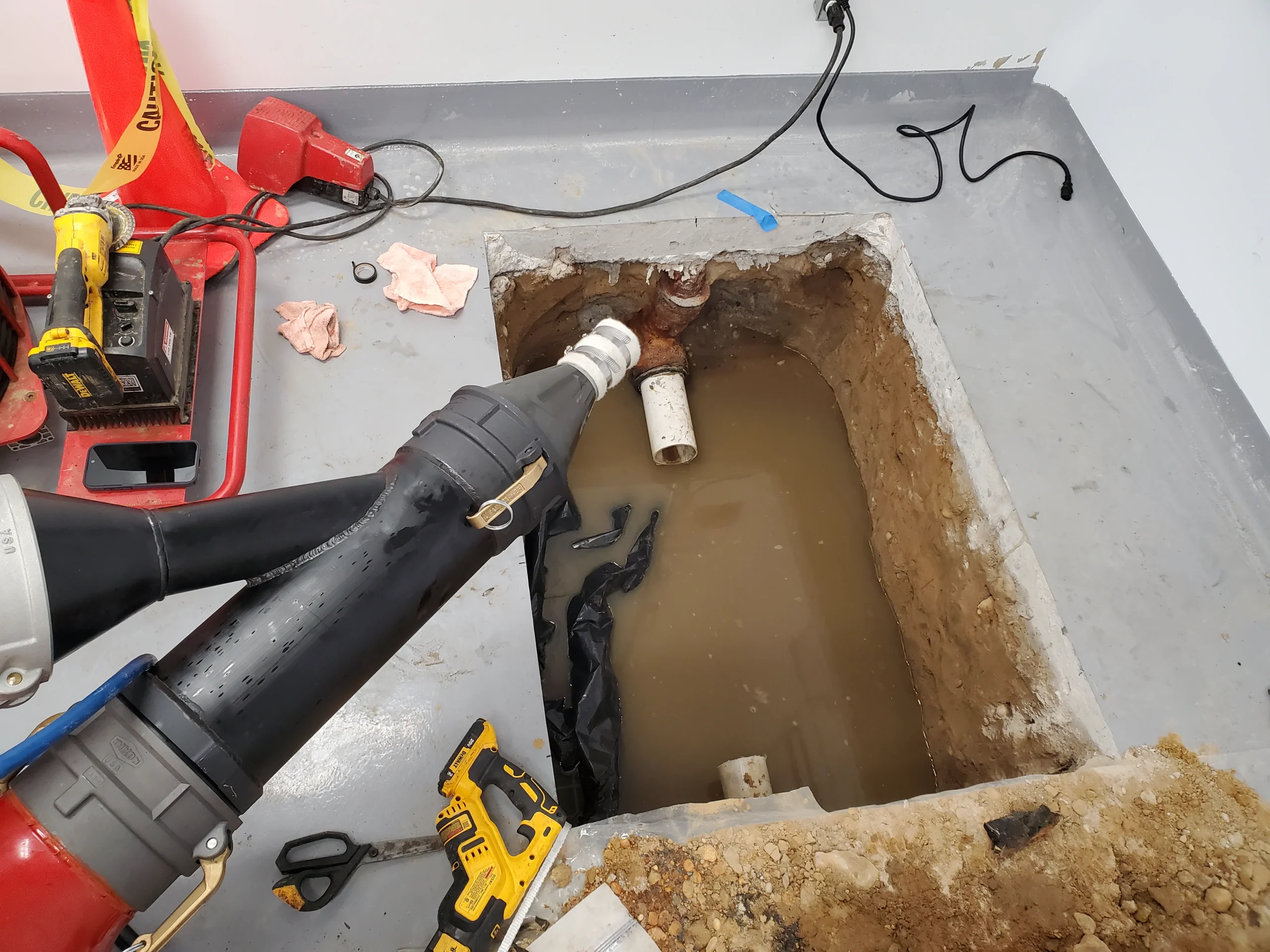
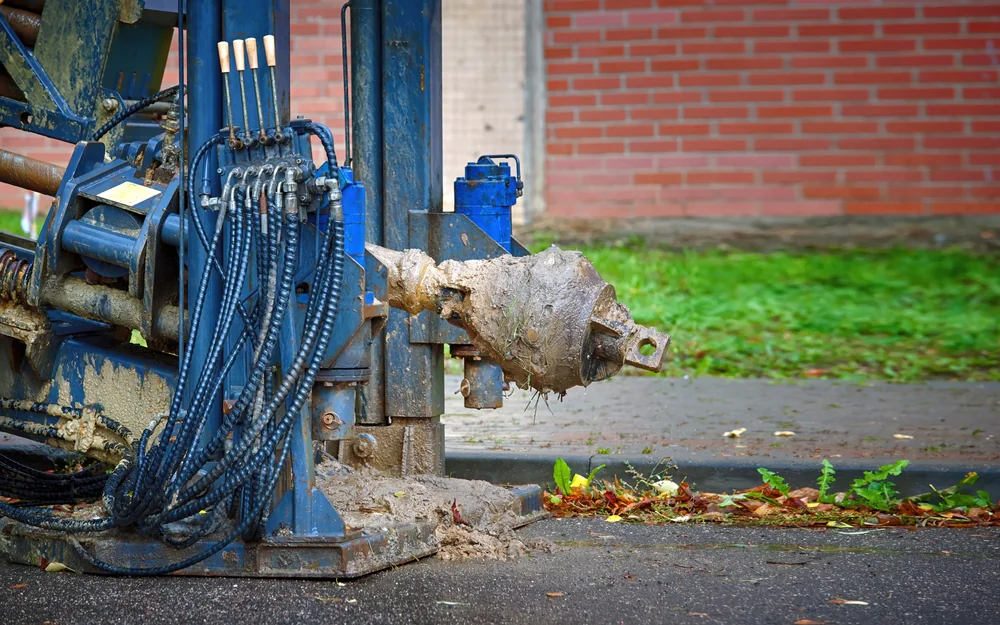
Pipe bursting is a different approach entirely. A hydraulic head is pulled through the old pipe, fracturing it outward while simultaneously pulling a new HDPE pipe into place behind it. This method is used when the existing pipe is too far gone to serve as a host, meaning it’s collapsed, severely deformed, or you want to upsize the diameter of the line. The new pipe is seamless, resistant to root intrusion, and carries a life expectancy of up to 100 years.
The critical point is that these two methods serve different situations. A contractor who only offers one of them will naturally recommend the one they have, regardless of suitability for your specific pipes. We offer both, which means the recommendation you get from us is based on what your specific pipe condition calls for, not on what equipment we happen to own. That distinction matters more than most homeowners realize when comparing quotes.
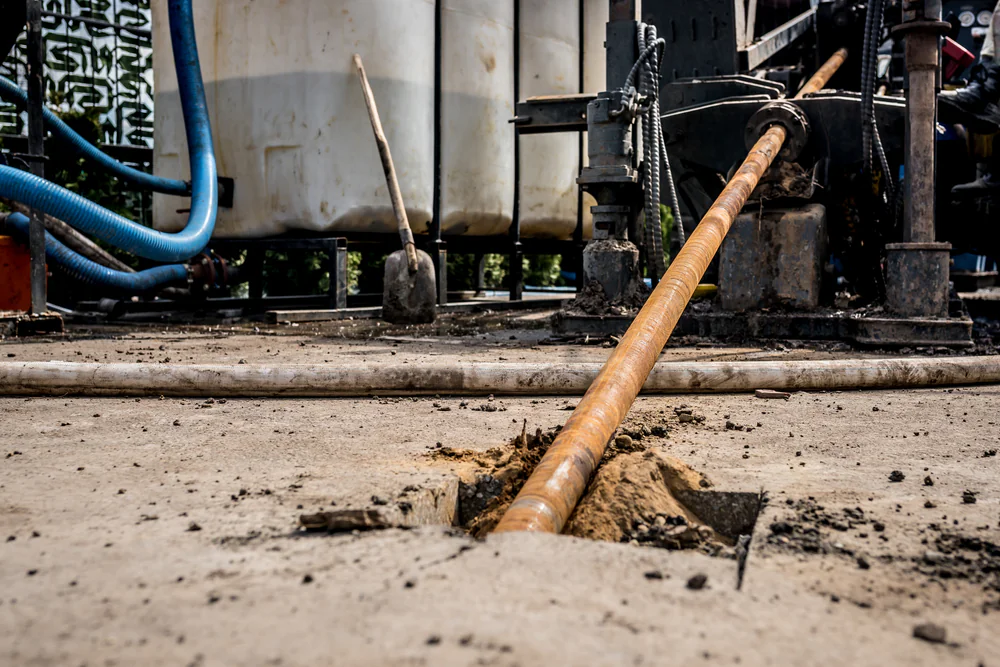
Directional drilling, also called horizontal directional drilling or HDD, is a different category of trenchless work. Where pipe lining and pipe bursting are used to rehabilitate or replace existing pipe, directional drilling is used to install new pipe underground without disturbing the surface above it.
The most common application on Long Island is running new water or sewer lines under driveways, roads, or structures where you can’t trench. If a water main needs to cross under a driveway or a sewer lateral needs to pass beneath a foundation, directional drilling allows the new pipe to be guided through the ground along a precise path without opening up the surface at all. Entry and exit pits are small, looking nothing like the full-length trenching traditional installation requires.
This is particularly relevant in Long Island’s older, established neighborhoods where mature landscaping, long driveways, and tight lot lines make conventional trenching a significant disruption. In communities like Garden City, Great Neck, and Commack, where homeowners have invested heavily in their properties, the ability to run new pipe without tearing up a driveway or removing mature plantings makes a meaningful difference.
We’re one of the few contractors on Long Island offering all three trenchless methods under one roof: pipe lining, pipe bursting, and directional drilling. That matters because real-world plumbing jobs rarely fit neatly into a single category. A job starting as a lining candidate might reveal a section needing bursting. A new installation might require directional drilling in one section and conventional work in another. Having all three options available means we’re not working around our own limitations when working on your property.
The most expensive plumbing call you’ll ever make is the one you didn’t make six months earlier. Underground pipes don’t send obvious warnings. They deteriorate gradually, and by the time the problem is impossible to ignore, the repair is usually bigger than it needed to be.
If your home was built before 1980, a camera inspection of your sewer line is one of the smartest things you can do this year. Not because something is necessarily wrong, but because you’ll know. Knowing puts you in control of the timing and the decision, rather than forcing you to react to an emergency.
Allied All City has been working on Long Island’s underground infrastructure since the early 1980s across Nassau and Suffolk Counties, relying on our own crews and our own equipment. If you have questions about what’s under your yard, or you already know something isn’t right, give us a call. We’ll tell you what we see, straight.
Article details:
Share:
Continue learning: