Not sure if trenchless repair is right for your home? Here is what Long Island homeowners need to know before making a decision.
Share:
Summary:
If your drains are slow, your yard has an unexplained wet spot, or a plumber just handed you a camera inspection report with words you’ve never heard before, this page is for you. Most homeowners don’t think about their sewer line until something goes wrong. And when it does, the options can feel overwhelming.
We hear a lot about trenchless repairs, but rarely see them explained well. What is the difference between pipe lining and pipe bursting? Is it really cheaper? Does it last? We’ve answered the questions we hear most often from Long Island homeowners, providing straight answers without any sales pitch attached.
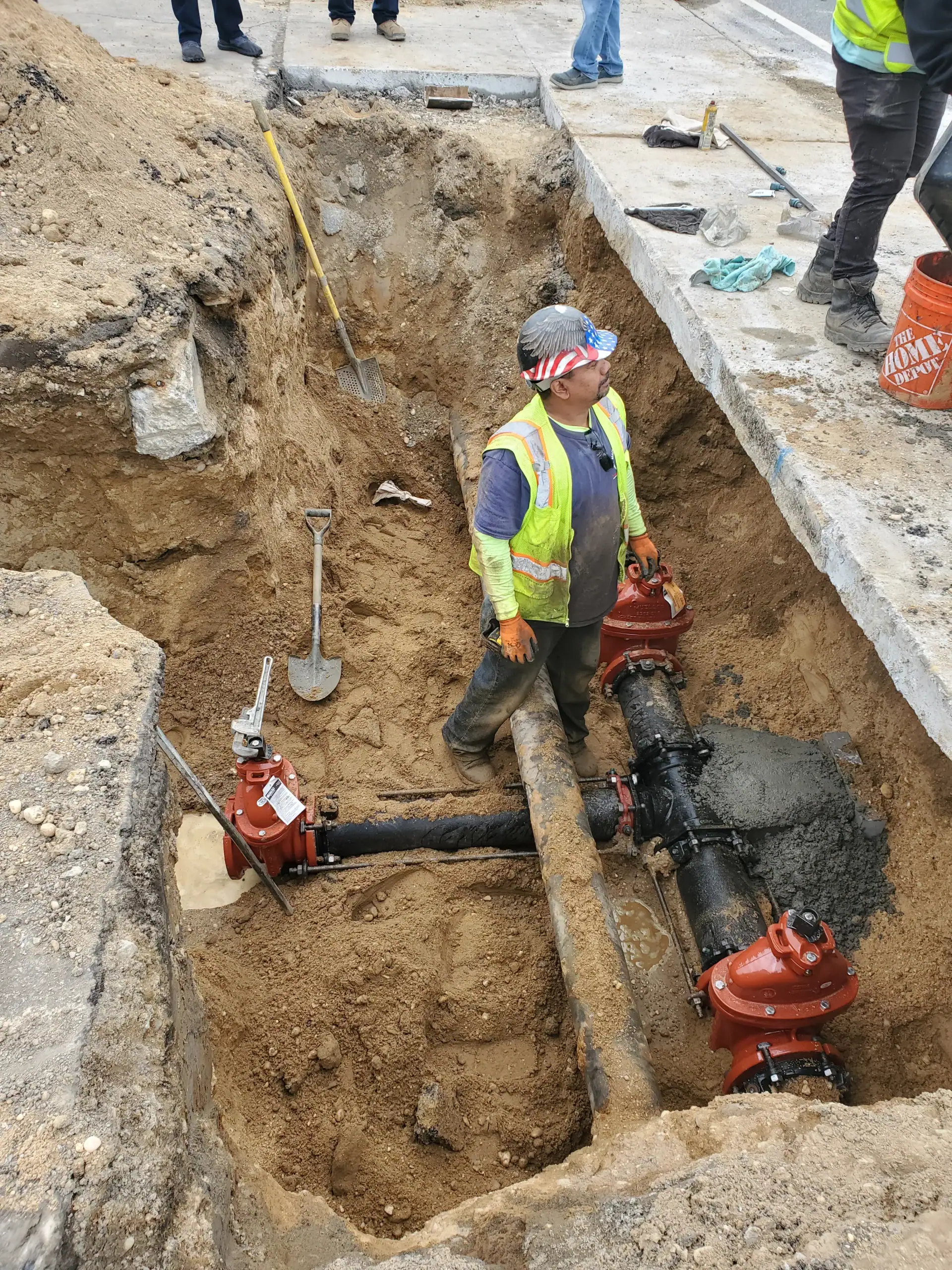
Trenchless repair is an umbrella term for methods that fix or replace underground pipes without digging a full trench along the length of the pipe. Instead of excavating your entire yard, driveway, or landscaping to access the damaged section, trenchless techniques work through small access points, typically a cleanout or a modest pit that is a fraction of the size of traditional excavation.
The three main methods are pipe lining, pipe bursting, and directional drilling. They’re not interchangeable. Each one works differently, applies to different situations, and produces a different result. Understanding which method applies to your pipe, and why, is the most important thing we can tell you before any work begins.
This is probably the most common source of confusion, and it’s worth taking a minute to get it right because the answer changes the scope of the job entirely.
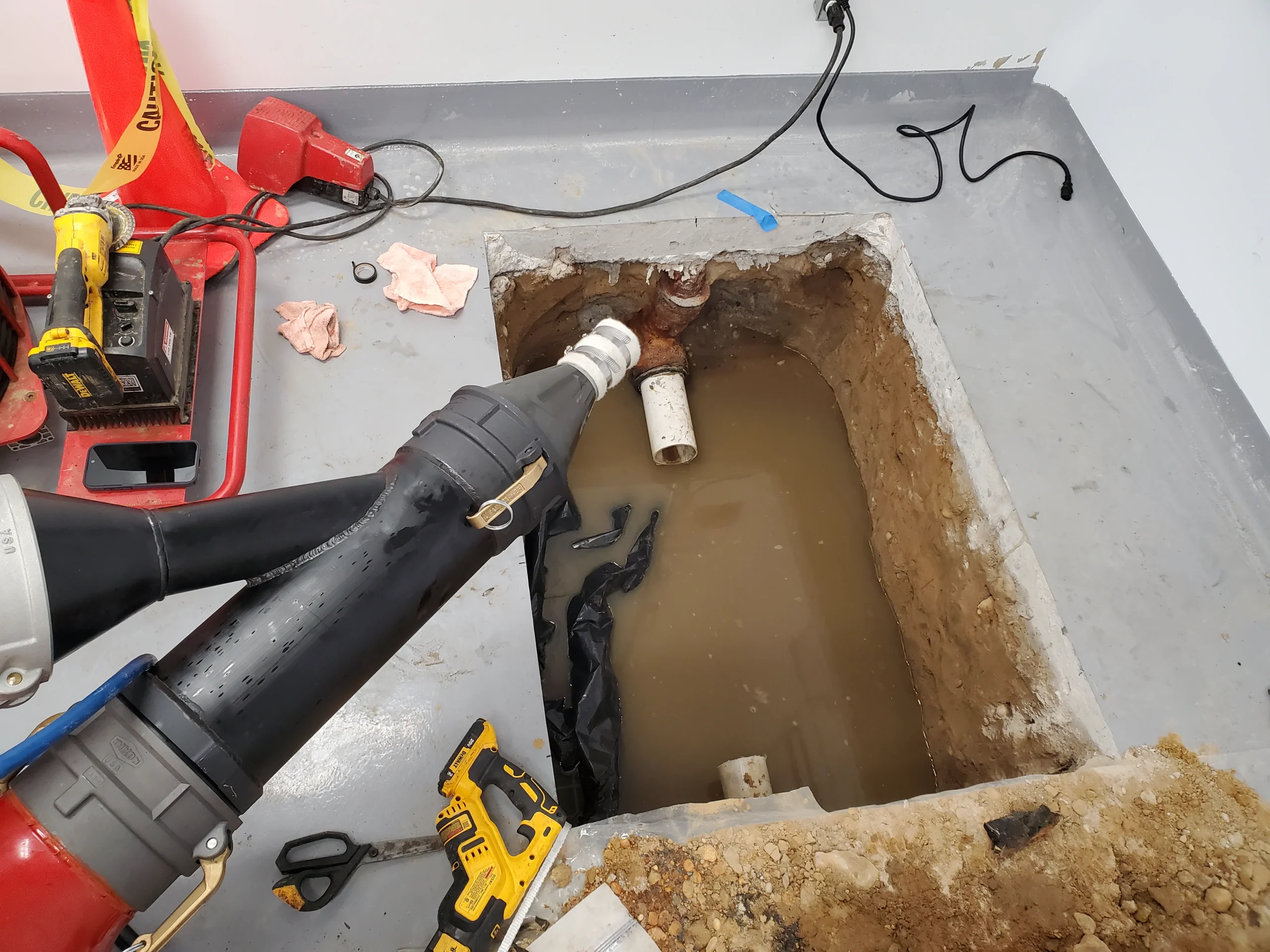
Pipe lining, technically called cured-in-place pipe lining or CIPP, is used when the existing pipe is damaged but still structurally present. A felt liner saturated with epoxy resin is inserted into the old pipe and inflated against the interior walls, then cured in place. What you’re left with is essentially a new pipe inside the old one: seamless, jointless, and impermeable to root intrusion. The liner can be cured in as little as three hours, and the finished product has a minimum life expectancy of 50 years when properly installed. It’s the most widely used trenchless method in the world for good reason.
Pipe bursting is a different process for a different situation. It’s used when the existing pipe is too far gone to line, meaning it is severely deteriorated, collapsed in sections, or simply needs to be replaced outright. A bursting head is pulled through the old pipe, fracturing it outward into the surrounding soil while simultaneously pulling a new HDPE pipe in behind it. The new pipe is seamless, corrosion-resistant, and also carries a 50-plus-year service life. It’s the faster-growing of the two methods precisely because it handles cases where lining alone isn’t enough.
On Long Island, where a significant share of homes were built during the post-war suburban boom of the late 1940s through the 1960s, many sewer laterals consist of original clay tile now 60 to 80 years old. Clay pipe is particularly prone to root intrusion at the joints, and it cracks under ground movement and age. In established neighborhoods like Great Neck, Roslyn, and Elmont, we’ve seen these pipes in every stage of deterioration. A camera inspection tells us which method is appropriate. That step isn’t optional, as it is how we know what we’re dealing with before recommending anything.
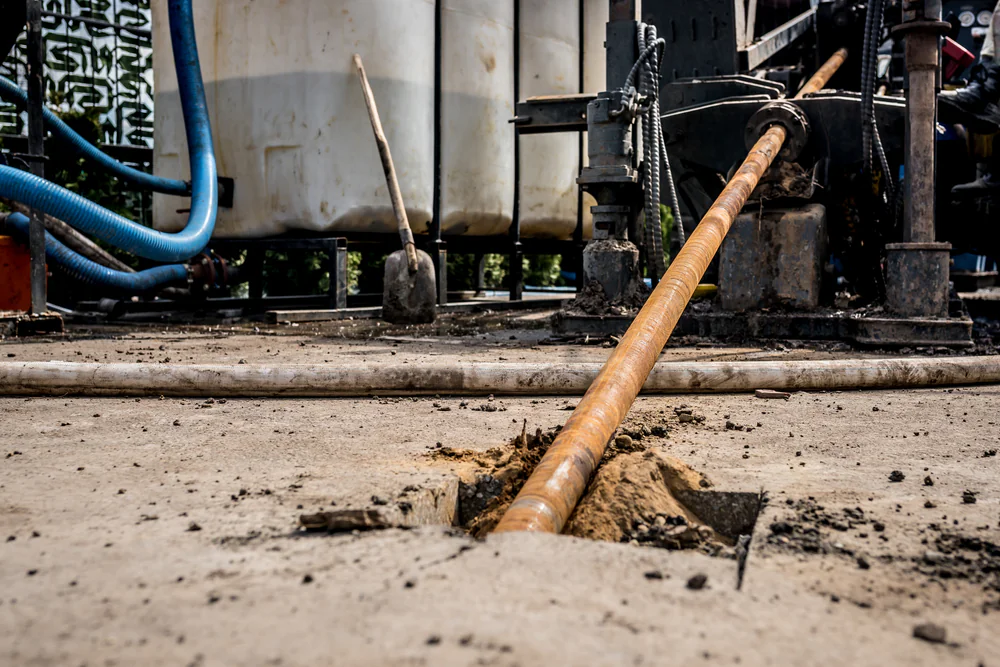
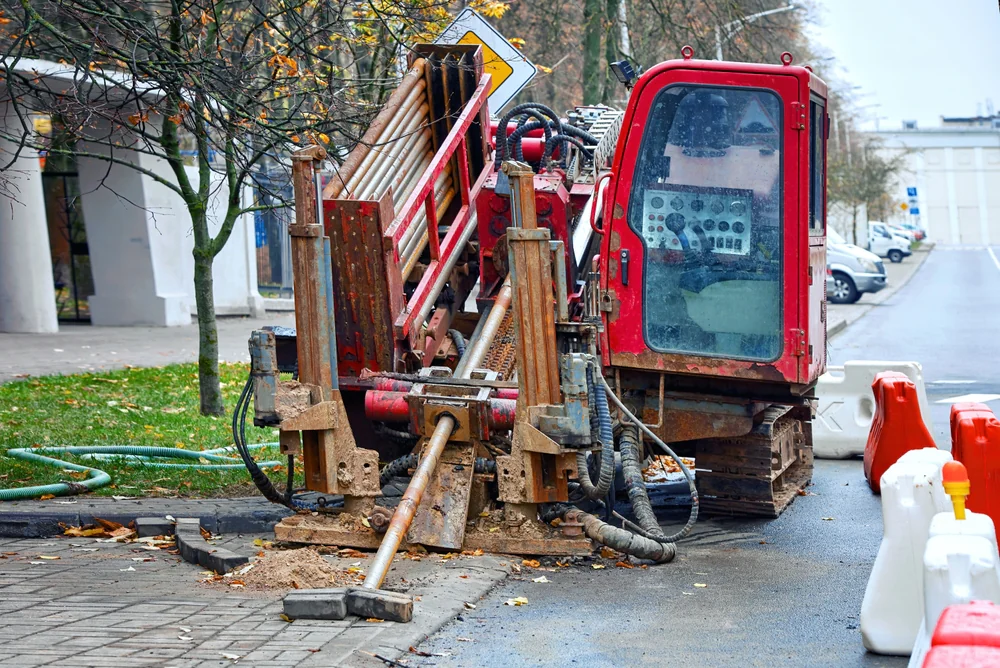
Directional drilling, also called horizontal directional drilling or HDD, is a different animal from pipe lining or bursting. It’s not a repair method. It’s an installation method, used when you need to run a new pipe or utility line underground without disturbing the surface above it.
Think of it this way: if you need a new water main installed under a driveway, a road, or a landscaped area, traditional excavation means digging up everything in the path of that pipe. Directional drilling steers a boring tool along a calculated underground path and pulls the new pipe through the bored channel. The surface stays intact. The pipe goes in.
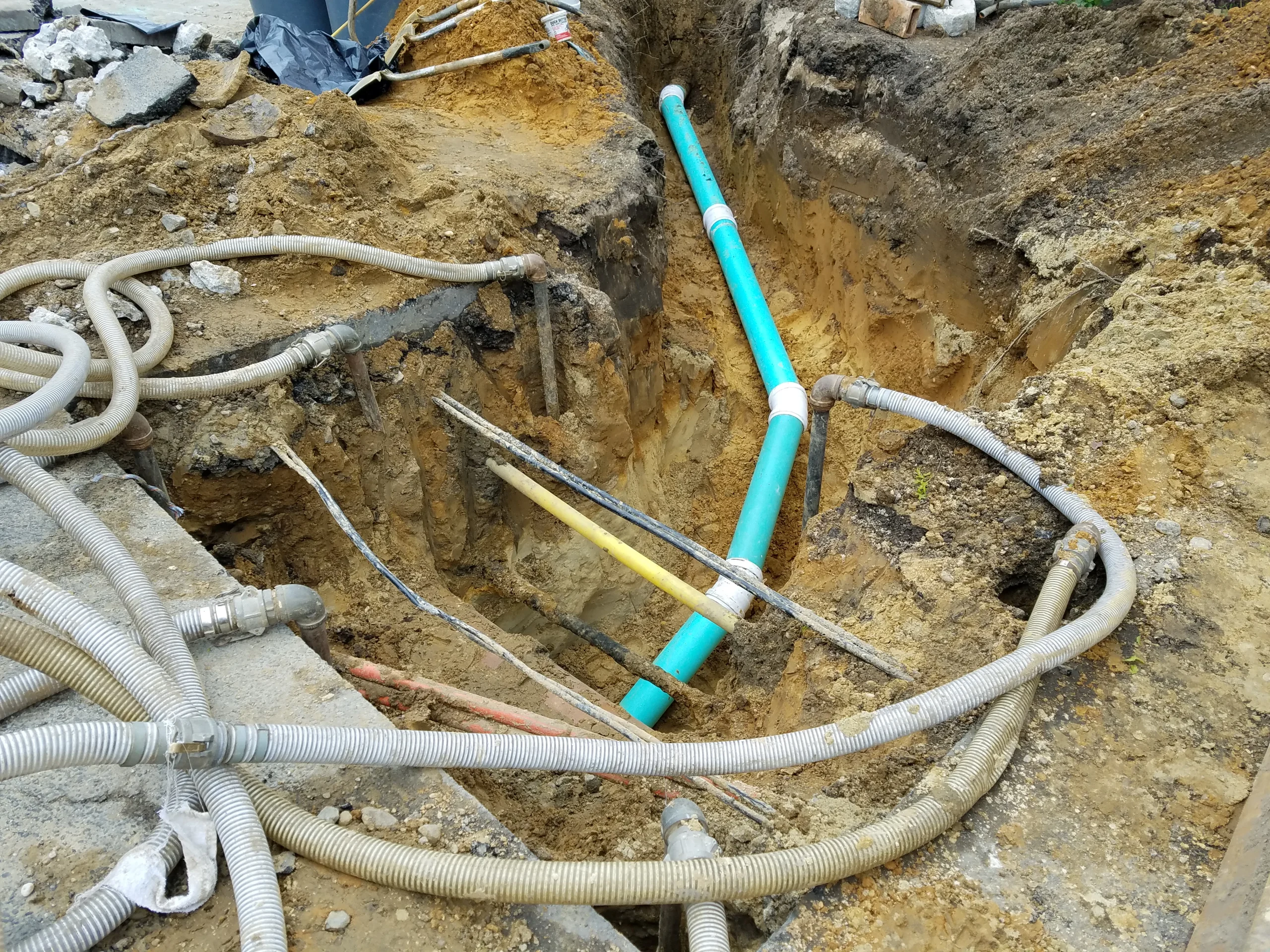
This is particularly valuable on Long Island, where mature landscaping, brick paver driveways, and tight lot spacing make open-cut installation disruptive and expensive. We use directional drilling regularly for water line installation, sewer line installation when a new run is needed, gas lines, and electrical conduit. It’s one of the reasons we describe ourselves as a no-dig contractor rather than just a sewer repair company.
The key distinction worth knowing is that directional drilling creates a new path for a new pipe, whereas pipe lining and pipe bursting rehabilitate or replace an existing pipe along its existing route. Different tools, different applications, different situations. We offer all three because the right answer depends on what your pipe needs, not on what equipment we happen to have on the truck.
Want live answers?
Connect with a Allied All City Inc. expert for fast, friendly support.
This is where most conversations stall, and honestly, it’s because the comparison isn’t always made fairly. A traditional excavation quote can look lower on paper, right up until you factor in everything that quote leaves out.
Traditional open-cut sewer repair runs roughly $150 to $300 per linear foot for the pipe work itself. But that number doesn’t account for breaking up and replacing a concrete or paver driveway, restoring landscaping, reseeding a lawn, or the time and disruption of a job stretching across days or weeks. When you add restoration costs, the same job that looked cheaper can easily exceed $20,000.
For most Long Island homeowners, the honest answer is yes, but the math is what makes it clear, not the marketing.
A residential trenchless sewer line replacement typically runs between $4,000 and $15,000 depending on the pipe length, the method used, and the condition of the pipe. That range covers the repair itself. What it doesn’t add is a $10,000 driveway restoration or a landscaping bill for mature plantings that took decades to grow. When you calculate the total cost of a traditional excavation job, which includes pipe work plus full surface restoration, trenchless typically saves somewhere between 30 and 50 percent.
That calculation lands differently on Long Island than it does in most markets. Nassau County homeowners have some of the highest property values in New York State, and with that comes significant investment in landscaping, hardscaping, and curb appeal. A brick paver driveway in Garden City or a mature specimen tree in Manhasset isn’t just cosmetic, as it carries real dollar value. Traditional excavation puts all of that at risk. Trenchless doesn’t.
There’s also the time factor. Most trenchless repairs we complete finish in a single day. Traditional excavation for the same job can mean days without functioning plumbing, heavy equipment staged in your yard, and a restoration timeline stretching well beyond the pipe work itself. For families with children, anyone working from home, or households with elderly residents, that disruption is far from a minor inconvenience.
One more thing worth saying plainly is that trenchless costs more upfront than a low-ball traditional quote. If a contractor gives you a number that seems surprisingly low, ask what the restoration scope includes. The answer usually explains the gap.
Not every pipe is a candidate for trenchless repair, and any contractor telling you otherwise without first scoping the line isn’t being straight with you.
Pipe lining works best when the existing pipe, while damaged, remains largely intact, meaning it is cracked, root-invaded, corroded, or leaking, but not fully collapsed. If the pipe has caved in completely along a significant section, there’s nothing for the liner to press against. In that case, pipe bursting may still be an option, since it fractures the old pipe outward and pulls a new one through. But if the pipe has shifted severely, if there are major offsets in the alignment, or if access conditions don’t allow for a bursting head to be pulled through, traditional excavation may be the only viable path.
This is why a camera inspection has to come first. It’s not a formality, but rather the diagnostic determining which method is appropriate for your specific pipe in its current condition. We scope the line, show you what the camera found, and then recommend a method based on what we see. If trenchless isn’t the right answer for your situation, we’ll tell you directly rather than force a repair that won’t hold.
On Long Island’s South Shore, in communities like Freeport, Oceanside, Massapequa, and Wantagh, high water tables and proximity to tidal waterways create a specific problem called infiltration, where groundwater seeps into cracked pipes and overloads the system. CIPP lining is particularly effective in these areas because the seamless epoxy interior eliminates the joint gaps and cracks allowing water in. It’s one of those situations where the method isn’t just convenient, but genuinely the right tool for the conditions.
One misconception worth clearing up is that trenchless means zero digging. Small access pits, typically around three feet by three feet, are needed at the entry and exit points of the repair. That’s a fraction of what traditional excavation requires, but it’s worth knowing going in so the scope remains clear from the start.
The method matters, but so does who’s doing the work. Trenchless repairs require specialized equipment, trained technicians, and the judgment to recommend the right approach for your specific pipe, rather than the approach most convenient for the contractor.
We’ve been doing this work on Long Island for more than 50 years. We know the clay laterals in Great Neck, the drainage conditions along the South Shore, and the post-war infrastructure running beneath neighborhoods from Elmont to Babylon. Every technician showing up is a direct Allied All City Inc. employee, meaning no subcontractors and no exceptions.
If you have questions about your sewer line, a camera inspection report you don’t fully understand, or a quote you’re unsure how to evaluate, reach out to Allied All City Inc. We’ll give you a straight answer.
Article details:
Share:
Continue learning: