Slow drains, sewage smells, a yard you'd rather not see torn apart — here's what Long Island homeowners need to know before making a decision on sewer line repair.
Share:
Summary:
Most homeowners don’t think about their sewer line until something goes wrong. Then suddenly you’re dealing with slow drains, a smell you can’t explain, or worse — sewage backing up into the house. And the first contractor you call tells you they’ll need to dig up your yard to fix it.
That’s usually the moment people start searching for a better option. This page is written for exactly that moment. We’ll walk you through how trenchless pipe bursting works, how it compares to traditional excavation, and what homeowners in Copiague, Bellmore, Sayville, and Patchogue specifically need to know before making a decision.
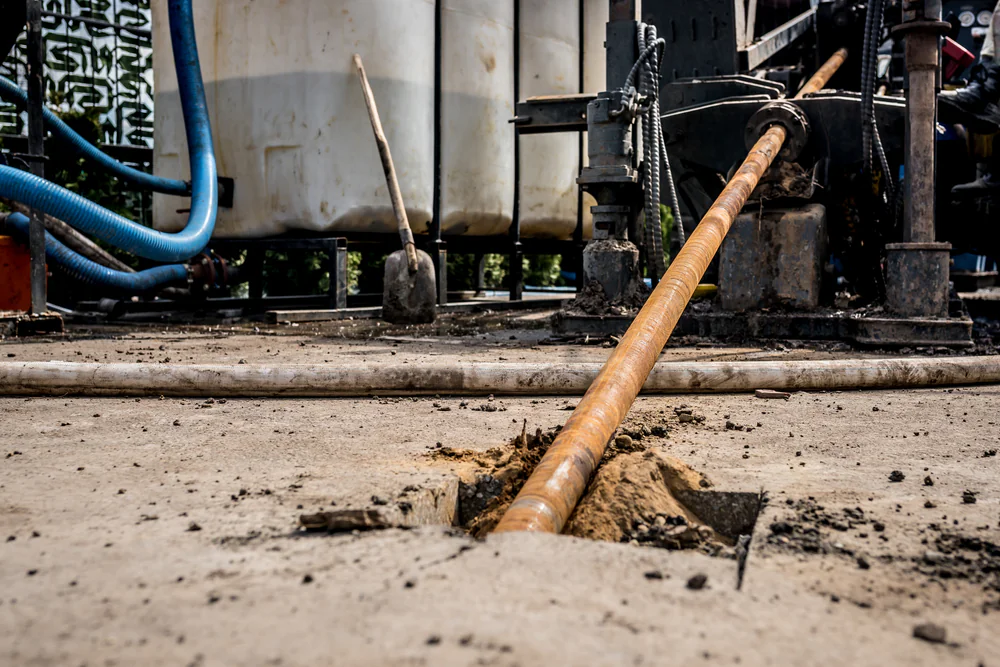
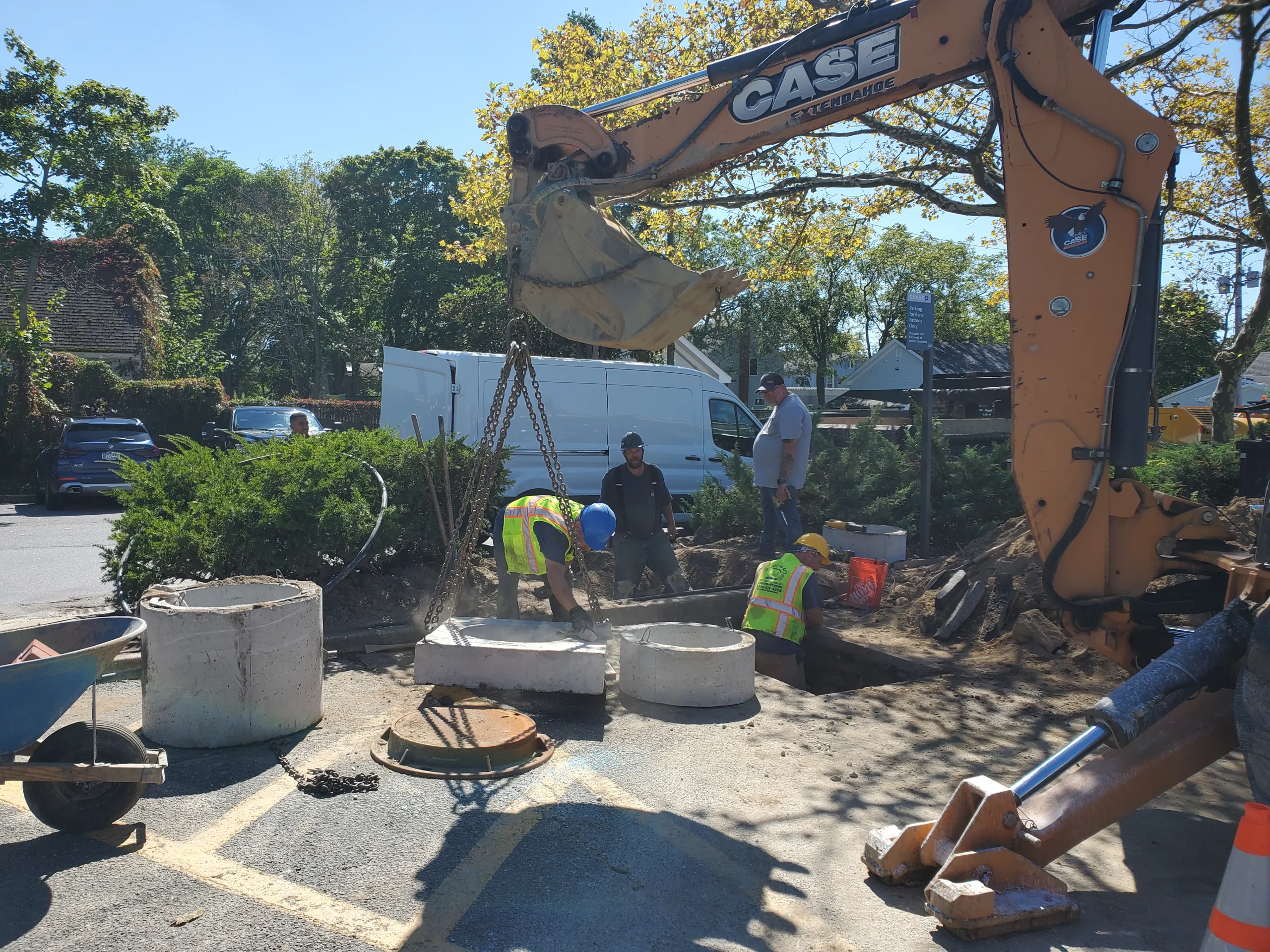
Trenchless pipe bursting replaces a damaged sewer line without digging a trench across your property. Instead of excavating the full length of the pipe, we dig two small access pits — one at each end of the damaged section — and use a hydraulic bursting head to fracture the old pipe outward while simultaneously pulling a new HDPE pipe into place behind it.
The whole process typically completes in a single day. The pipe materials that were causing the problem — clay, cast iron, Orangeburg fiber pipe — are broken apart and displaced into the surrounding soil. What goes in their place is a seamless, jointless pipe rated for 100 years of service life.
If you live in a home built before 1980 in Copiague, Bellmore, Sayville, or Patchogue, there’s a good chance your sewer lateral was installed using materials that were never meant to last this long. Clay pipe cracks under root pressure and ground movement. Cast iron corrodes from the inside over decades. Orangeburg pipe — a fiber-based material used heavily in post-WWII construction across Suffolk County — deforms and collapses under soil pressure. It wasn’t designed for the long haul, and a lot of it is failing right now.
Long Island’s freeze-thaw winters make things worse. When temperatures drop and rise repeatedly through January and February, the ground shifts. Pipes that are already cracked or weakened by root intrusion don’t handle that movement well. By spring, what was a slow drain in October becomes a full backup.
Root intrusion is its own category of problem in established neighborhoods like Bellmore and Sayville. Mature oaks and maples have root systems that extend 40 to 50 feet in every direction. Those roots find the joints in aging clay and cast iron pipes, work their way in, and eventually choke the line entirely. It’s not a fluke — it’s a predictable outcome of older pipe materials meeting decades of tree growth.
Coastal conditions add another layer. Properties in Copiague near the Great South Bay and waterfront neighborhoods in Sayville deal with salt air that accelerates corrosion in metallic pipes. A cast iron sewer lateral that might last 60 years inland can degrade significantly faster when it’s been breathing coastal air for decades.
The timing of all this isn’t coincidental. The post-war housing boom that built much of these four communities happened in a narrow window — mostly the 1940s through the 1960s. That means a large portion of original sewer infrastructure across these towns is reaching end of life at roughly the same time.
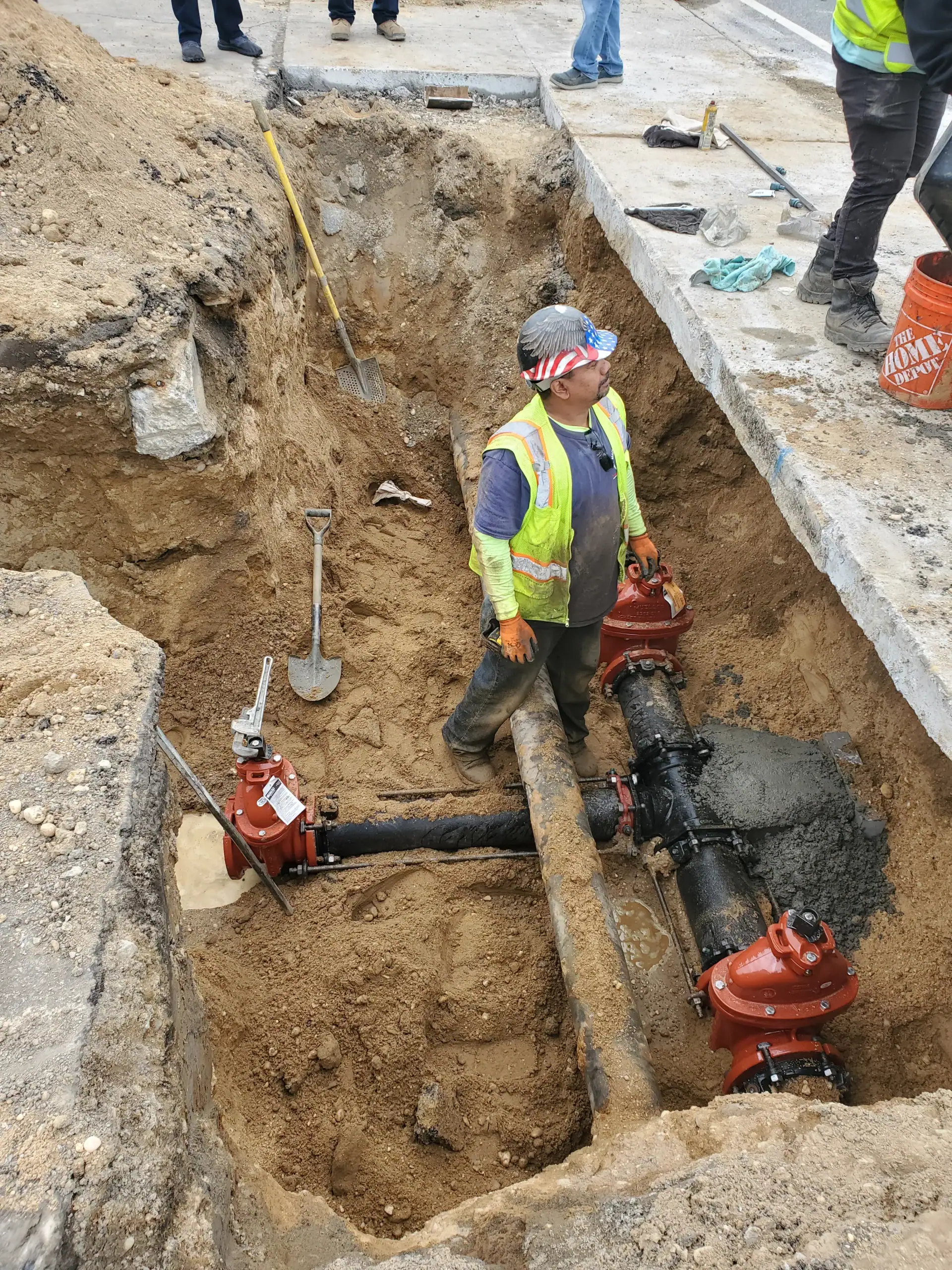
Traditional sewer line replacement means digging a trench four to six feet deep across the full length of the damaged pipe. If that pipe runs under your driveway, through your garden, or beneath a mature tree you’ve had for 30 years, all of that gets disrupted. The plumbing work gets done, and then you’re left figuring out how to restore everything that was torn up — which, on an established Long Island property, can easily add $10,000 to $20,000 on top of the original job.
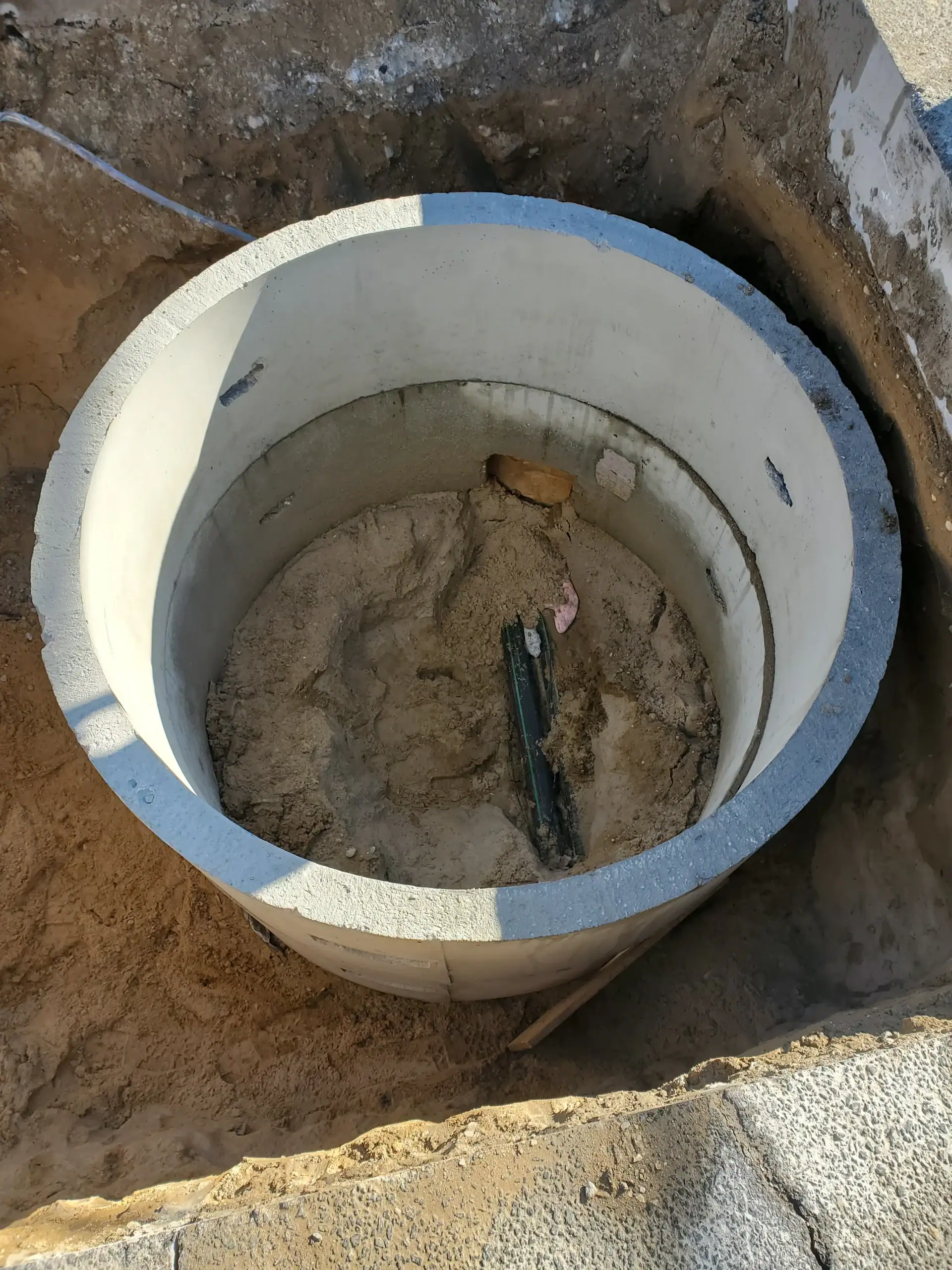
Trenchless pipe bursting requires only two small access pits. Everything between those two points stays untouched. Your driveway stays intact. Your landscaping stays intact. The lawn you spent years getting right stays where it is. That’s not a minor convenience — for homeowners in Bellmore and Sayville who have invested significantly in their properties, it’s a major financial consideration.
The timeline difference is equally significant. Traditional excavation typically takes a week or more, between the digging, the pipe work, the backfill, and waiting for restoration crews to schedule. Pipe bursting usually wraps in a single day. Your household is back to normal the same day we start.
There’s also a quality argument for trenchless that doesn’t get made often enough. The HDPE pipe we install during pipe bursting is actually better than most of what it replaces. It’s seamless — no joints for roots to exploit. It doesn’t corrode. It doesn’t react to the chemicals in soil or groundwater. And because the bursting head is slightly larger than the old pipe, we can actually increase the diameter during installation, which improves flow capacity. You’re not restoring what you had. You’re upgrading it.
One honest caveat: pipe bursting isn’t the right answer in every situation. If a pipe has completely collapsed and the line is fully closed, the bursting head can’t pass through. In those cases, a short section of conventional excavation may be needed to restore access before bursting the remainder. We use camera inspection to identify exactly what we’re dealing with before recommending anything — so you get the right fix, not the most expensive one.
Want live answers?
Connect with a Allied All City Inc. expert for fast, friendly support.
These are the questions we actually hear from homeowners across Long Island before they decide to move forward. Some are practical, some are skeptical, and a few are things people are embarrassed to admit they don’t know. All of them are worth answering honestly.
If your question isn’t here, it probably comes down to the same core concern: is this the right fix for my specific situation? The only real way to answer that is with a camera inspection — which is where every job we do starts.
Yes — and this is one of the details that catches homeowners off guard. Sewer line work in both Nassau County and Suffolk County requires a permit before work begins. If the job involves any portion of a public right-of-way — a sidewalk, a street crossing, a municipal easement — additional encroachment permits from the local village or town are typically required on top of that.
We handle all of it. Every permit, every application, every coordination with the county or municipality is part of what we do before we touch anything on your property. You don’t need to navigate county offices or figure out what forms apply to your situation — that’s our job.
This matters more than it might seem. A contractor who suggests skipping permits isn’t doing you a favor. Unpermitted sewer work creates real liability for the homeowner — it can complicate a future home sale, create issues with your homeowner’s insurance, and leave you responsible if something goes wrong after the fact. In Bellmore, where Nassau County has its own specific permitting requirements, and in Suffolk County towns like Sayville and Patchogue where municipal rules vary by village, getting this right from the start is essential.
We’ve been pulling permits for sewer work on Long Island for more than 50 years. We know what Nassau County requires, we know what the Town of Islip requires for Sayville properties, and we know the Village of Patchogue’s process. That institutional knowledge saves time and keeps your project moving without unexpected stops.
This is a fair question, and one that deserves a direct answer. We use camera inspection twice — once before the job to diagnose the problem and determine the right method, and once after the job is complete to confirm the line is fully restored and flowing correctly. We don’t close up and leave until that post-repair inspection is done.
The pre-job inspection is how we avoid recommending the wrong fix. A camera tells us exactly what we’re dealing with — whether it’s root intrusion, a crack, a full collapse, or a belly in the line — so we’re not guessing. That diagnostic step is also what lets us tell you honestly when pipe bursting is the right call and when it isn’t.
The post-job inspection is how we verify the work. You get confirmation that the new pipe is in place, the line is clear, and everything is flowing the way it should. That’s not something every contractor offers, but it’s standard for us on every job.
We also back our work with a 5-year guarantee on new alteration work and a 2-year guarantee on new plumbing work. Those are specific, written terms — not vague assurances. If something related to the work fails within that window, you call us and we handle it.
One thing worth mentioning: we don’t subcontract. The crew that shows up is our crew — licensed, trained, and directly accountable to us. That matters because it means the people doing the work are the same people whose reputation is on the line. We’ve been based in Copiague and Bellmore for decades. We’re not going anywhere, and we’re not sending someone else to represent us on your property.
If you’ve been told your sewer line needs replacing, the most important thing you can do before agreeing to anything is understand your options. Trenchless pipe bursting isn’t right for every situation — but for the majority of failing sewer laterals in Copiague, Bellmore, Sayville, and Patchogue, it’s a faster, cleaner, and more cost-effective solution than digging up your property.
The pipe materials in Long Island’s older housing stock, the root pressure from decades of mature tree growth, the coastal conditions along the South Shore, the freeze-thaw cycles that stress already-compromised lines — all of it points to a real and growing need for sewer line replacement across these communities. The question is how it gets done.
If you want a straight answer about what’s going on with your line and what it would actually take to fix it, reach out to us. We’ll start with a camera inspection, tell you exactly what we found, and give you an honest recommendation — whether that’s pipe bursting, pipe lining, or something else entirely.
Article details:
Share:
Continue learning: