Three warning signs that Long Island homeowners in Sayville, Patchogue, Bellmore, and Copiague often miss — and what to do before a small problem becomes a serious one.
Share:
Summary:
Most sewer problems don’t start with a dramatic backup. They start with something small — a drain that takes a little longer than it used to, a smell you can’t quite place, a patch of grass in the yard that’s greener than the rest. Easy to ignore. Easy to explain away. But on Long Island’s South Shore, where a huge portion of homes in Sayville, Patchogue, Copiague, and Bellmore were built in the 1950s and ’60s, those small signs often mean the original sewer system is telling you something. Here’s how to read what it’s saying — before it gets expensive.
These three warning signs come up again and again in homes across Long Island’s South Shore — and they’re worth taking seriously, especially if your home was built before 1980.
The first is slow drains in more than one fixture at the same time. A single slow drain is usually just a localized clog. But when your kitchen sink, bathroom tub, and basement floor drain are all sluggish at once, that points to the main sewer line — not a spot fix. The second is gurgling sounds coming from your toilet or drains, especially when you run water somewhere else in the house. That sound is air being pushed back through the system, which means something is blocking flow downstream. The third is a sewage odor inside or outside your home, or a wet, spongy patch of ground in your yard that has no obvious explanation. That last one, in particular, is a sign that sewage may already be leaking into the soil.
The communities along Long Island’s South Shore — Sayville, Patchogue, Copiague, Bellmore — were largely developed during the post-World War II suburban boom. Builders were moving fast, and the sewer pipe materials available at the time were clay tile, cast iron, and a compressed tar-and-paper product called Orangeburg pipe. All three have a typical service life of 50 to 70 years. A home built in 1958 in Patchogue is now nearly 70 years old. Its original sewer system, if it’s never been replaced, is not aging gracefully — it’s failing.
Clay tile pipes crack at the joints as the ground shifts, and those cracks are an open invitation for tree roots. Cast iron corrodes from the inside out, building up scale that eventually chokes flow entirely. Orangeburg pipe — which was never meant to last this long — absorbs moisture, softens, and collapses under the weight of the soil above it. These aren’t hypothetical risks. We find them regularly when we run a camera through sewer lines in these neighborhoods.
The soil conditions on the South Shore make things worse. Sandy, loamy soil near the Great South Bay shifts more than dense inland soil, which causes pipes to settle unevenly and develop what’s called a “belly” — a low spot where waste collects instead of flowing through. Add in the freeze-thaw cycle that Long Island goes through every winter, and you have a recipe for accelerated pipe deterioration. Water gets into micro-cracks, freezes, expands, and widens those cracks year after year. After 60 winters, the cumulative damage is real.
The mature tree canopy in Sayville and Patchogue adds another layer of risk. Old oaks and maples have root systems that extend far beyond the tree itself, and those roots are drawn to moisture — including the moisture leaking from a cracked sewer joint. Once roots get inside a pipe, they don’t stop growing. They fill the pipe, trap debris, and eventually block flow entirely. This is one of the most common causes of recurring sewer backups in established Long Island neighborhoods, and it’s not something a drain snake fixes permanently.
The honest answer is that a problem you could have addressed for a few thousand dollars becomes one that costs significantly more — and causes significantly more disruption — if you let it run its course. A slow drain caused by partial root intrusion is a manageable repair. A fully collapsed pipe that backs raw sewage into your basement is an emergency, and it typically requires more extensive work to resolve.
There’s also the property angle. Homes in Patchogue have a median value approaching $485,000. In Sayville and Bellmore, values are comparable or higher. A sewer failure that causes sewage to saturate a basement — damaging flooring, walls, insulation, and anything stored down there — can easily run into tens of thousands of dollars in remediation costs on top of the plumbing repair itself. That doesn’t include the disruption to your household while the work gets done.
What most homeowners don’t realize is that the warning signs — slow drains, gurgling, odors, soggy ground — are actually the best-case scenario. They mean the system is still functioning, just struggling. That’s the window where your options are widest and your costs are lowest. A video camera inspection at this stage can tell you exactly what’s happening inside the pipe, whether it’s root intrusion, corrosion, a belly, or a crack, and give you a clear picture of what the repair actually involves. No guessing, no worst-case-scenario quotes based on nothing.
Ignoring the signs doesn’t make the problem go away. It just narrows your options and raises your costs. And in communities like Sayville, Patchogue, Copiague, and Bellmore, where a significant portion of homes are sitting on sewer systems that are well past their designed lifespan, the question usually isn’t whether the pipe will need attention — it’s when.
Want live answers?
Connect with a Allied All City Inc. expert for fast, friendly support.
If you’ve heard the phrase “trenchless sewer repair” and wondered what it actually means for your yard, your driveway, and your daily life — it’s worth understanding how the process works before you assume the worst.
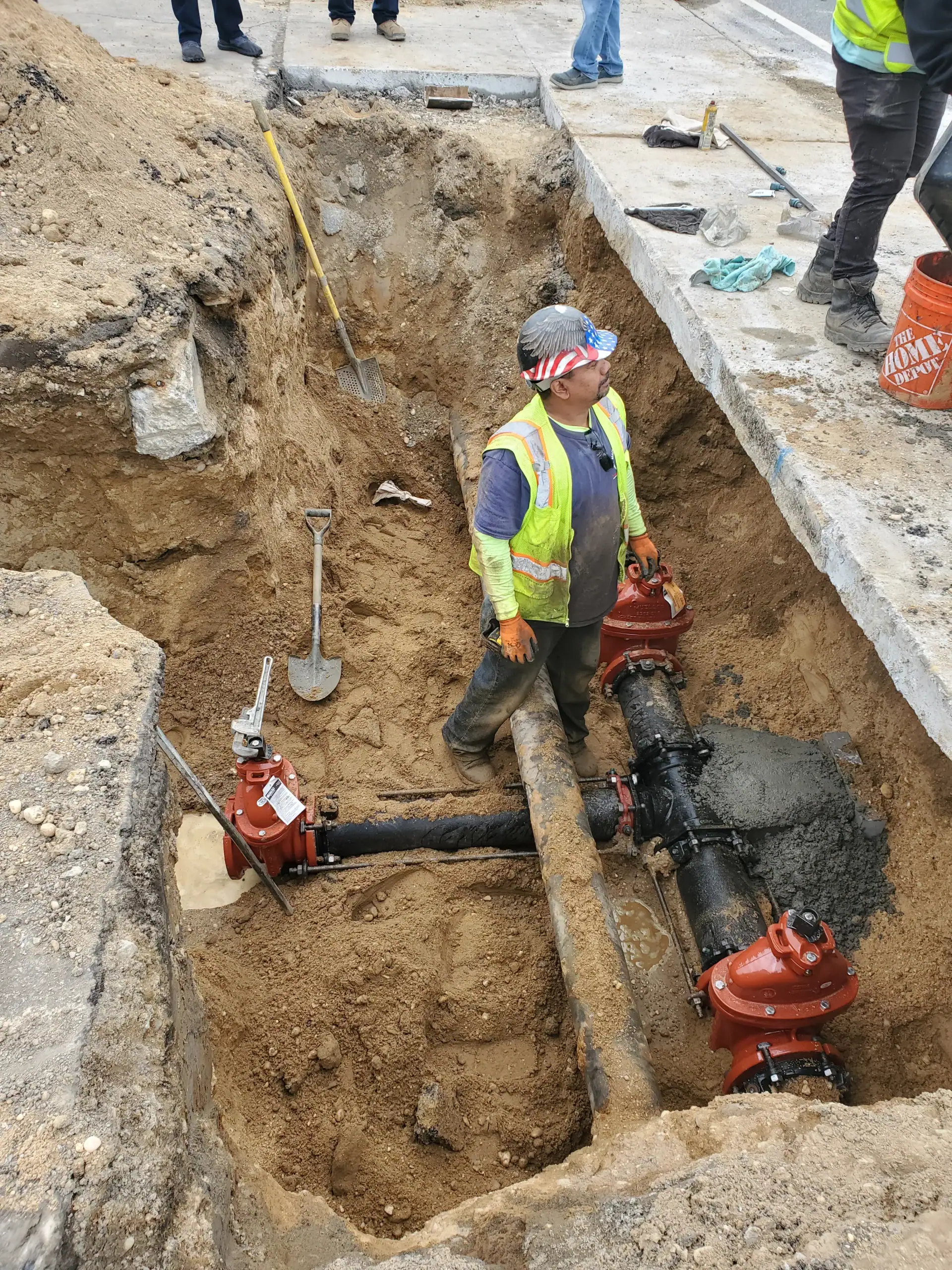
Trenchless methods are exactly what they sound like: ways to repair or replace underground pipes without digging up the ground above them. No backhoe in your front yard. No driveway torn apart. No landscaping destroyed and rebuilt. The work happens underground, and in most cases, the only excavation involved is one small access point — sometimes near the sidewalk, sometimes at the cleanout — rather than a trench running the full length of the pipe.
There are two primary trenchless methods we use for sewer line repair and replacement, and they serve different purposes depending on what’s actually wrong with the pipe.
Trenchless pipe lining — sometimes called CIPP, or cured-in-place pipe lining — is used when the existing pipe is structurally compromised but still largely intact. A flexible liner coated in epoxy resin is inserted into the old pipe and inflated against the pipe walls, where it cures and hardens into a smooth, seamless new surface inside the old one. The result is essentially a new pipe inside the old pipe, with no joints for roots to infiltrate and no corrosion to worry about. This method works well for cracked or leaking pipes that haven’t fully collapsed.
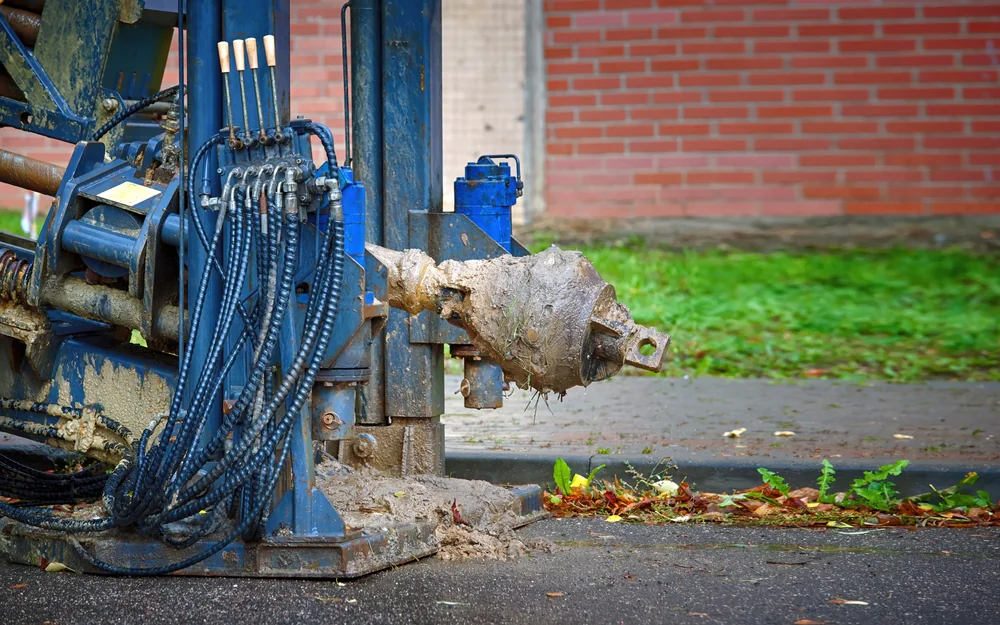
Trenchless pipe bursting is used when the pipe is too far gone to be relined — when it’s collapsed, severely deteriorated, or made of a material like Orangeburg that can’t support a liner. In this process, a hydraulic head is pulled through the old pipe, fracturing it outward into the surrounding soil, while simultaneously pulling a new HDPE pipe into place behind it. The old pipe is destroyed and replaced in a single pass. The new pipe — High-Density Polyethylene — is seamless, impervious to corrosion, and has a projected service life of over 100 years. For a homeowner replacing a 65-year-old clay tile or Orangeburg system, this is genuinely a once-in-a-lifetime repair.
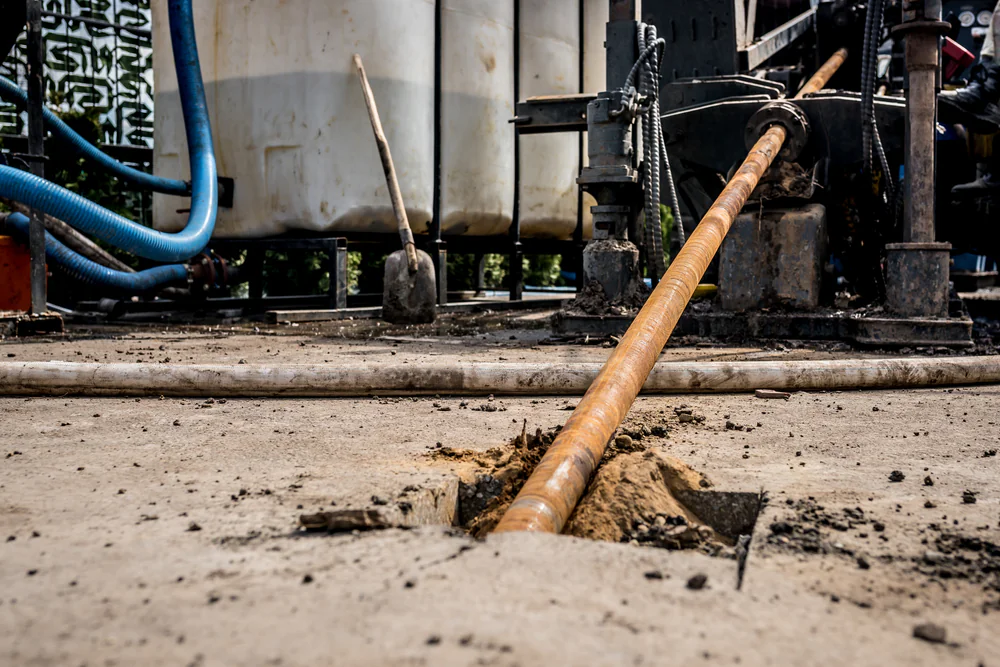
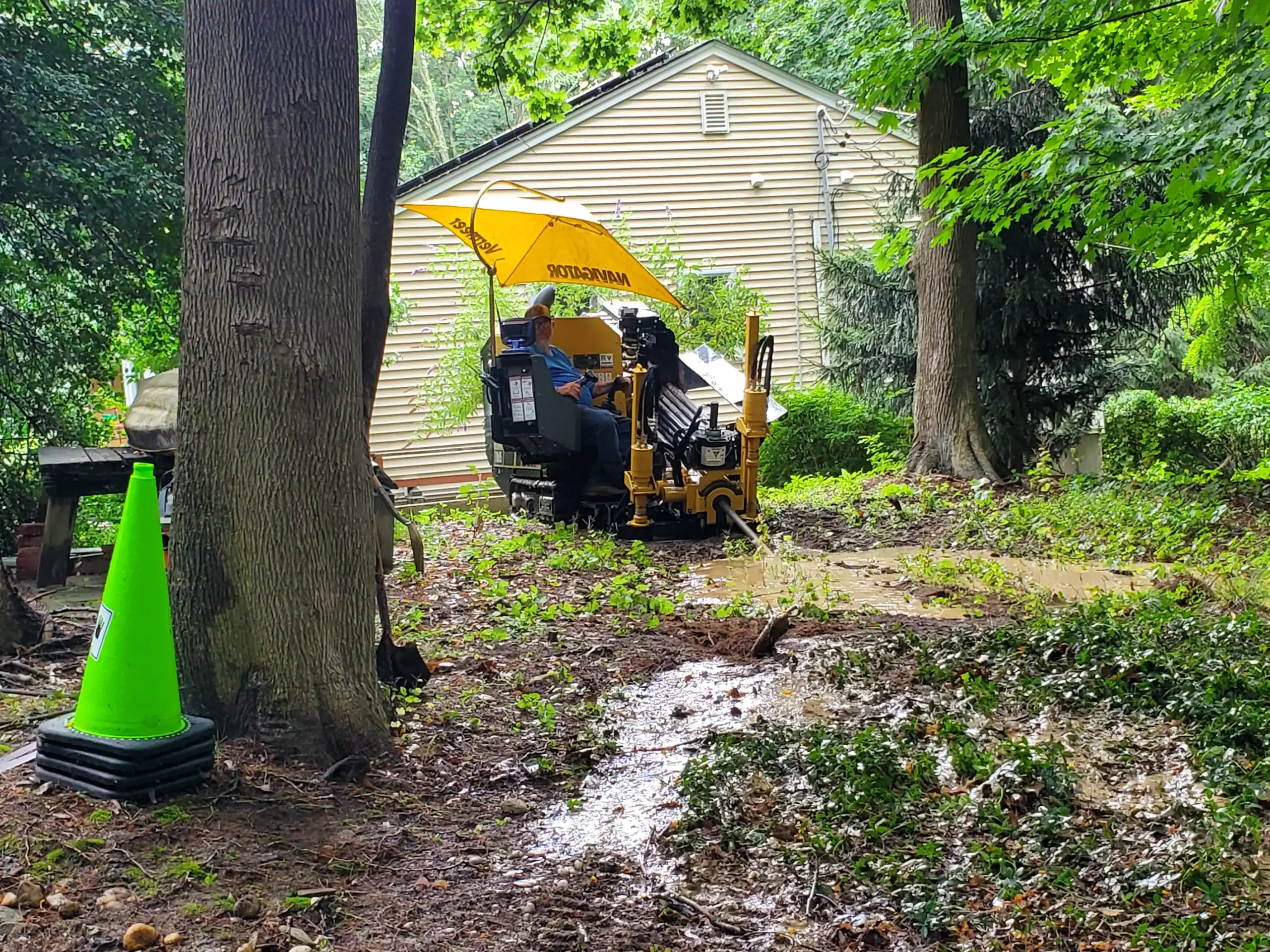
We also use horizontal directional drilling when a new pipe path needs to be created entirely — for example, when running a new sewer connection under a road, a driveway, or a structure where no existing pipe is present. A steerable drill navigates underground without disturbing the surface above. This is particularly useful in South Shore communities where connecting to a municipal sewer system may require crossing under a paved road or other obstacle.
The right method depends on what the camera inspection finds. That’s always our first step — see exactly what’s happening before recommending anything.
**How much does sewer line repair cost on Long Island?** It varies depending on the method and the scope of the problem, but trenchless repairs typically run between $3,000 and $12,000. Traditional excavation — where the ground is dug up, the pipe replaced, and the surface restored — can exceed $20,000 once you factor in driveway repair, landscaping, and the longer project timeline. Trenchless methods generally cost 30 to 40 percent less than traditional digging when total costs are compared honestly. Given that Long Island property taxes average over $10,000 a year in communities like Patchogue and Sayville, most homeowners appreciate solutions that don’t add unnecessary expense.
**Do I need a permit for sewer line work in Nassau or Suffolk County?** Yes, in most cases. Sewer line work in Nassau and Suffolk Counties requires permits from the local town plumbing department, and only a licensed master plumber can pull those permits. We handle the entire permit process as part of the job — application, coordination with the town, and scheduling inspections. This is something homeowners in Bellmore, Copiague, and across Long Island frequently tell us they were relieved not to deal with on their own, particularly in towns where the permitting process involves multiple steps and follow-up.
**How long does trenchless sewer repair take?** Most trenchless repairs are completed in one to two days. Traditional excavation projects can take considerably longer, especially when surface restoration is factored in. For homeowners in Sayville or Patchogue who commute into the city and need their household functioning normally, the timeline difference is significant.
**What if I’m not sure whether I actually have a sewer problem?** That’s exactly what a video camera inspection is for. We run a camera through the line, you see what we see, and we tell you honestly what it means. If the pipe is fine, we’ll tell you that. If there’s root intrusion, a belly, or a crack developing, you’ll see it on screen. There’s no reason to guess, and no reason to commit to a repair before you know what you’re actually dealing with.
**Does trenchless repair work on older Long Island homes with Orangeburg or clay tile pipes?** Yes — and honestly, these are the homes that need it most. Pipe bursting is specifically designed for pipes that are too deteriorated to reline, including Orangeburg and severely cracked clay tile. We work in older South Shore homes in Sayville, Patchogue, Bellmore, and Copiague regularly, and trenchless methods are often the most practical solution precisely because the homes are established — the landscaping is mature, the driveways are finished, and nobody wants to tear everything up to replace a sewer line.
If something has felt off with your drains, your toilets, or your yard, you’re not overreacting. The warning signs described on this page are real, they’re common in South Shore Long Island homes, and they’re worth a conversation before they turn into something bigger.
We’ve been doing this work on Long Island since 1983. We have offices in Sayville, Patchogue, Copiague, and Bellmore — not a regional call center, actual locations in the communities we serve. Every technician who comes to your home works directly for us. We pull the permits, handle the town coordination, and see the job through from camera inspection to final cleanup.
If you’re in Sayville, Patchogue, Bellmore, Copiague, or anywhere across Long Island and you want a straight answer about what’s going on with your sewer system, reach out to us. We’re available around the clock, including weekends — because sewer problems don’t wait for Monday morning, and neither do we.
Article details:
Share:
Continue learning: