Trenchless pipe lining is transforming sewer repairs for Long Island homeowners—preserving landscaping, completing in days not weeks, and delivering decades of reliability without excavation's mess and expense.
Share:
Summary:
Your sewer line is failing, and you’re facing a choice that feels like choosing between bad and worse. Traditional excavation means weeks of construction chaos, a torn-up yard, and thousands more in restoration costs you didn’t budget for. But there’s a reason your Long Island neighbors are skipping the backhoes entirely in 2026.
Trenchless pipe lining and related no-dig methods are changing how Nassau and Suffolk County homeowners handle pipe problems. You get a permanent fix without sacrificing your landscaping, your driveway stays intact, and you’re back to normal in days instead of weeks. The technology isn’t new, but the shift in how homeowners approach sewer repairs definitely is.
Let’s walk through what’s actually driving this change and whether trenchless solutions make sense for your Long Island property.
Trenchless pipe lining is a repair method that fixes damaged sewer and water lines from the inside, without digging a trench across your property. Instead of excavating the entire length of pipe, we access your system through existing cleanouts or small access points and insert new pipe material directly into the old, failing line.
The most common approach is CIPP lining—cured-in-place pipe. A flexible liner saturated with epoxy resin gets pulled or inverted into your damaged pipe, then inflated to press against the interior walls. Heat, steam, or UV light cures the resin, creating a seamless new pipe inside the old one. The result is a smooth, jointless pipe that can last 50+ years.
Pipe bursting takes a different approach when your existing pipe is too far gone for lining. A hydraulic bursting head fractures the old pipe outward while simultaneously pulling a new high-density polyethylene pipe through the same path. You get a brand-new pipe with a 100-year lifespan, and your yard stays untouched except for two small access pits.
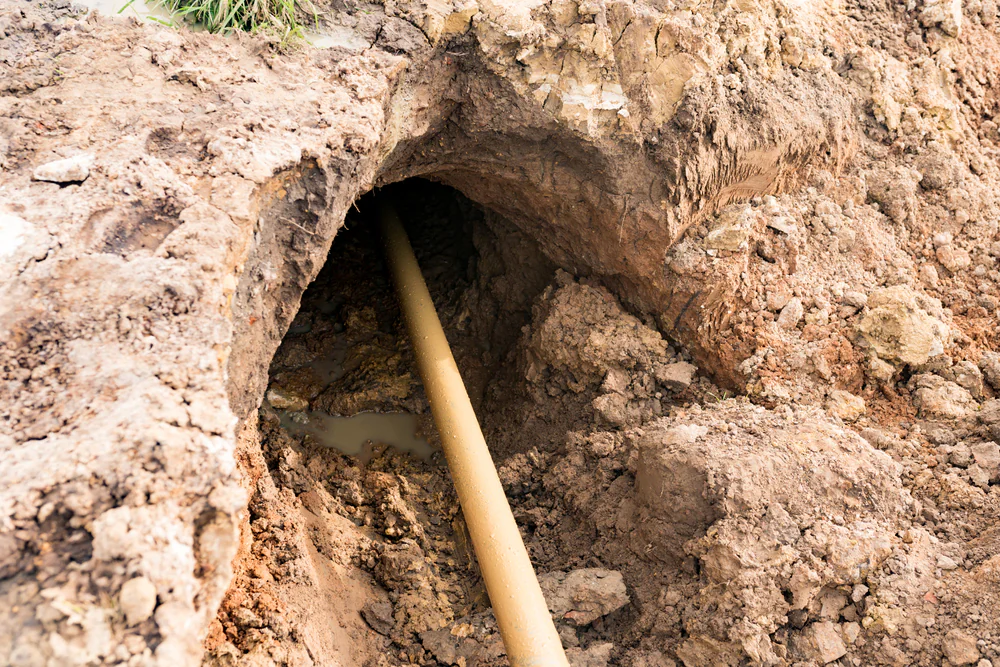
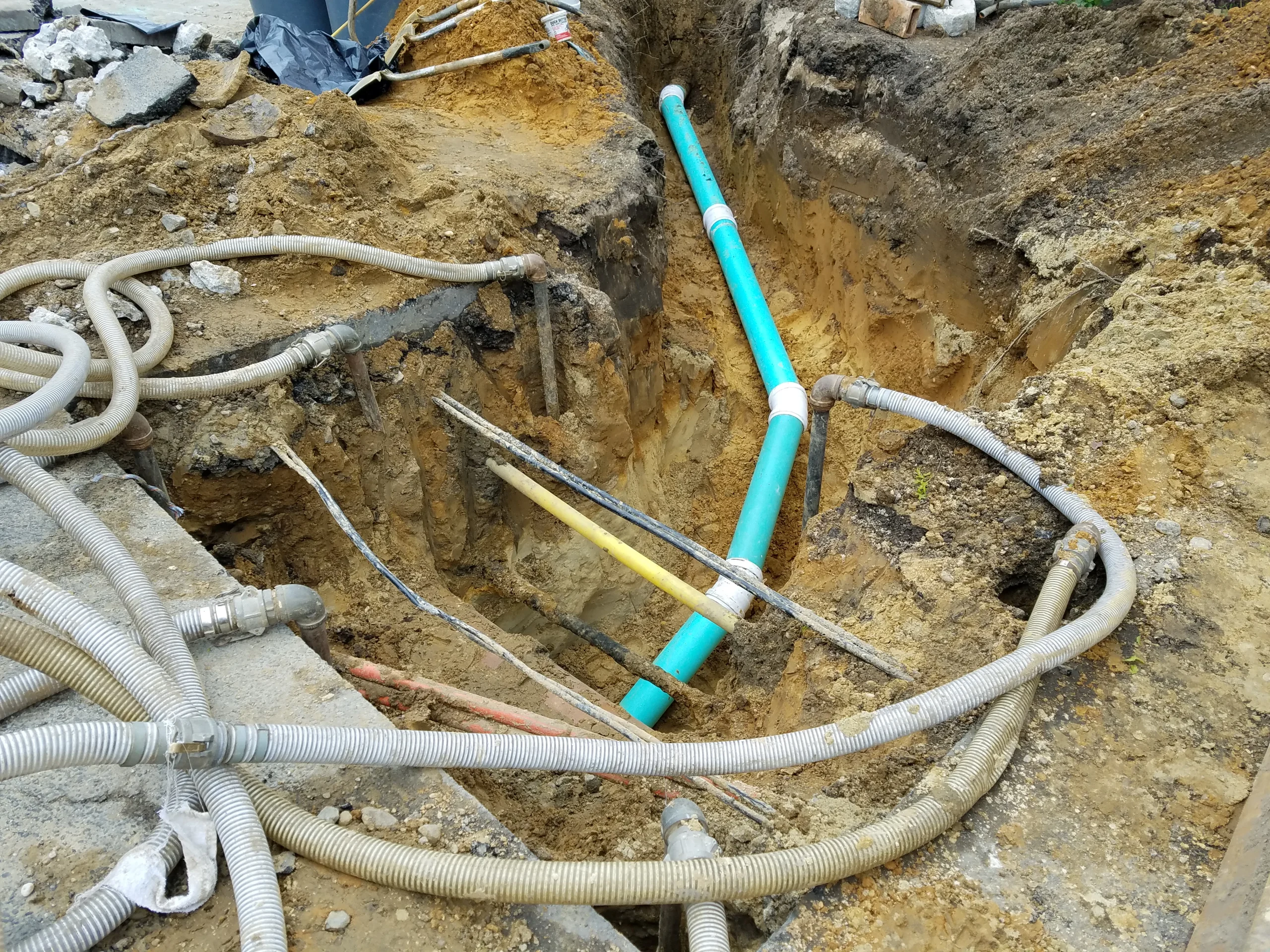
Traditional excavation used to be the only option. A crew shows up with a backhoe, digs a trench four to six feet deep along your entire sewer line, removes the damaged pipe, installs new sections, backfills the trench, and leaves. The actual plumbing work might be straightforward, but everything around it becomes expensive fast.
Your landscaping gets destroyed. Mature trees you’ve nurtured for decades might need removal. That driveway you just repaved gets torn up. Sidewalks, patios, garden beds—all casualties of accessing underground pipes the old way. Then comes the restoration bill that wasn’t in the original quote. Regrading and re-sodding your lawn adds $500 to $1,500. Replacing a concrete driveway can tack on another $2,000 to $5,000. If your sewer line runs under multiple obstacles, those costs multiply.
The timeline creates just as many problems. Traditional excavation typically takes two to five days for the actual pipe work, but that doesn’t include restoration time. You’re looking at weeks before your property returns to normal, and during that time, you’re dealing with construction equipment, displaced soil, noise, and limited access to your own driveway.
For Long Island homeowners in densely populated Nassau and Suffolk County neighborhoods, there’s another issue: space. Many properties don’t have room for heavy equipment to maneuver. Crews might need to dig up your neighbor’s yard to access your sewer line, creating tension and additional permissions you didn’t anticipate.
The environmental impact matters too. Traditional excavation displaces massive amounts of soil, creates significant waste, and requires multiple truckloads of material in and out. In 2026, homeowners are more aware of these factors and looking for methods that align better with sustainability goals.
Cost is the final issue. While excavation might seem cheaper on the initial estimate, the total project cost including restoration often exceeds trenchless pipe repair methods by 30-50%. You’re paying for the digging, the pipe replacement, the backfilling, and then everything needed to make your property look like construction never happened. That’s where trenchless technology changes the equation entirely.
When we talk about trenchless sewer repair, we’re usually referring to three main techniques. Each solves different problems, and understanding which one fits your situation helps you make better decisions.
CIPP lining works best when your existing pipes still have decent structural integrity but suffer from leaks, cracks, or root intrusion. The process starts with a thorough cleaning using high-pressure water jetting to remove debris, scale, and minor root intrusions. A camera inspection confirms the pipe is ready. Then a resin-coated liner gets inserted through an access point, positioned using air pressure or water inversion, and cured in place. The curing process takes several hours depending on the method used—hot water, steam, or UV light. What you end up with is a smooth, seamless interior surface that restores flow capacity and seals existing problems. The trade-off is a slight reduction in internal diameter, typically a quarter to half inch, which rarely affects residential flow rates.
Trenchless pipe bursting is the heavy-duty option for pipes that are structurally compromised beyond what lining can fix. If you’re dealing with collapsed sections, severe root intrusion, or pipes with multiple breaks, this method gives you a complete fresh start. A bursting head gets threaded into your existing pipe and pulled through, fracturing the old pipe outward while simultaneously pulling a new seamless HDPE pipe into place. The new pipe maintains or even increases the original diameter, which matters for properties with longer sewer runs or recurring backup issues. HDPE pipes resist root intrusion, chemical damage, and ground movement, with a service life of 75 to 100 years.
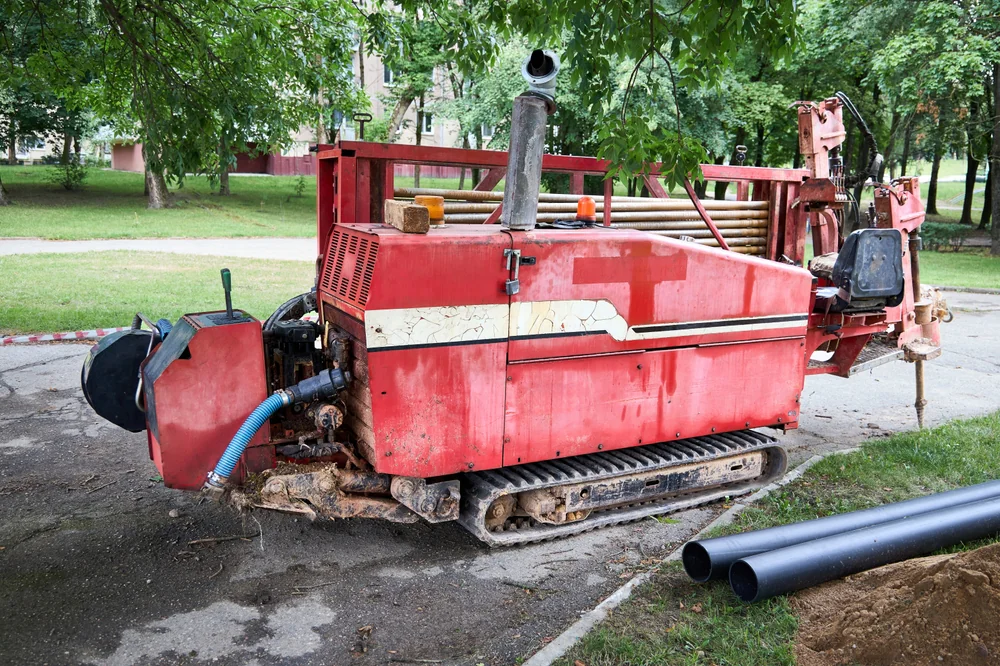
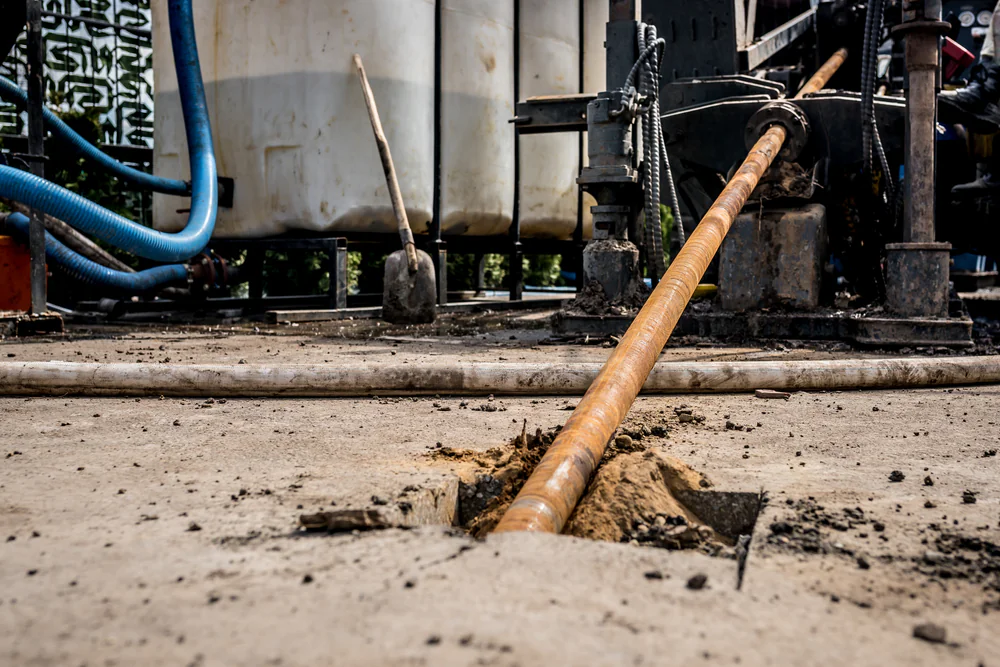
Horizontal directional drilling comes into play when you’re installing new lines or when the existing pipe is too damaged for either lining or bursting. A drilling rig creates a shallow arc along a prescribed path, and new pipe gets pulled through without surface disruption. This method excels when your sewer line runs under obstacles like pools, mature trees, or buildings where even the small access pits required for other trenchless methods aren’t feasible. It’s particularly useful in Long Island’s established neighborhoods where properties have limited access or sensitive landscaping.
All three methods share common advantages over excavation. They require minimal surface disruption—usually just one or two small access points instead of a continuous trench. They’re faster, with most residential projects completing in one to two days. They preserve your property’s aesthetics and value. And they eliminate the restoration costs that make traditional excavation so expensive when you factor in the full project scope.
The key is matching the method to your specific pipe condition and property layout. A camera inspection reveals what you’re actually dealing with, and we can recommend the approach that makes the most sense for your situation and budget.
Want live answers?
Connect with a Allied All City Inc. expert for fast, friendly support.
Cost conversations around trenchless pipe repair often focus on the wrong numbers. Yes, the per-foot rate for trenchless methods can seem higher than traditional excavation at first glance. But that comparison misses the bigger picture that Long Island homeowners are figuring out in 2026.
Trenchless CIPP lining typically runs $120 to $200 per linear foot for residential sewer lines in Nassau and Suffolk County. Pipe bursting costs $150 to $250 per foot. Those rates include the specialized equipment, materials like epoxy resins or HDPE piping, and skilled technicians trained in trenchless technology. For a typical residential sewer line replacement of 50 to 100 feet, you’re looking at $6,500 to $15,000 depending on the method and specific conditions.
Traditional excavation might quote $50 to $250 per linear foot for the plumbing work itself, with total initial costs between $4,000 and $13,000. But that figure stops before restoration begins. Add another $4 to $12 per linear foot for trenching-related repairs, plus $30 to $70 per cubic foot for raw excavation. If your sewer line runs under a driveway, add $2,000 to $5,000 for concrete demolition and re-pouring. Landscaping restoration adds another $500 to $1,500 minimum.
When you factor in those avoided restoration costs, trenchless methods often deliver 30-50% savings on the total project. You’re not just paying for pipe repair—you’re preserving everything above that pipe that would otherwise need rebuilding.
The upfront cost is only part of the value equation. Trenchless repairs deliver durability that traditional methods struggle to match, and that longevity changes how you should think about the investment.
CIPP-lined pipes carry a lifespan of 50 years or more when properly installed. The cured epoxy resin resists corrosion, root intrusion, and cracking—putting it on par with new PVC pipe in terms of durability. Pipe bursting installations using HDPE pipe have an expected underground lifespan of approximately 100 years. Both methods deliver long-term performance that rivals or exceeds a full traditional sewer line replacement.
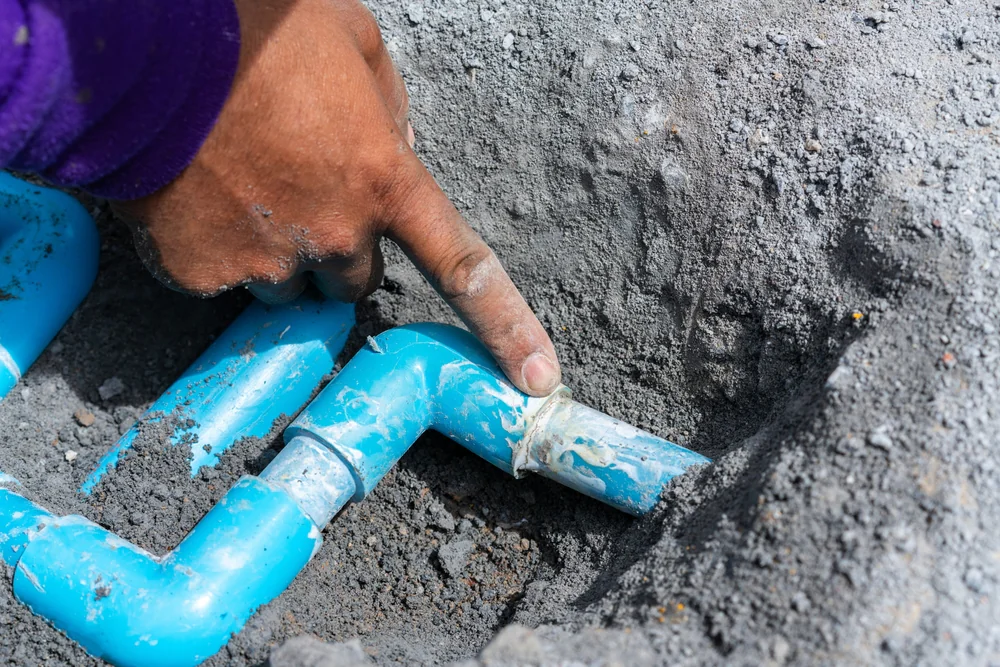
The seamless, jointless nature of trenchless installations matters more than most homeowners realize. Traditional pipe replacement uses 20-foot segments connected with gasketed joints. Those joints are weak points where leaks develop over time, where roots find entry points, and where future failures originate. Trenchless methods eliminate those vulnerabilities entirely. A 50-foot CIPP liner or pipe bursting installation is one continuous piece with no joints to fail.
Warranties reflect that confidence. Quality trenchless installations often come with 25 to 50-year warranties covering both materials and workmanship. Pipe bursting warranties are typically comparable to those for entirely new pipe installations. CIPP lining benefits from extended material warranties issued by liner manufacturers, covering deficiencies in curing and installation.
There’s also the property value consideration that doesn’t show up on any invoice. A home with a documented trenchless sewer line replacement is more attractive to buyers than one with a traditional excavation repair. The newer technology, longer lifespan, and lack of property disruption all signal a well-maintained home. Plus, your landscaping, driveway, and hardscaping remain intact, preserving the curb appeal that influences property values in Long Island’s competitive real estate market.
Maintenance costs drop too. The smooth interior surface of CIPP liners and new HDPE pipes improves flow and reduces the buildup of debris that causes recurring clogs. Root-resistant materials mean you’re not calling for emergency root removal every few years. The reduction in ongoing maintenance adds up to significant savings over the decades your trenchless repair will be in service.
For Long Island homeowners dealing with aging infrastructure—especially properties built before 1980 with galvanized steel or cast iron pipes—trenchless methods offer a permanent solution rather than a temporary patch. You’re not just fixing today’s problem; you’re eliminating the underlying issues that caused it and preventing the same failures from recurring down the road.
Trenchless pipe repair solves most sewer line problems, but it’s not a universal solution. Understanding the limitations helps you set realistic expectations and avoid contractors who oversell methods that won’t work for your specific situation.
Completely collapsed pipes can’t be lined. If your sewer line has pancaked or collapsed to the point where a camera can’t pass through, CIPP lining isn’t an option. The existing pipe needs enough structural integrity to support the lining process and provide a stable foundation for the new liner. In these cases, pipe bursting might still work if the collapse isn’t too severe, but traditional excavation becomes necessary when the pipe has shifted or collapsed so badly that trenchless equipment can’t navigate through.
Severe misalignment poses similar challenges. If your pipe has significant bellies—sections that sag and pool water—or if joints have separated and shifted, trenchless methods may not restore proper grade. Sewer lines need to maintain a consistent slope for gravity to move waste effectively. When that slope is compromised by ground settling or poor original installation, point repairs or excavation might be necessary to physically reposition the pipe.
Orangeburg pipes, made from wood pulp and tar and installed in many homes between 1946 and 1972, are generally too fragile for trenchless repair. These pipes often collapse during the cleaning process required before lining, and their deteriorated condition makes them poor candidates for any trenchless method. They typically need full replacement via excavation.
Proximity to other utility lines can also favor excavation over pipe bursting. The bursting process pushes old pipe fragments outward into the surrounding soil, which can damage or cut adjacent gas, water, or electrical lines. In situations where multiple utilities run close together, an open trench lets us visually locate and protect other lines during the work.
Cost becomes a factor for very short runs. If you only need to repair a 10-foot section of pipe, the mobilization costs for specialized trenchless equipment might not make economic sense compared to a targeted excavation. The break-even point varies, but generally, trenchless methods become more cost-effective for runs of 20 feet or more.
The condition of your existing pipe matters enormously for CIPP lining. If more than 20% of the pipe is severely damaged or missing, lining won’t provide adequate structural support. Camera inspection reveals the true condition, and we’ll tell you when excavation or pipe bursting is the better path forward.
Access limitations can also complicate trenchless repairs. While these methods need far less access than excavation, they still require entry points. If your cleanouts are inaccessible or your property layout makes it impossible to position equipment, even trenchless methods face challenges. Directional drilling can sometimes work around these issues, but every property is different.
The key is getting a thorough camera inspection before we recommend a solution. That inspection should reveal the extent of damage, the pipe material, the presence of any collapses or severe misalignments, and whether trenchless methods are actually viable. Contractors who recommend trenchless repair without first inspecting your pipes with a camera are guessing, and that’s not how you want to spend thousands of dollars.
The shift toward trenchless pipe lining on Long Island isn’t about following trends—it’s about homeowners recognizing that better technology exists and traditional excavation no longer makes sense for most situations. When you can get a 50-100 year solution that preserves your property, costs less overall, and completes in a fraction of the time, the choice becomes straightforward.
What matters most is matching the right method to your specific pipe condition and property layout. CIPP lining excels for pipes with good structure but localized problems. Pipe bursting handles severe damage that needs complete replacement. Directional drilling solves access challenges that would make other methods difficult.
Start with a camera inspection to see what you’re actually dealing with. Work with contractors who can explain why they’re recommending a specific approach for your situation, not just the method they happen to specialize in. And factor in the total project cost including restoration, not just the initial repair estimate.
If your Long Island property is dealing with aging sewer lines, recurring backups, or pipe problems that keep coming back, trenchless technology offers solutions that weren’t available when your home was built. We’ve been serving Nassau and Suffolk County properties since 1980 with the full range of trenchless options—pipe bursting, CIPP lining, and directional drilling—backed by the local knowledge that comes from four decades working with Long Island’s unique infrastructure challenges.
Article details:
Share:
Continue learning: