
Hear from Our Customers
You’ve probably seen it before: a neighbor’s front yard torn apart for weeks, piles of dirt everywhere, destroyed landscaping, a ripped-up driveway. Then the utility company finishes the job and leaves them with a patch job that never quite matches. That’s traditional excavation.
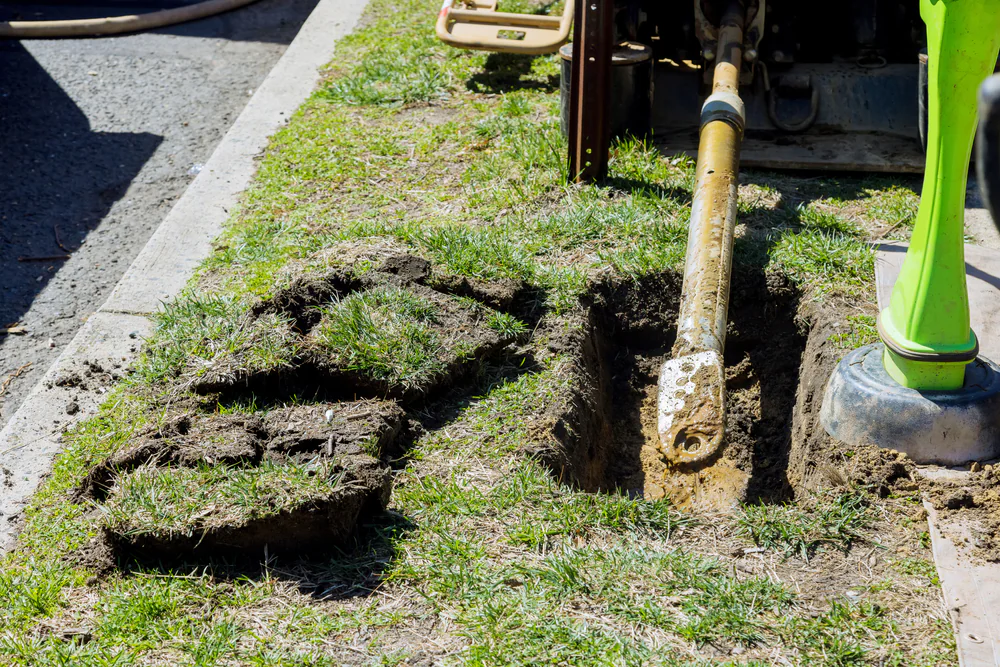
Trenchless directional drilling services in Shirley, NY work differently. We drill horizontally underground to install your water line, sewer line, or gas line without digging trenches across your property. Your lawn stays green. Your driveway stays intact. Your landscaping investment stays protected.
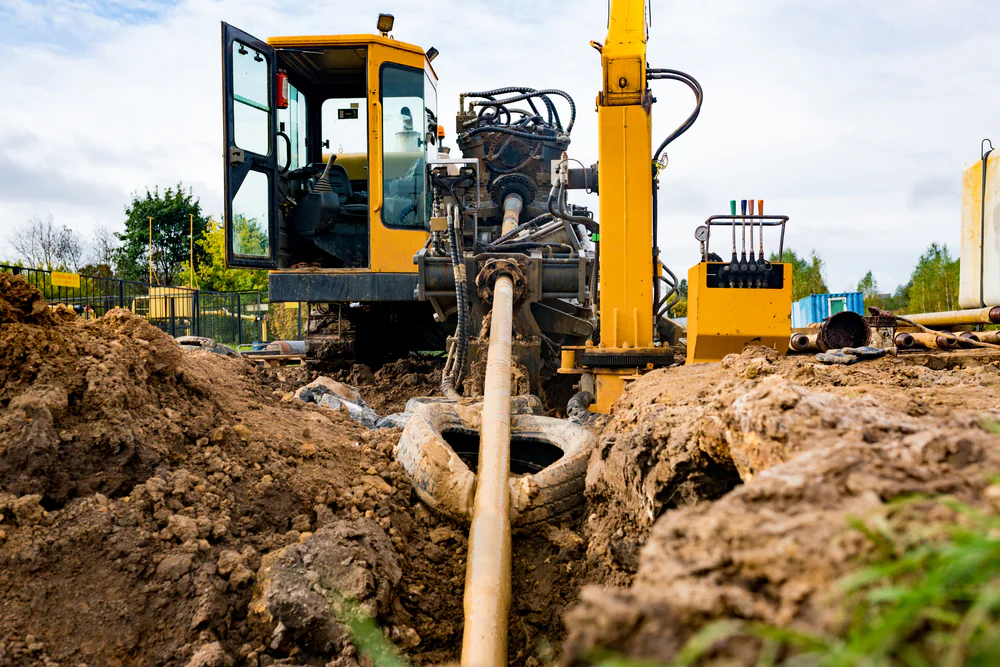
The technology uses a guided boring system that creates a small entry and exit point, then pulls new pipe through the ground beneath the surface. We can navigate under driveways, sidewalks, landscaping, even existing utilities. When we’re done, you’d barely know we were there.
Most projects finish in days, not weeks. You’re not paying to restore what was destroyed because nothing gets destroyed in the first place. And the new pipe we install—heavy-duty polyethylene—lasts up to 100 years with zero risk of root intrusion or leaks.
We’ve operated on Long Island since 1983. Allied All City is a family-owned directional drilling company serving Shirley, NY and the surrounding Suffolk County communities with trenchless technology that most contractors still don’t offer.
Shirley properties—especially older homes built in the 1960s and 70s—often need water line replacements as original infrastructure reaches the end of its lifespan. Traditional excavation here means tearing through established landscaping and mature trees that took decades to grow. We saw that problem and invested in horizontal directional drilling equipment that solves it.
Our crews have completed hundreds of trenchless installations across Nassau and Suffolk Counties. We handle residential properties, commercial sites, and municipal projects. We’re not a general contractor trying to do everything—we specialize in trenchless work because that’s what Long Island properties need.
First, we locate all existing utilities on your property using advanced detection equipment. This step prevents any accidental damage to gas lines, electrical, or fiber optic cables already underground. We mark everything clearly before any drilling starts.
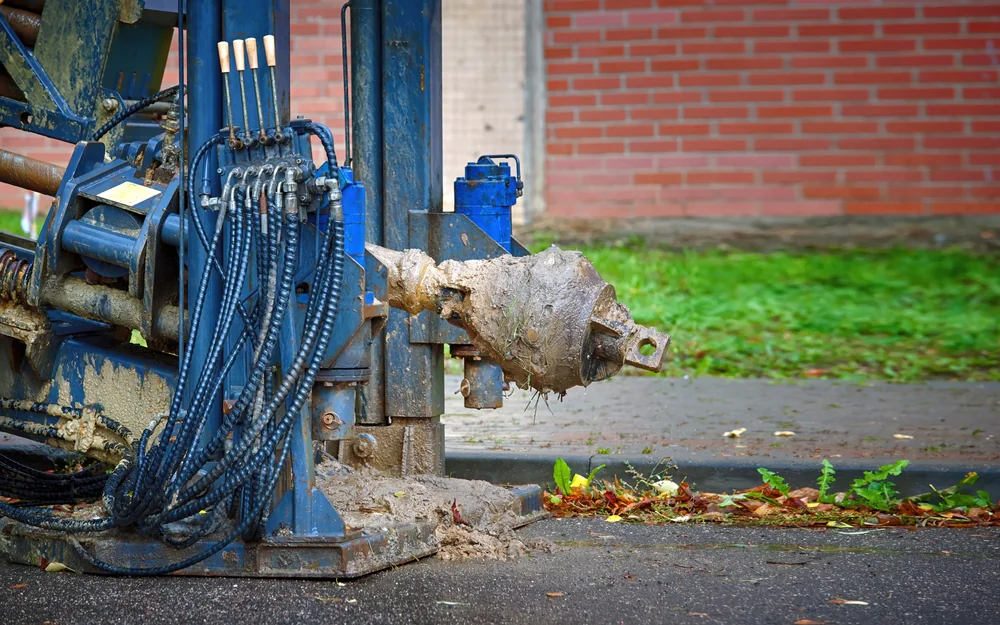
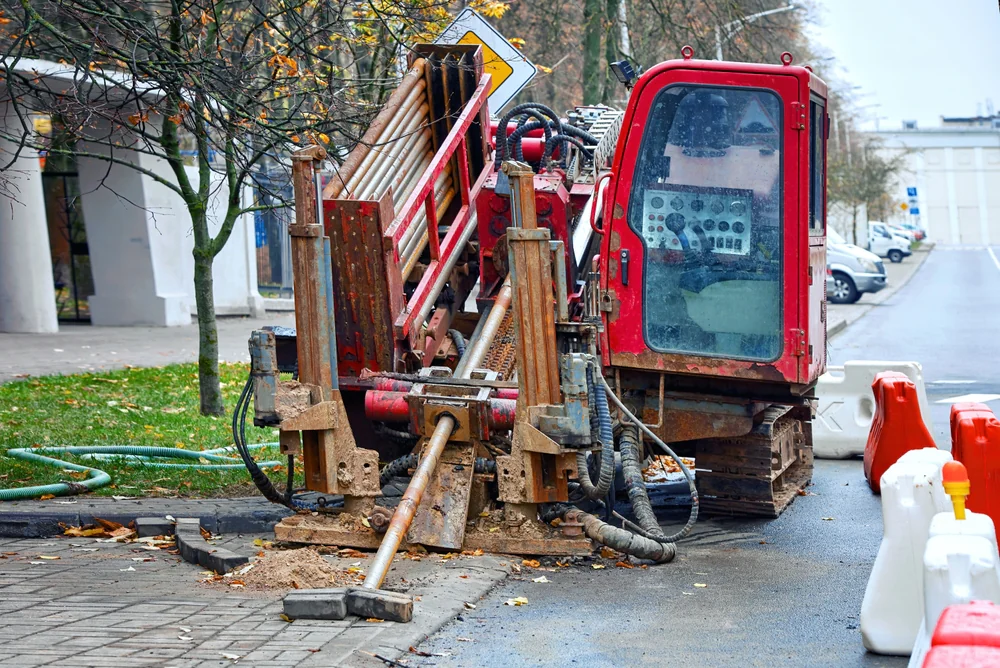
Next, we set up the directional drilling rig at the entry point—usually near your property line or wherever the new utility connection needs to begin. The drill head uses a combination of rotation and hydraulic pressure to bore horizontally through the soil. We guide it electronically to follow the exact path needed, even if that means curves or angles to avoid obstacles.
As the drill head reaches the exit point, we attach your new water line or sewer line to the back of it. Then we pull the entire pipe through the drilled path in one continuous piece. No seams, no joints, no weak points.
The whole process creates two small access points—entry and exit—that we restore with minimal surface work. Your driveway never gets touched. Your landscaping stays rooted. Most residential water line installations in Shirley, NY take one to three days depending on distance, and you can use your property normally the entire time.
Ready to get started?
Suffolk County properties face unique challenges. Many Shirley homes sit on lots with mature landscaping, established trees, and custom hardscaping that took years and significant investment to create. Ripping that up for a water line replacement doesn’t make sense when trenchless technology exists.
The cost comparison surprises most people. Yes, directional drilling has a higher upfront equipment cost than a backhoe and shovel. But you’re not paying for landscape restoration, driveway replacement, or the weeks of labor that traditional excavation requires. Total project cost often runs 30-50% less than conventional methods once you factor in restoration.
Winter installations become possible too. Frozen ground stops traditional excavation cold—literally. Directional drilling works below the frost line where soil conditions stay stable year-round. If your water line fails in January, you’re not waiting until spring for a fix.
The environmental impact matters for properties near protected areas or wetlands common in Suffolk County. Trenchless methods minimize soil disruption, prevent erosion, and protect existing vegetation and wildlife habitats. Permits often process faster because the work doesn’t trigger the same environmental review requirements as open trenching.
And the pipe itself outperforms old copper or galvanized steel. Modern polyethylene pipe resists corrosion, handles ground movement without cracking, and carries a 100-year life expectancy. You’re installing infrastructure that outlasts the building.
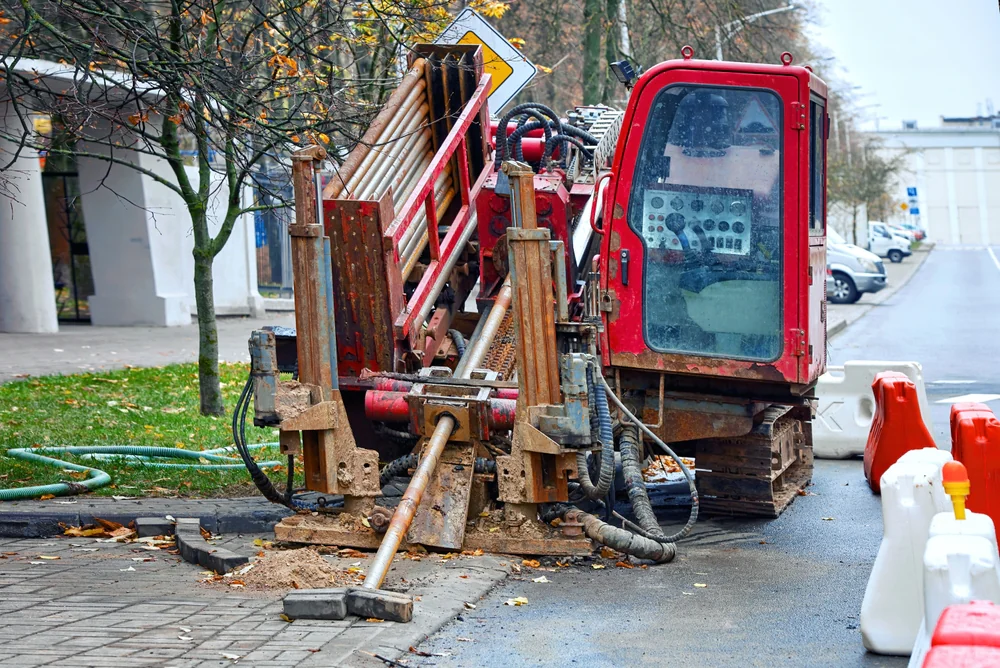
Yes. That’s exactly what horizontal directional drilling does.
We drill horizontally underneath your driveway, creating a path for the new water line without touching the surface. The drill enters from one side—usually your front yard near the street—and exits on the other side near your house. The new pipe gets pulled through that drilled path underground.
Your driveway never gets cut, cracked, or disturbed. You can park on it and drive on it during the entire installation. When we finish, there’s no patching, no mismatched asphalt or concrete, and no settling issues that show up six months later. The driveway looks exactly like it did before we arrived, because we never touched it.
Most residential water line installations in Shirley, NY take one to three days from start to finish.
Day one usually involves utility locating, site setup, and beginning the drilling process. Day two completes the drilling and pulls the new pipe through. Day three handles connections, testing, and site cleanup. Shorter runs under 100 feet might finish in a single day. Longer installations over 300 feet might stretch to four days.
Compare that to traditional excavation, which can take two to three weeks once you factor in digging, pipe installation, backfilling, compaction waiting periods, and landscape restoration. You’re looking at 80-90% faster completion with trenchless methods. Less time means lower labor costs, less disruption to your daily routine, and faster return to normal property use.
Directional drilling typically costs $10 to $30 per linear foot depending on soil conditions, depth requirements, and site access. A 150-foot residential water line runs $1,500 to $4,500 for the drilling and pipe installation.
Traditional excavation might quote lower for the actual digging and pipe work—maybe $8 to $20 per foot. But then you’re paying separately for driveway removal and replacement ($2,000-$5,000), landscape restoration ($1,000-$3,000), and the extra labor time for a two-week project instead of a two-day project. Total cost often exceeds $8,000 to $12,000 for the same 150-foot run.
The real savings show up in what you don’t have to fix afterward. No destroyed landscaping to replant. No driveway patch that cracks and settles. No erosion problems from disturbed soil. You’re paying once for a complete solution instead of paying twice—once for installation and again for restoration.
Yes. Shirley’s soil composition—mostly sandy loam with some clay deposits—handles directional drilling very well.
The drill head adjusts for different soil densities. Sandy soil requires different pressure and rotation speeds than clay. Our equipment monitors soil resistance in real-time and adjusts automatically to maintain the drilling path. We’ve completed installations through everything from loose sand near the coast to dense clay deposits further inland.
Rocky soil or areas with large boulders can slow progress, but modern drilling equipment handles most rock formations without issue. The drill bit can cut through or navigate around obstacles that would stop traditional excavation completely. The only conditions that truly prevent directional drilling are solid bedrock layers, which are rare in residential areas of Suffolk County. Even then, we can usually adjust the drilling depth to go under or around the obstruction.
No, when done correctly with proper utility locating beforehand.
We start every project with comprehensive utility locating using electronic detection equipment and ground-penetrating radar. This identifies existing gas lines, electrical conduit, water mains, sewer lines, and communication cables. We mark everything on the surface and map the underground layout before the drill ever starts.
The drilling path gets planned to avoid all existing utilities with adequate clearance—usually 24 inches minimum separation. The drill head includes a tracking beacon that tells us its exact position underground in real-time. We’re not guessing where it is; we’re watching it on a screen as it moves through the soil.
Landscaping stays intact because we’re working 3 to 6 feet underground, well below root zones for most plants and grass. Trees, shrubs, flower beds, and lawn areas don’t get disturbed. The only surface access points are the small entry and exit holes—typically 12 inches in diameter—which we restore with topsoil and seed or sod matching your existing lawn.
Yes. Trenchless gas line installation follows the same directional drilling process as water and sewer lines.
Gas line installations require additional safety protocols and specific pipe materials rated for natural gas service. We use high-density polyethylene (HDPE) pipe that meets all local and national gas code requirements. The pipe gets fusion-welded at connection points to create leak-proof joints stronger than the pipe itself.
Suffolk County gas line projects require permits and inspections from the local building department and often the utility company. We handle all permitting and coordinate required inspections as part of the installation. The trenchless method actually simplifies the approval process because there’s minimal surface disruption and lower risk of damaging existing utilities during installation.
Installation timeline runs similar to water lines—typically two to four days for residential properties. The main difference is the testing phase, which involves pressure testing the entire line and electronic leak detection before the gas company makes the final connection. You’re not using the new gas line until it passes every safety check and receives final approval from all inspecting authorities.
Other Services we provide in Shirley