
Hear from Our Customers
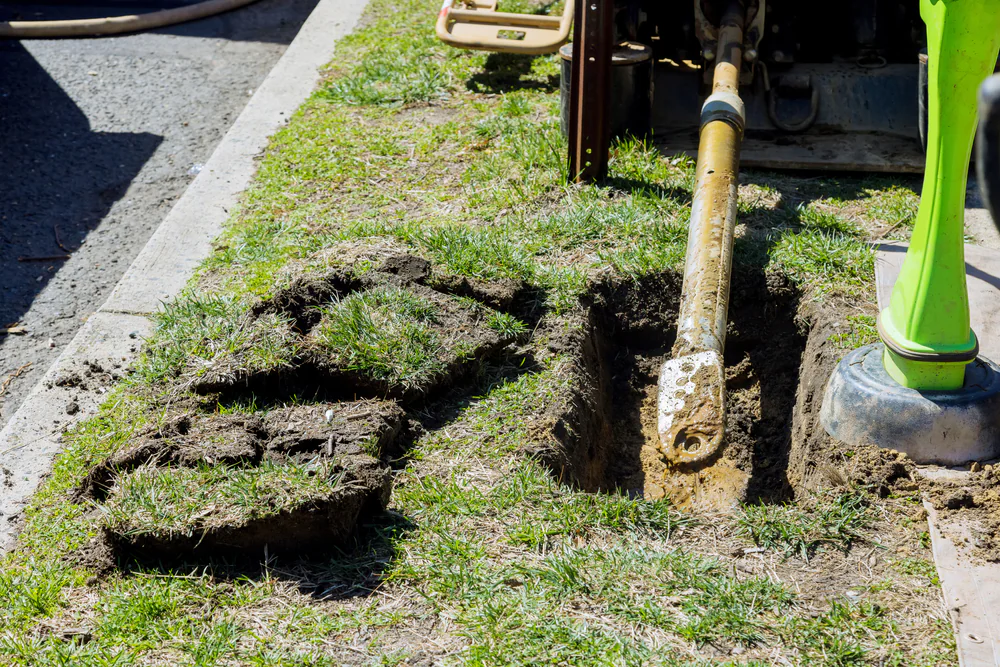
Your property stays intact. No backhoe tearing through the lawn you spent years perfecting. No driveway repair bills after the utility work is done.
Trenchless directional drilling in Oceanside, NY pulls new pipe underground without surface excavation. That means your landscaping, pavers, concrete, and asphalt remain untouched. The drilling equipment creates a small entry and exit point, then pulls the new line through the ground between them.
You avoid the restoration costs that come with traditional trenching. No need to re-sod, re-pave, or rebuild what was already there. The job gets done faster because there’s no excavation and backfill process eating up days of your time.
This matters in Oceanside, NY, where properties sit close together and every square foot of your yard has value. You’re not sacrificing your curb appeal to get the utility work you need. The new line goes in, the equipment leaves, and your property looks the same as it did before we arrived.
We’ve been handling underground utility work in Nassau and Suffolk Counties since 1983. Allied All City is a family-owned operation that brought trenchless directional drilling technology to Long Island when most contractors were still defaulting to excavation for every job.
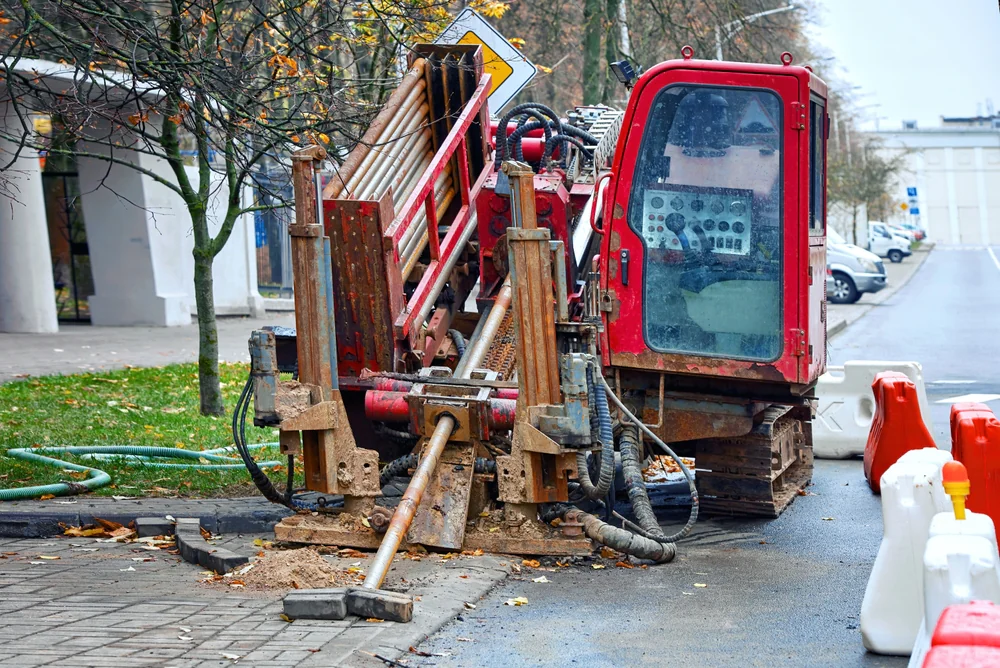
Our crews work throughout Oceanside, NY and surrounding areas with the equipment needed to install water lines, sewer lines, gas lines, and electrical conduit without digging up your property. We’ve seen what happens when directional drilling gets done wrong—lines installed at incorrect depths, poor compaction causing settling, utility strikes from inadequate locating. That’s why we use real-time tracking systems and follow proper boring procedures on every installation.
You’re dealing with a company that’s been doing this work locally for over 40 years. We know Oceanside’s soil conditions, the permit requirements, and how to navigate the utility congestion that comes with densely developed Long Island neighborhoods.
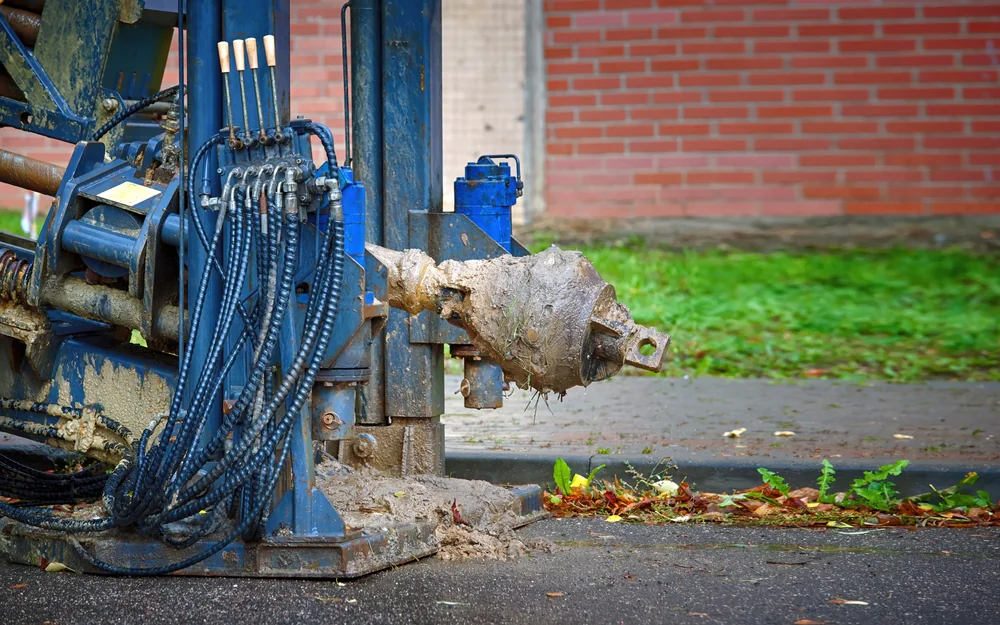
First, we locate existing utilities on your property. This step prevents strikes and determines the drilling path for your new line. We’re identifying where water, sewer, gas, electric, and cable currently run so the new installation doesn’t interfere.
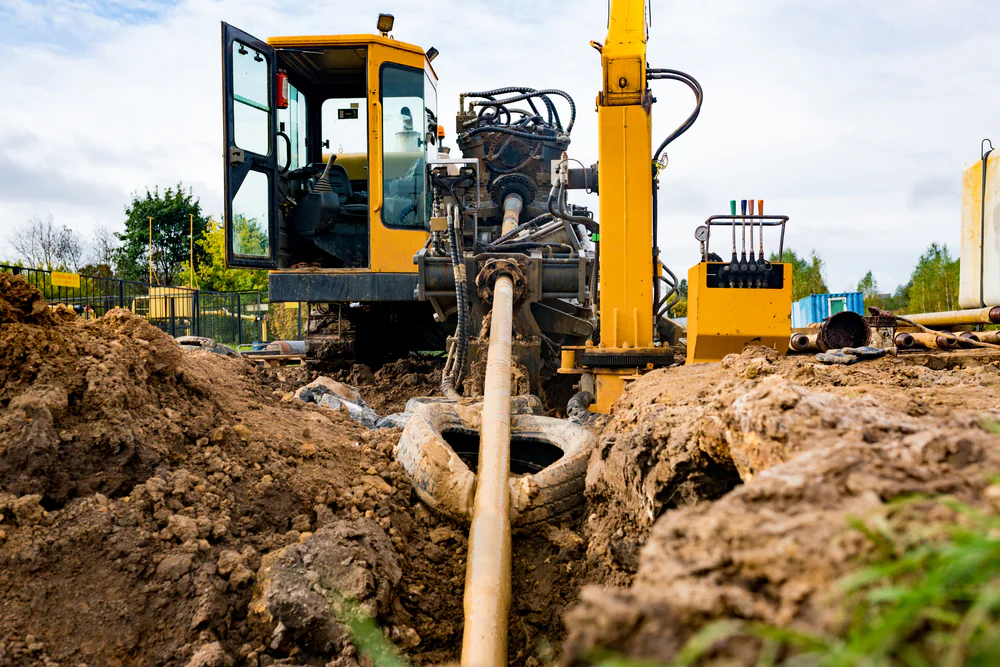
Next, we set up the directional drilling rig at the entry point. The drill head creates a pilot bore underground, following a predetermined path to the exit point. Our tracking system monitors depth and direction in real-time, allowing us to adjust the bore path if we encounter unexpected obstacles or need to curve around existing utilities.
Once the pilot bore reaches the exit point, we attach the new pipe to the drill head and pull it back through the bore path. The pipe gets pulled into place in one continuous run. For water line directional drilling in Oceanside, NY, this means your new service line goes from the street to your foundation without any surface disruption.
We can install lines through most soil conditions—sand, clay, even areas with some rock. The drilling equipment adjusts to what’s underground. If we’re doing trenchless gas line installation in Oceanside, NY, the same process applies: small entry and exit pits, underground boring, pipe pulled into place.
The entire installation typically takes one to two days depending on distance and soil conditions. Compare that to traditional trenching, which requires excavation, shoring, pipe installation, backfill, compaction, and surface restoration—often stretching into a week or more.
Ready to get started?
We install water service lines from the street main to your foundation. This matters in Oceanside, NY, where aging galvanized and lead service lines are reaching failure points. You can replace your water line without tearing up your driveway or front walkway.
Sewer laterals get installed the same way. If your existing sewer line has failed due to root intrusion, ground shifting, or pipe deterioration, we can install a new line without excavating your entire yard. The new pipe runs from your foundation to the street connection point underground.
Gas line installations work for new construction additions or when you’re converting from oil to natural gas. We pull the new gas line from the street to your meter location without surface excavation. Same process for electrical conduit when you need new service or are adding capacity for EV charging or other high-draw equipment.
Long Island’s sandy soil shifts after heavy rain and freeze-thaw cycles. That movement causes pipe joints to separate and crack over time. Horizontal directional drilling in Oceanside, NY installs continuous pipe with no joints underground, eliminating those failure points.
Tree roots are another issue here. Mature oak trees send roots 20 to 30 feet searching for water, and they’ll find any crack or joint in your sewer line. A trenchless installation with solid pipe gives roots nothing to infiltrate.
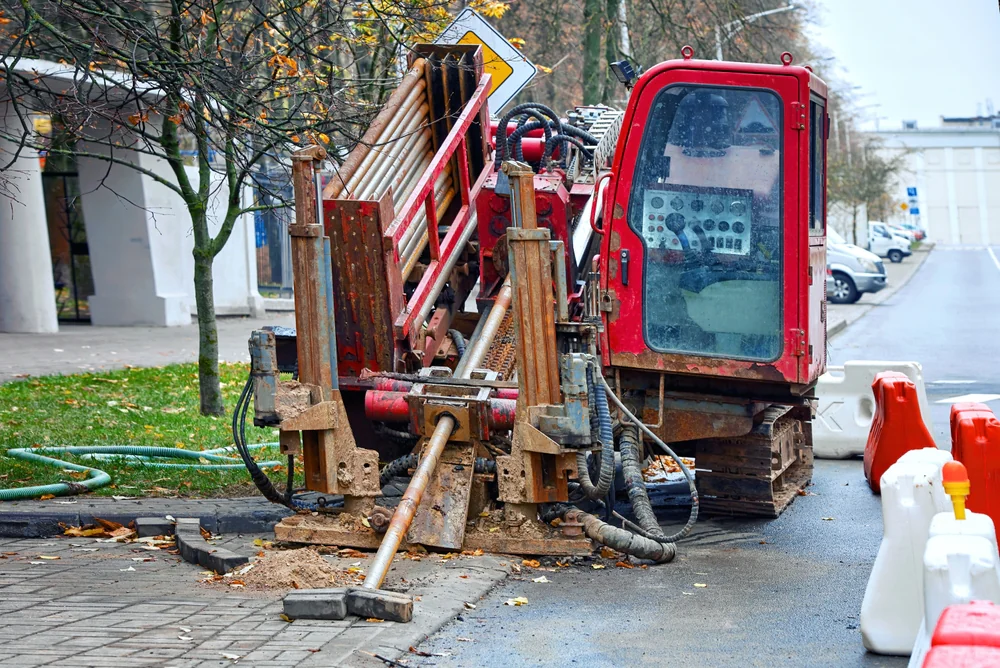
Yes. Trenchless directional drilling installs your new water line underneath your driveway without breaking through the surface.
We create a small entry pit on one side of the driveway and an exit pit on the other side. The drilling equipment bores underground between these two points, then pulls the new water line through the bore path. Your driveway remains intact throughout the entire installation.
This approach eliminates the cost of driveway removal and replacement. Traditional trenching requires cutting through asphalt or concrete, excavating down to the required depth, installing the pipe, backfilling, compacting, and then repaving. That process adds thousands to your project cost and takes significantly longer to complete. With directional drilling, the water line goes in without any of that disruption or expense.
Water lines typically run 3 to 5 feet deep to stay below the frost line. Sewer lines go deeper, usually 4 to 6 feet, depending on the depth of your existing connection point and the street main.
The drilling equipment can adjust depth as needed during the bore. If we encounter an obstacle or existing utility, we can steer the drill head deeper or adjust the path slightly. Real-time tracking shows us exactly where the drill head is at all times, so we maintain proper depth throughout the installation.
Depth matters because lines installed too shallow risk frost damage in winter or accidental strikes during future landscaping work. Lines installed too deep create unnecessary cost and complexity. We follow local code requirements and match the depth of your existing connections so everything ties in correctly without forcing awkward angles or transitions.
Directional drilling installs a completely new line along a new path. Pipe bursting replaces an existing line by breaking apart the old pipe and pulling new pipe through the same path.
You’d use directional drilling when you need a new utility line where none currently exists, or when the existing line’s path isn’t suitable for reuse. For example, if your old sewer line has severe bellies, offset joints, or runs too shallow, directional drilling lets us install a new line at the correct depth and grade without following the failed line’s path.
Pipe bursting works when your existing line is in the right location and at the right depth, but the pipe itself has failed. The bursting head breaks apart the old pipe while simultaneously pulling new pipe into place. This method requires access to both ends of the existing line and enough space for the bursting equipment.
Both methods are trenchless, but they solve different problems. We’ll assess your specific situation and recommend which approach makes sense for your property in Oceanside, NY.
Most residential installations take one to two days from start to finish. Commercial projects with longer runs or multiple utility lines may take three to four days.
Day one typically involves utility locating, setting up equipment, and completing the bore. Day two covers pulling the new pipe through, making connections at both ends, and restoring the small entry and exit areas. Weather and soil conditions can affect timing, but you’re looking at a fraction of the time required for traditional excavation.
Compare that to trenching, which involves multiple steps spread across a week or more: excavation, shoring installation, pipe laying, backfill, compaction, and surface restoration. Each step requires different equipment and often different crews. The extended timeline means more disruption to your property and your daily routine.
The faster completion with directional drilling also means less risk of weather delays. A project that takes two days has a much smaller window for rain or other conditions to cause delays compared to a week-long excavation project.
Yes, directional drilling equipment handles the range of soil conditions found in Oceanside, NY—primarily sand and sandy loam, with occasional clay layers.
Long Island’s glacial soil is actually well-suited for directional drilling. Sandy soil allows for smooth boring with less resistance than heavy clay. When we do encounter clay layers or areas with some rock, the drilling equipment has enough power to push through while maintaining the bore path.
The main soil challenge in Oceanside is the shifting that occurs after heavy rain or seasonal freeze-thaw cycles. That’s actually an advantage for directional drilling installations. Because we’re installing continuous pipe with no joints, there are fewer failure points when the ground shifts. Traditional pipe with multiple joints can separate or crack when the surrounding soil moves.
We’ve completed hundreds of directional drilling installations throughout Nassau County. The equipment and techniques we use are designed for the specific soil conditions found on Long Island, so we’re not adapting a process meant for different geology.
Most directional drilling projects require a plumbing permit from the Town of Hempstead and a street opening permit if we’re connecting to utilities in the right-of-way. Gas line installations also require approval from National Grid.
We handle the permit applications as part of our service. The process involves submitting site plans showing the proposed drilling path, existing utilities, and connection points. The town reviews the application to ensure the work meets code requirements and doesn’t conflict with other infrastructure.
Street opening permits involve additional requirements like traffic control plans and restoration bonds. These permits take longer to obtain—typically two to three weeks—so we start the application process early in your project timeline.
The permit requirements exist to prevent utility strikes and ensure proper installation depth and methods. Because we’re doing trenchless work, the permit review is often simpler than it would be for full excavation. There’s less disruption to the right-of-way and less restoration required, which makes the approval process more straightforward.
Other Services we provide in Oceanside