
Hear from Our Customers
Your driveway stays put. Your landscaping doesn’t get touched. Your daily routine continues without a crew ripping up half your property for two weeks.
That’s what trenchless directional drilling in Meadowmere Park, NY does. We bore underground to install new water lines, sewer lines, or gas lines beneath driveways, patios, walkways, and gardens without disturbing the surface. You don’t pay to rebuild what was already there, and you don’t spend weeks staring at a torn-up yard while contractors patch it back together.
Most homes in Meadowmere Park were built between the 1940s and 1990s. If your service lines are original, they’re reaching the end of their lifespan. Coastal salt air accelerates corrosion on cast iron and galvanized steel pipes faster than you’d see inland. When those lines fail, you’re facing either traditional excavation that destroys your property or trenchless installation that leaves everything intact. The difference in final cost and disruption isn’t small.
We’ve been handling underground utility work across Nassau County since 1983. We’ve watched trenchless technology evolve from niche specialty to standard practice, and we’ve invested in the equipment and training to do it right.
Our crews know Meadowmere Park’s infrastructure. We know how coastal conditions affect pipe longevity, where frost lines sit, and what Nassau County requires for permits and inspections. When you’re dealing with property values over $1.2 million, you don’t want someone learning on your driveway.
We run four locations across Long Island, which means faster response times when you need camera inspections or emergency service. You’re not waiting three days for someone to drive out from another county.
We start with a camera inspection to see exactly what’s happening underground. You watch the footage in real time, so there’s no guessing about whether you actually need replacement or just a repair.
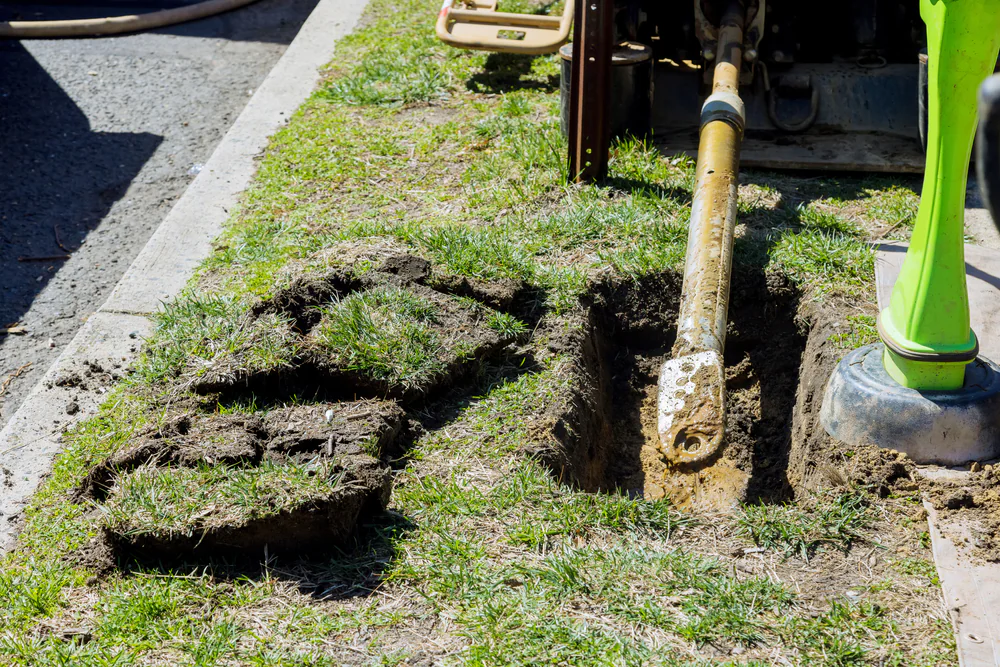
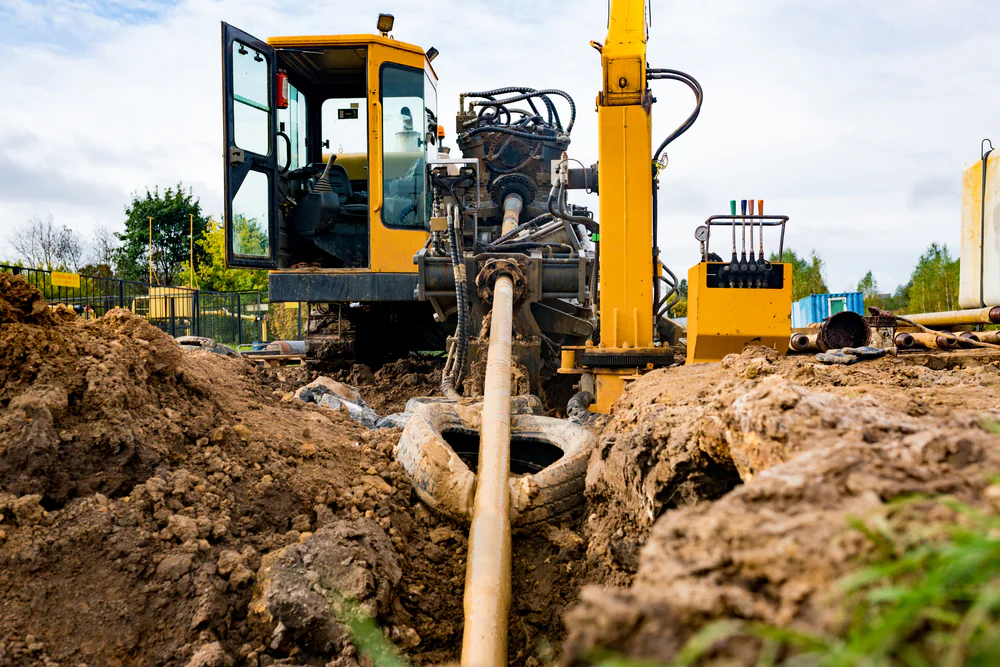
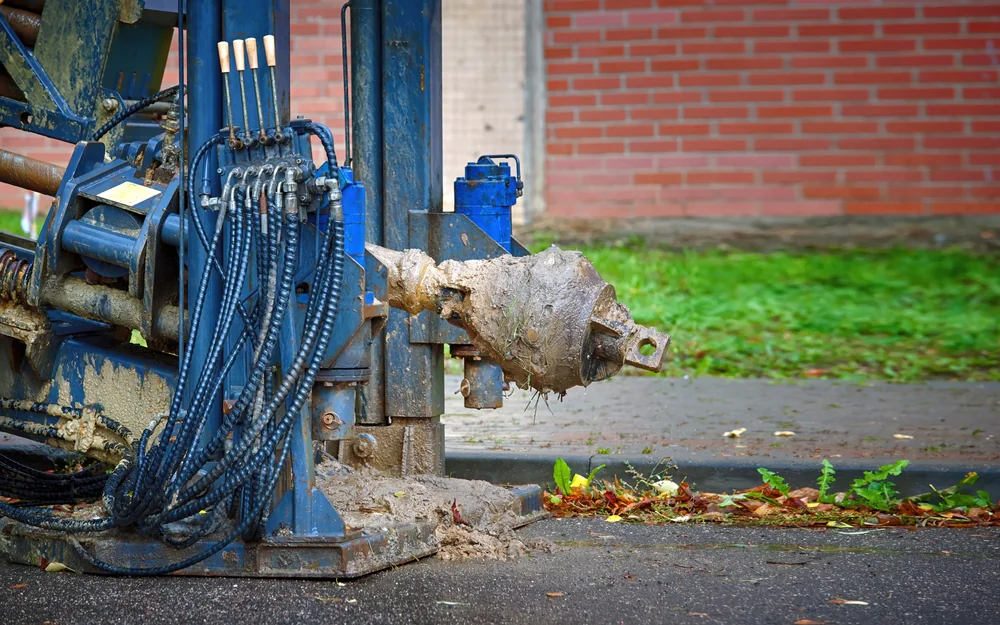
Once we confirm the line needs replacement, we dig two small access points: one where the line starts, one where it ends. Then we use a directional drill to bore a path underground between those two points. The drill head is steerable, so we can navigate around existing utilities, tree roots, or obstacles without surfacing.
After the bore path is complete, we pull the new pipe through. Depending on what you’re installing, that could be PEX for water lines, HDPE for sewer lines, or steel for gas lines. The entire process typically takes one to two days for residential work. When we’re done, you’ve got new infrastructure and the same driveway you started with.
We handle permits, inspections, and cleanup. The two small access holes get backfilled and tamped. Everything else stays untouched.
Ready to get started?
You can install water lines, sewer lines, gas lines, and electrical conduits using horizontal directional drilling. If it runs underground and crosses under hardscape or landscaping, it’s a candidate for trenchless installation.
Water line directional drilling in Meadowmere Park, NY is common for homes replacing old galvanized steel or lead service lines. You’re looking at 50 to 100 feet of boring under driveways, walkways, and garden beds to connect your home to the street main. Same approach works for sewer lines when tree roots have destroyed the old clay or cast iron pipes.
Trenchless gas line installation in Meadowmere Park, NY follows the same process but requires additional safety protocols and inspections. Gas work is more regulated, but the trenchless approach still saves you from tearing up your property.
The benefits of trenchless directional drilling come down to cost and disruption. Traditional excavation means ripping out your driveway, hauling away debris, installing the new line, backfilling the trench, compacting the soil, and repaving. That’s thousands in restoration costs alone. Trenchless skips all of it. You pay for the drilling and the pipe, not for rebuilding what was already finished.
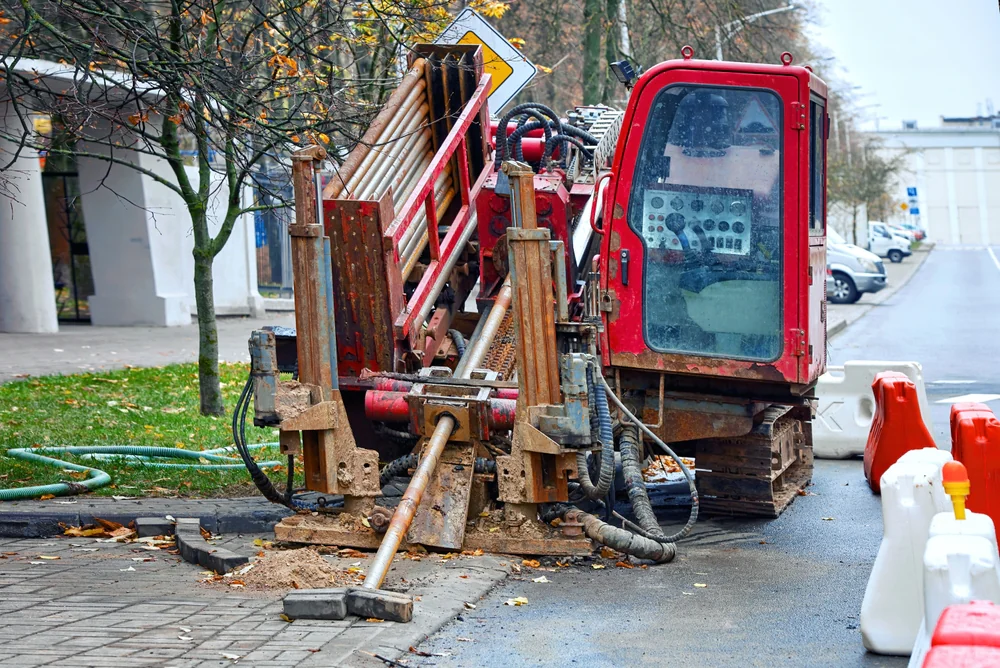
Trenchless directional drilling in Meadowmere Park, NY typically costs 30% to 50% less than traditional excavation when you factor in restoration. The drilling itself might run $80 to $150 per foot depending on soil conditions, depth, and pipe diameter. Traditional excavation might look cheaper at $50 to $100 per foot until you add back the cost of repaving your driveway, replacing landscaping, and repairing sprinkler systems.
For a typical 75-foot residential water line replacement, you’re looking at $6,000 to $11,000 for trenchless vs $8,000 to $15,000 for excavation plus restoration. The gap widens if you’ve got decorative pavers, mature landscaping, or a recently paved driveway. Replacing a high-end driveway can easily add $10,000 to $20,000 to the excavation approach.
The other cost is time. Trenchless work finishes in one to two days. Traditional excavation can take a week or more when you include demo, installation, backfill, compaction waiting periods, and repaving. If you can’t park in your driveway or access your front door for a week, that’s a cost too.
Yes, but it requires more planning. Meadowmere Park sits on a mix of sandy loam and glacial deposits, which is generally favorable for horizontal directional drilling. Rocky soil slows the process and can increase costs because we need specialized drill bits and more frequent equipment adjustments, but it doesn’t make trenchless impossible.
Existing utilities are a bigger concern. Before we drill, we run a utility locate to map out electric, gas, water, sewer, cable, and phone lines. The directional drill head is steerable, so we can adjust depth and angle to navigate around those lines. In tight corridors where multiple utilities run close together, we might need to hand-dig small test pits to visually confirm clearance before drilling through.
If the corridor is genuinely too crowded or if bedrock sits too shallow, we’ll tell you before we start. There’s no point in forcing a trenchless approach if conditions don’t support it. But in 40+ years of work across Nassau County, we’ve found that most residential properties have enough room to make trenchless drilling viable with proper planning.
The installation method doesn’t affect pipe lifespan. What matters is the pipe material. HDPE sewer lines last 50 to 100 years regardless of whether you installed them through trenching or trenchless boring. Same goes for PEX water lines, which typically last 40 to 50 years, and steel gas lines, which can last 50+ years with proper coating.
The advantage of trenchless installation is that it often encourages upgrades to better materials. When you’re not paying thousands to repave a driveway, you’re more likely to choose HDPE over PVC or PEX over copper because the installation cost difference is smaller. That means you end up with longer-lasting infrastructure.
Trenchless installations also avoid some of the compaction and settling issues you see with traditional trenching. When you dig a four-foot-deep trench, backfill it, and compact the soil, you’re never quite matching the original soil density. That’s why driveways and walkways sometimes crack or sink along old trench lines. Trenchless boring doesn’t disturb the surrounding soil, so you don’t create weak points that settle over time.
That’s the entire point of trenchless directional drilling. We bore underneath your driveway at depths typically ranging from three to six feet, depending on frost line requirements and existing utility clearances. The drill path stays completely below the surface, so your driveway, walkway, patio, or landscaping remains untouched.
The only surface access points are two small pits: one at the starting point, usually near your home’s foundation or basement wall, and one at the endpoint, typically near the street or property line. Those pits are usually two feet by three feet, just large enough to set up the drill and pull the new pipe through. Once the installation is complete, we backfill those pits, compact the soil, and restore the surface. If the pit happens to be in your lawn, we’ll reseed or lay sod. If it’s in a garden bed, we’ll match the existing mulch or stone.
For homes in Meadowmere Park with decorative driveways, mature landscaping, or recently completed hardscaping, trenchless drilling is often the only practical option. Tearing up a stamped concrete driveway or cutting through a stone patio to dig a trench means you’re replacing the entire section, not just patching it. Trenchless avoids that entirely.
Both are trenchless methods, but they work differently. Trenchless directional drilling creates a new underground path and installs a new pipe where no pipe currently exists or where the old pipe is too damaged to use as a guide. Pipe bursting uses the old pipe’s path as a guide, breaks apart the old pipe, and pulls a new pipe through the same route.
Pipe bursting works well when your existing line runs in a good location and you just need to replace it with a larger or more durable pipe. It’s common for sewer line replacements where the old clay or cast iron pipe is cracked but still intact enough to guide the bursting head. The bursting head fractures the old pipe and pushes the fragments into the surrounding soil while simultaneously pulling the new pipe into place.
Directional drilling is better when the old pipe has completely collapsed, when you need to reroute around obstacles like tree roots or other utilities, or when you’re installing a line where none existed before. It gives you more control over depth, angle, and path. For most residential water line and gas line installations in Meadowmere Park, directional drilling is the standard approach because it offers the most flexibility and doesn’t rely on the old pipe being in usable condition.
If your home was built before 1980 and you’ve never replaced your water or sewer lines, you’re a candidate. Galvanized steel water lines corrode from the inside out and typically fail after 40 to 60 years. Cast iron sewer lines crack and separate at the joints after 50 to 70 years, especially in coastal areas where salt air accelerates corrosion. Clay sewer pipes, common in older Meadowmere Park homes, crack under pressure from tree roots and shifting soil.
Signs you need replacement include low water pressure that doesn’t improve after checking fixtures and aerators, discolored water that suggests pipe corrosion, frequent drain backups that don’t clear with snaking, or soggy spots in your yard that indicate a leaking sewer line. If you’re seeing any of those symptoms, start with a camera inspection. We’ll run a waterproof camera through your lines to show you exactly what’s happening underground.
Once you confirm the line needs replacement, the question becomes whether to excavate or go trenchless. If the line runs under your driveway, walkway, patio, or landscaping, trenchless directional drilling in Meadowmere Park, NY saves you thousands in restoration costs and weeks of disruption. If the line runs through open lawn with no obstacles, traditional trenching might be slightly cheaper, but you’re still dealing with torn-up grass and settling issues. Most homeowners in Meadowmere Park choose trenchless when they see the cost comparison and timeline difference.
Other Services we provide in Meadowmere Park