
Hear from Our Customers
Your custom paver patio stays untouched. Your mature trees keep their roots intact. Your driveway doesn’t get torn up and poorly patched back together.
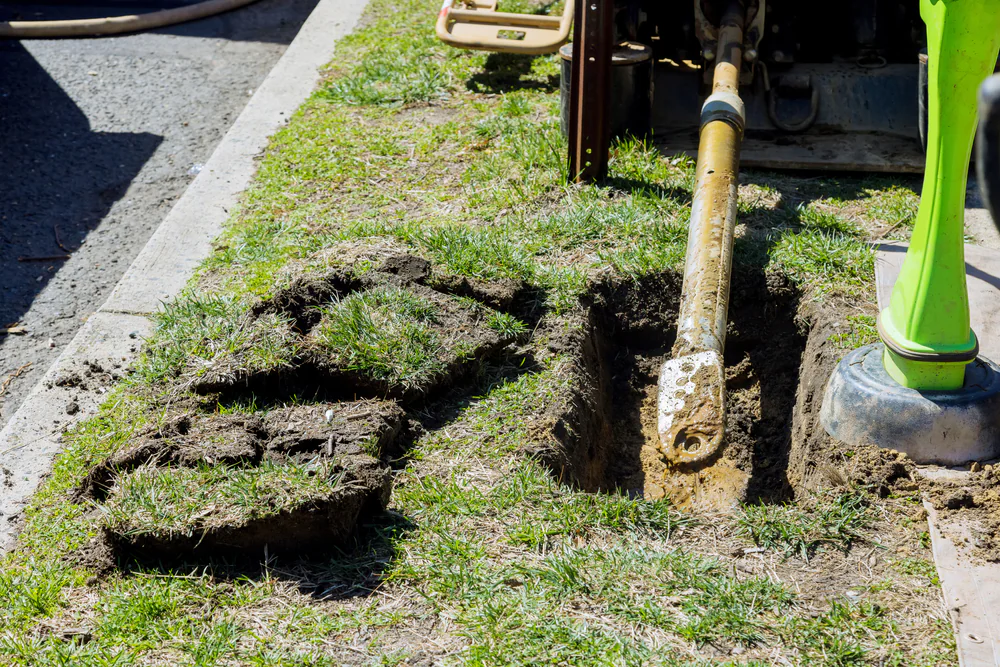
That’s what trenchless directional drilling in Deer Park, NY does for you. It installs new utility lines underground without ripping apart everything you’ve invested in above ground.
Traditional trenching means destruction first, installation second, restoration never-quite-right third. You end up with sunken pavement, dead grass, and a yard that looks like a construction zone for months. Directional drilling skips all that. We drill a precise path underground, pull the new line through, and you’re left with two small access points instead of a 100-foot trench cutting through your property.
Your project gets done faster too. No waiting for excavators to dig, no hauling away tons of dirt, no scheduling separate crews to come back and restore everything. The work happens underground where it belongs.
If you’re adding an outdoor kitchen and need a gas line, or your water service line is failing and needs replacement, this is how you do it without turning your property into a job site. Especially in Deer Park, NY, where homes average $497,900 and most were built in the 1940s-1950s, you can’t afford to damage what you’ve built or maintained over the years.
We’ve served Nassau and Suffolk counties for over 40 years. We’re not new to trenchless technology or directional drilling in Deer Park, NY. We’re the company that homeowners call when they need utility work done right without wrecking their property.
We’re licensed and insured throughout the area. We run our own equipment and our own crews. When you call, you’re talking to people who actually do the work, not a call center routing you to the lowest bidder.
Deer Park homeowners deal with aging infrastructure. Homes here were mostly built 70-80 years ago, which means original water lines and sewer laterals are reaching the end of their lifespan. When those fail, you need a company that can replace them without destroying the landscaping and hardscaping you’ve added since. That’s what we do, and we’ve been doing it locally long enough to know what works in this area.
We start by locating every existing utility on your property. That means water, sewer, gas, electric, cable, phone lines. Everything gets marked so we know exactly what’s underground before we drill.
Next, we set up at two access points: where the new line starts and where it needs to end. These are small excavations, usually 2×3 feet, not massive trenches. One is typically near your house foundation, the other near the street or wherever your utility connection point is.
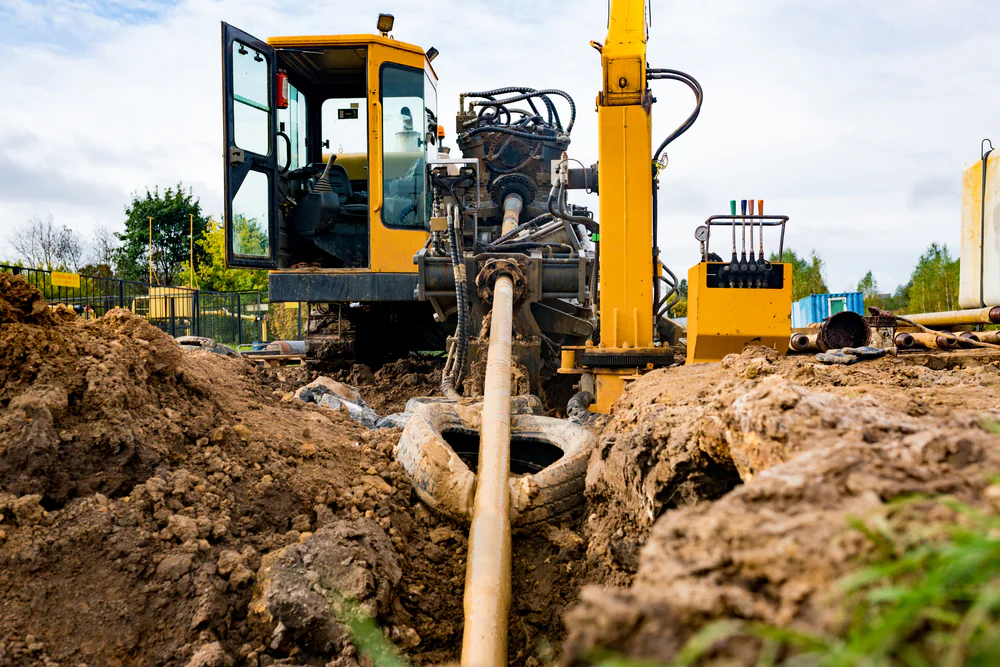
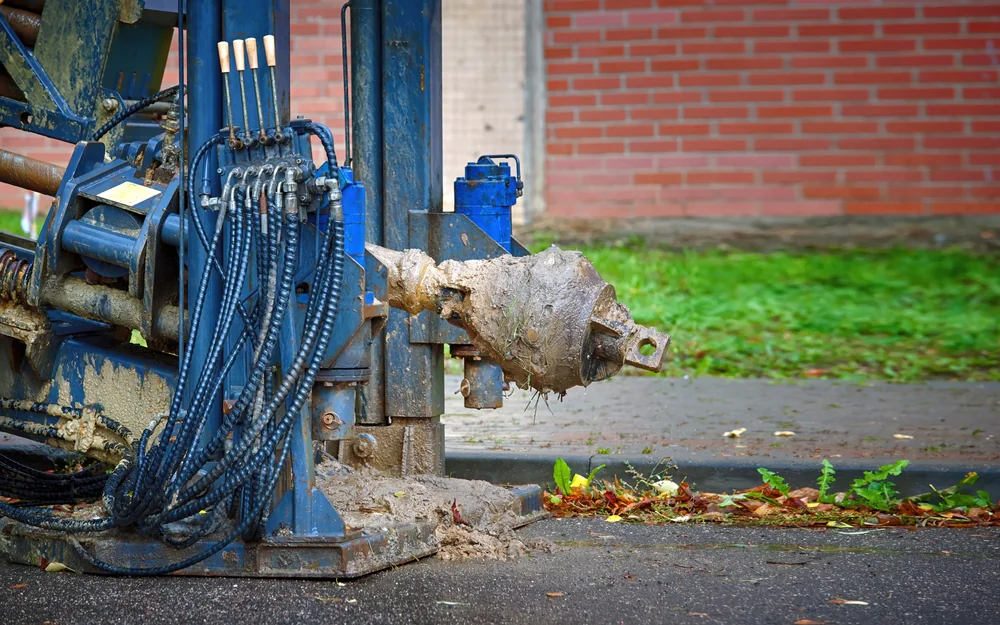
The drilling rig pushes a steerable drill head underground along the planned path. We’re tracking its exact position, depth, and direction in real-time using locating equipment. If we need to go under your driveway, around a tree root system, or beneath your pool deck, we adjust the path as we go. The drill head creates a pilot bore first.
Once the pilot bore is complete, we attach the new water line or gas line to the drill head and pull it back through the path we just created. The line gets installed in one continuous piece, which means no joints underground that could fail later.
We connect everything at both access points, test the system, backfill the two small holes, and you’re done. Total time is usually one to two days depending on distance and obstacles, compared to a week or more for traditional trenching and restoration.
Your driveway never gets touched. Your landscaping stays intact. You don’t need permits for tearing up sidewalks or street cuts. The work happens underground where utilities belong.
Ready to get started?
You get a complete utility line installation from connection point to connection point. That includes all locating work, the directional drilling itself, the new pipe or line, connections at both ends, pressure testing, and restoration of the two small access points.
We handle water line directional drilling in Deer Park, NY for service line replacements, new outdoor kitchen connections, pool house plumbing, and anywhere you need water run underground without excavation. Same goes for trenchless gas line installation in Deer Park, NY when you’re adding fire pits, outdoor heaters, or replacing aging gas service lines.
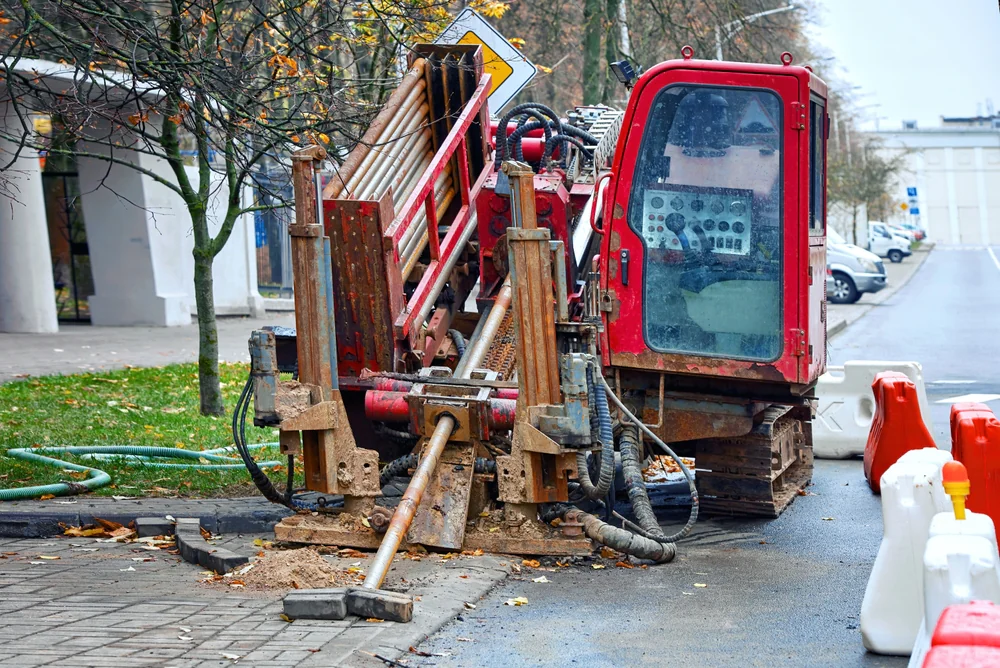
The equipment we use can navigate under driveways, sidewalks, patios, and landscaping. It can curve around obstacles and adjust depth to avoid existing utilities. That’s critical in Deer Park, NY, where properties have decades of improvements layered on top of each other and you can’t just rip through everything to install one new line.
You also avoid the municipal headaches. When you dig up a sidewalk or parkway in Deer Park, NY, you’re dealing with permits, inspections, and restoration requirements that add thousands to your project cost. Directional drilling typically stays on your property and doesn’t disturb public right-of-ways, which means fewer permits and less red tape.
The lines we install last longer too. They go in without stress fractures or damage from excavation equipment. They’re not sitting in disturbed soil that settles unevenly. And because we’re using modern materials rated for underground installation, you’re looking at 50-100 year lifespans, not the 20-30 years you might get from older methods.
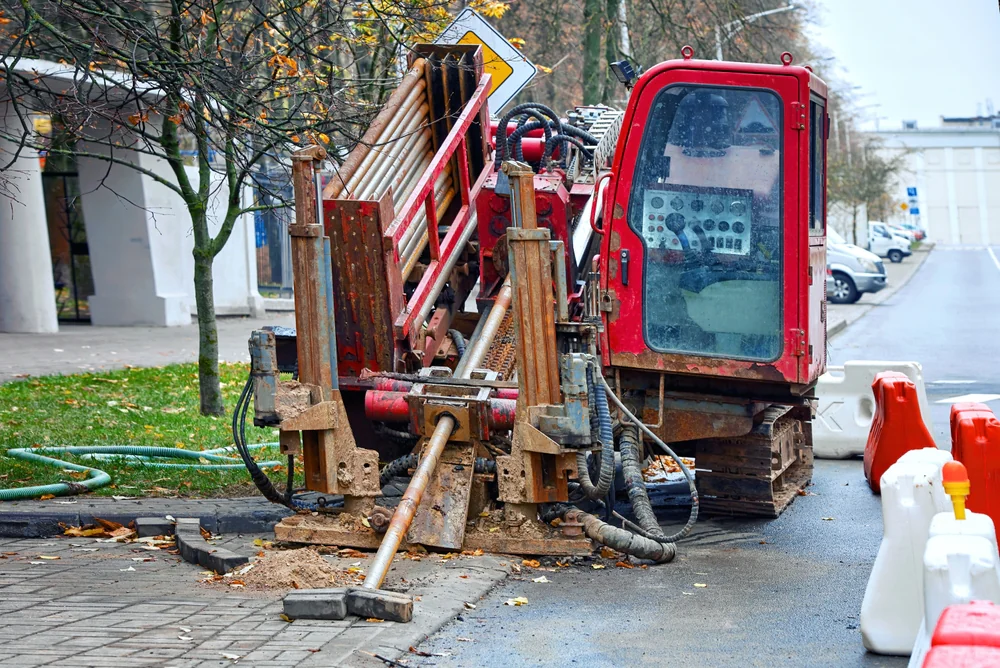
Yes. That’s exactly what horizontal directional drilling does.
We drill underneath your driveway at a controlled depth, usually 3-4 feet down, and pull the new water line through without touching the surface. You end up with two small access points on either side of the driveway, but the driveway itself never gets cut, broken, or patched.
This matters because driveway cuts almost never settle properly. You’ll see the patch sink within a year, water pools in the depression, and freeze-thaw cycles make it worse every winter. Then you’re either living with a permanent low spot or paying to repave the whole driveway. Directional drilling skips that entire problem. Your driveway stays intact, and you don’t risk long-term settling issues or mismatched patches that hurt your property value.
The drilling itself typically costs more per linear foot than open-cut trenching. But that’s not the full picture.
Traditional trenching means you’re paying for excavation, hauling away dirt, installing the line, backfilling, and then restoration. Restoration is where costs explode. If the trench crosses your driveway, you’re repaving. If it goes through landscaping, you’re replacing sod, plants, irrigation, and hardscaping. If it crosses a sidewalk or street, you’re dealing with municipal restoration requirements that can run $3,000-$5,000 alone.
Directional drilling eliminates most restoration costs. You’re filling two small holes instead of a 100-foot trench. Your total project cost often ends up lower, and you’re definitely saving money on long-term property damage. Plus the work gets done faster, which matters if you’re paying for equipment rental by the day or losing business hours for commercial properties.
Directional drilling installs a completely new line along a new path. Pipe bursting replaces an existing line by following the old pipe’s route.
With directional drilling in Deer Park, NY, we’re creating a new underground path from point A to point B. You’d use this when you’re adding a new utility connection, when the old line’s path goes through something you can’t disturb, or when you want to reroute away from problem areas like tree roots or unstable soil.
Pipe bursting works when you have an existing line that’s failed but the path is still good. We pull a bursting head through the old pipe, which breaks it apart, and simultaneously pull the new pipe into place. It’s faster and cheaper than directional drilling, but only works if the existing line’s route makes sense and isn’t blocked or collapsed.
Both are trenchless methods. Which one you need depends on whether you’re installing something new or replacing something that’s already there.
We locate everything first, then track the drill head’s exact position in real-time as it moves underground.
Before drilling starts, we call 811 for public utility locates and use private locating services for lines that aren’t part of the public system. That includes your private water service, sewer lateral, sprinkler lines, low-voltage lighting, and anything else on your property. Everything gets marked on the surface.
During drilling, we use electronic locating equipment that tells us the drill head’s depth, position, and pitch angle at all times. The drill head sends a signal that we pick up above ground, so we know exactly where it is as it moves through the soil. If we’re approaching another utility, we adjust the path or depth to maintain safe clearance.
This is why directional drilling works so well in established neighborhoods like Deer Park, NY, where properties have 70-80 years of utilities layered underground. We’re not blindly digging and hoping we don’t hit something. We know what’s there, and we’re actively steering around it.
Yes, but it depends on the specific conditions and the equipment we’re using.
Modern directional drilling rigs can handle most soil types including clay, sand, gravel, and even some rock. The drill head can push through or navigate around obstacles as we go. If we hit a large boulder or bedrock, we can adjust the path to go around it rather than trying to drill straight through.
What doesn’t work well is heavily fractured rock or areas with massive underground obstructions like old foundations or large concrete debris. In those cases, we might need to adjust the entry or exit points, change the depth, or in rare situations, use a different installation method for that section.
Long Island soil conditions are generally favorable for directional drilling. You’re mostly dealing with sandy soil, some clay, and occasional glacial till. We’ve run thousands of feet of line through this area and rarely encounter conditions that stop a project. When we do the initial site assessment, we’ll tell you if there’s anything that might complicate the drilling before we start.
Most residential projects take one to two days from start to finish. That includes locating, drilling, installing the line, making connections, testing, and cleanup.
A straightforward water line replacement from your house to the street might be done in a single day if everything goes smoothly. More complex projects, like running a gas line 200 feet to a pool house with multiple direction changes, might take two days.
Compare that to traditional trenching, which might take a day to excavate, a day to install and backfill, and then you’re waiting days or weeks for restoration work. You’re also dealing with your property being torn up the entire time, which affects your daily routine.
The speed advantage matters in Deer Park, NY, where most homeowners are busy professionals who can’t have their driveway blocked or their yard unusable for a week. We show up, do the work underground, and you’re back to normal by the next day.
Other Services we provide in Deer Park