
Hear from Our Customers
You’re not looking to rip apart your property just to install a new water line. You want the job done right without the mess, without weeks of disruption, and without paying thousands extra to restore what got destroyed in the process.
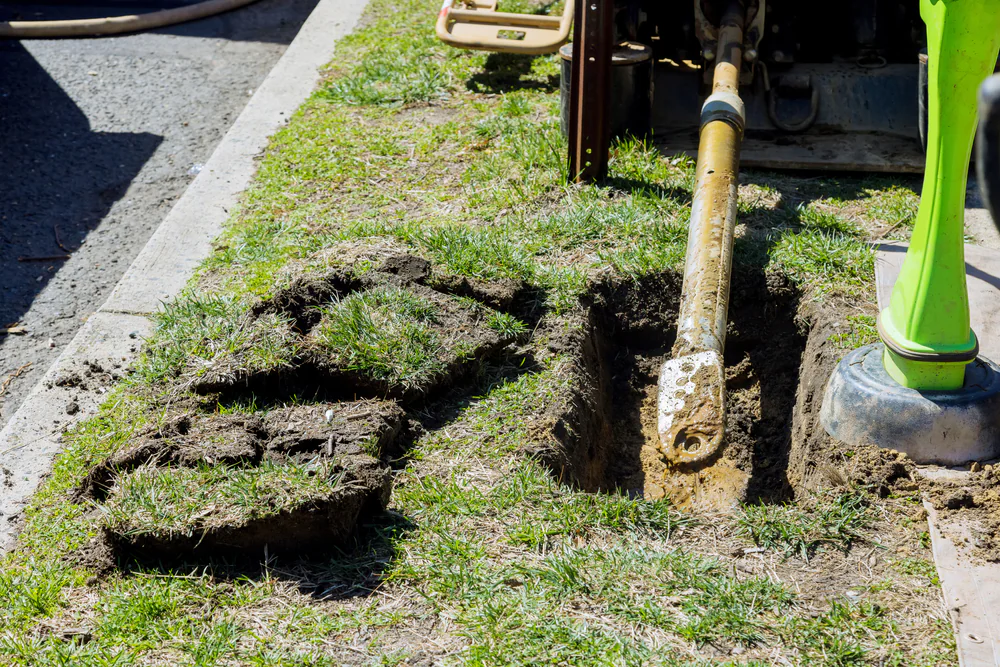
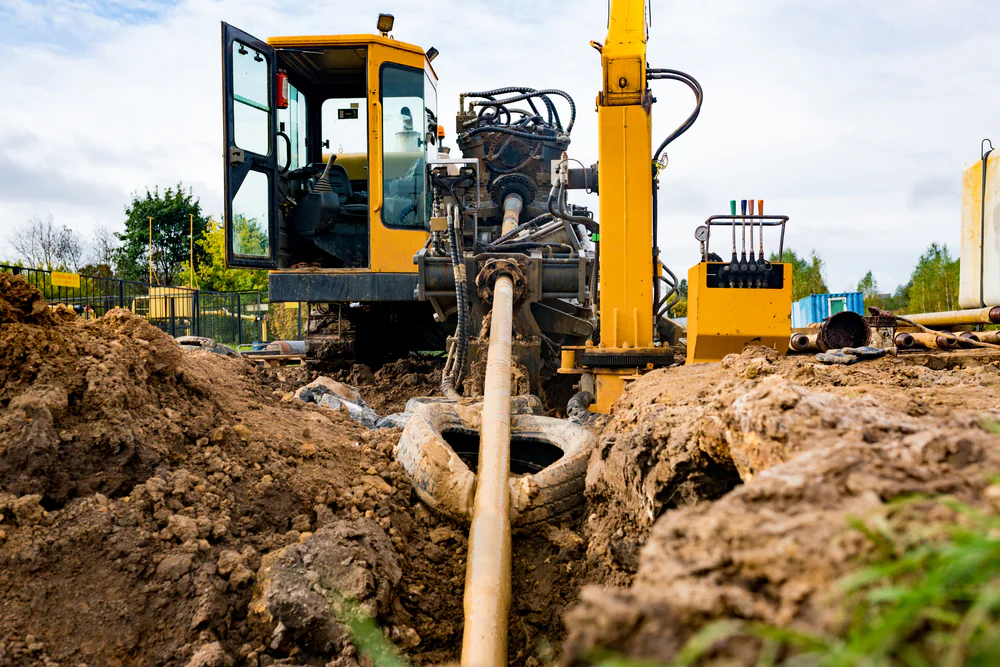
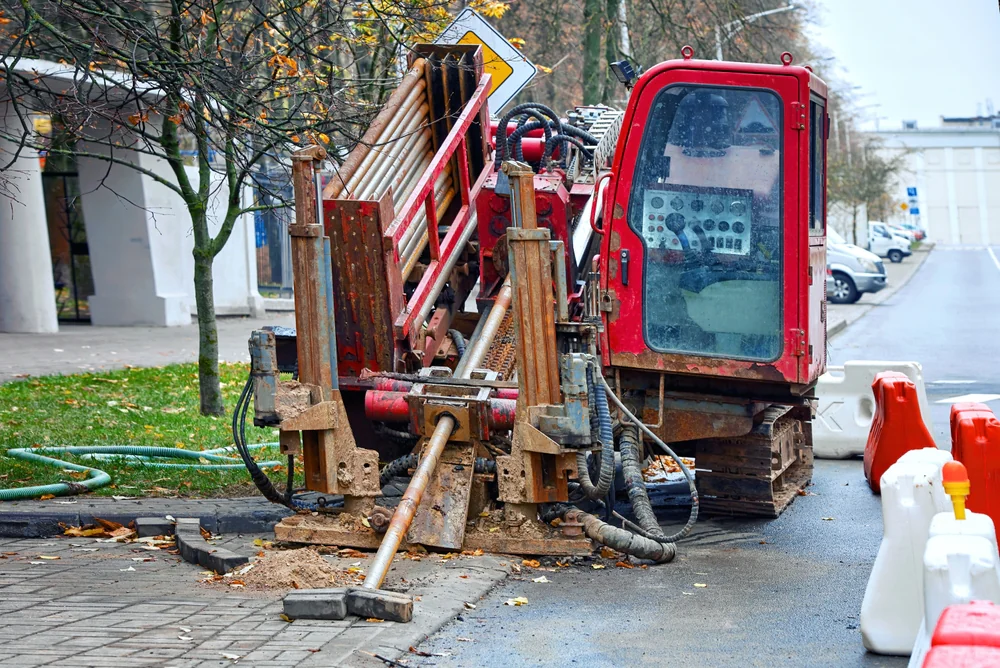
Trenchless directional drilling services in Uniondale, NY solve that exact problem. The equipment works entirely underground, pulling new utility lines through without surface excavation. Your driveway stays put. Your landscaping doesn’t get touched. And the timeline shrinks from weeks to days because there’s no trench to dig, no material to haul away, and no restoration work afterward.
This method works for water line directional drilling, sewer connections, gas line installations, and electrical conduit. If you need something run underground and you don’t want your property torn apart to make it happen, this is how it gets done. Faster, cleaner, and with far less disruption than traditional open-cut trenching.
We’ve been handling underground utility work in Uniondale, NY and across Nassau County since 1983. That’s over 40 years working with homeowners, business owners, contractors, and municipalities who need utility installations done without the destruction that comes with traditional digging.
We’re not new to this. We’ve seen what happens when inexperienced crews attempt directional drilling without the right equipment or training. You end up with damaged lines, missed targets, and projects that take twice as long as they should. Our team uses state-of-the-art horizontal directional drilling equipment and has the experience to navigate around existing utilities, through challenging soil conditions, and under obstacles like driveways and foundations.
Uniondale properties—whether residential homes near Uniondale Avenue or commercial buildings in the business district—require precision work. You’re dealing with established infrastructure, mature landscaping, and property values you’ve worked hard to maintain. We understand what’s at stake, and we’ve built our reputation on protecting that investment while getting your utility work completed correctly.
The process starts with locating existing underground utilities. Before any drilling begins, we map out what’s already there—water lines, gas lines, electrical conduit, communication cables. This prevents damage to existing infrastructure and ensures your new line gets installed in the right path.
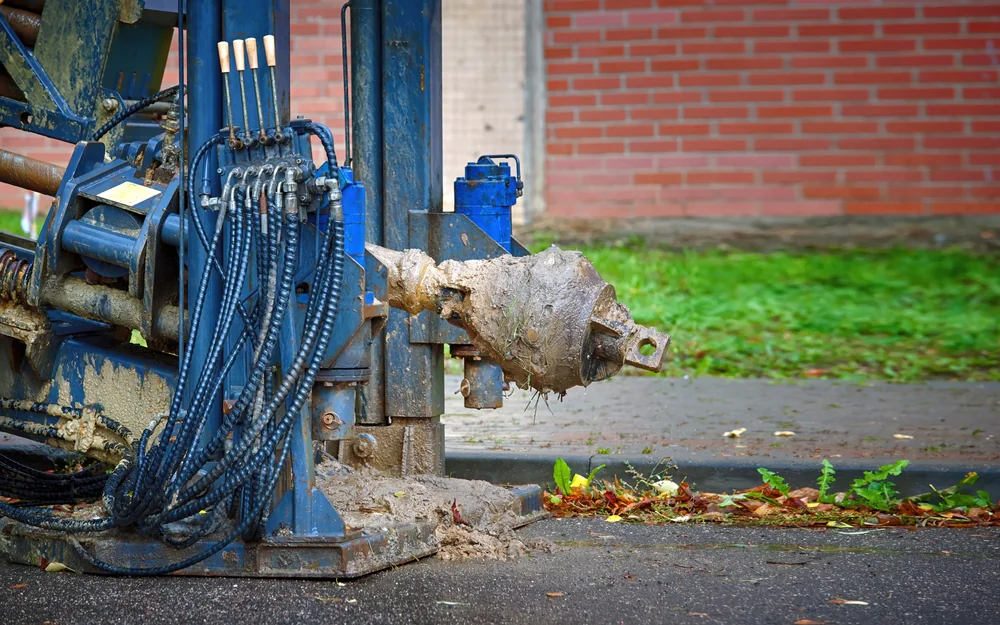
Next, we drill a small pilot hole along the planned route using a steerable drill head. The operator tracks the drill path in real-time, making adjustments as needed to avoid obstacles and maintain the correct depth and trajectory. This is where experience matters—navigating around tree roots, through varying soil conditions, and under driveways requires skill, not just equipment.
Once the pilot hole reaches the exit point, we attach the new utility line to the drill head and pull it back through the bore path. The line gets installed in one continuous pull, which means fewer connection points and less chance of future leaks or failures. For water line directional drilling in Uniondale, NY, this method is particularly valuable because it protects the integrity of the pipe during installation.
The entry and exit points are small—typically just a few feet wide. After the line is installed and tested, we restore these small areas, and you’re done. No torn-up lawn, no destroyed driveway, no weeks of waiting for restoration crews to finish their work.
Ready to get started?
Water line directional drilling in Uniondale, NY handles everything from residential service line replacements to commercial water main connections. If your existing water line is failing due to corrosion, freezing damage, or age-related deterioration, directional drilling lets you install the replacement without excavating your entire front yard.
Trenchless gas line installation works the same way. Whether you’re connecting to natural gas service for the first time or replacing an aging gas line, the installation happens underground without surface disruption. This is especially valuable for Uniondale properties where gas lines need to run under driveways, sidewalks, or landscaped areas.
Sewer and drain connections also benefit from this method. Running a new sewer lateral from your home to the street connection traditionally meant tearing up everything in between. Directional drilling eliminates that destruction while still giving you a properly sloped, code-compliant installation.
Electrical conduit and communication lines round out the common applications. If you’re adding service to a detached garage, pool house, or commercial building addition, directional drilling provides the underground pathway without the excavation. The method adapts to different pipe sizes and materials, and it works in the varied soil conditions you’ll find throughout Nassau County—from sandy areas to heavier clay soils.
The drilling itself typically runs between $20 to $30 per meter for standard conditions, with costs increasing to $80 to $100 per meter when you’re dealing with heavy clay or larger pipe installations. Water line installations generally fall between $100 to $165 per meter depending on depth, distance, and site conditions.
But here’s what matters more than the per-meter cost: the total project expense. Traditional open-cut trenching might seem cheaper on paper until you factor in restoration costs. You’re paying to dig the trench, sure, but then you’re also paying to repave your driveway, replace your landscaping, repair your irrigation system, and restore your lawn. Those restoration costs often exceed the original excavation costs.
Directional drilling eliminates most of that restoration work. You’re left with two small access points instead of a trench running across your property. For most Uniondale homeowners and business owners, the total project cost ends up lower with directional drilling, and you avoid weeks of living with a torn-up property. The method also completes faster, which means less disruption to your daily routine or business operations.
Yes, and this is one of the most common reasons property owners in Uniondale, NY choose horizontal directional drilling. Your driveway—whether it’s asphalt, concrete, or pavers—stays completely intact during the installation.
The drill path runs underneath the driveway at a depth that clears the foundation and any base material. We enter from one side, typically your front yard, and exit on the other side, usually near the street connection point. The driveway never gets touched. You don’t lose parking access during the project, and you don’t face the expense of repaving or replacing sections of your driveway afterward.
This matters especially for newer driveways or high-end paving work. If you’ve recently invested in your driveway, the last thing you want is a trench cut through it for a utility installation. Even with careful restoration, you’ll see the repair line, and you’ve compromised the structural integrity of the paving. Directional drilling protects that investment completely. The same applies to sidewalks, patios, and other hardscaping—the installation happens underneath without disturbing the surface.
Most residential installations complete in one to two days, depending on the distance, soil conditions, and complexity of the route. A straightforward water line replacement from your home to the street connection typically takes a single day. More complex projects—longer runs, multiple utility lines, or challenging soil conditions—might extend to two or three days.
Compare that to traditional open-cut trenching, which often takes a week or more when you include excavation, installation, backfill, and restoration work. Then add another week or two if you’re waiting for paving contractors or landscapers to complete the restoration. You’re looking at weeks of disruption versus days.
The faster timeline isn’t just about convenience. For Uniondale business owners, every day of disrupted operations costs money. For homeowners, it’s about getting back to normal life without construction equipment in your yard for weeks. The trenchless method also reduces the weather-related delays that plague traditional excavation—there’s no open trench that floods when it rains, no muddy mess that needs to dry out before work can continue.
This is why the locating process happens first, before any drilling begins. We use underground utility locating equipment to map out existing water lines, gas lines, electrical conduit, communication cables, and sewer lines. This gives us a clear picture of what’s already underground and where the safe drilling path exists.
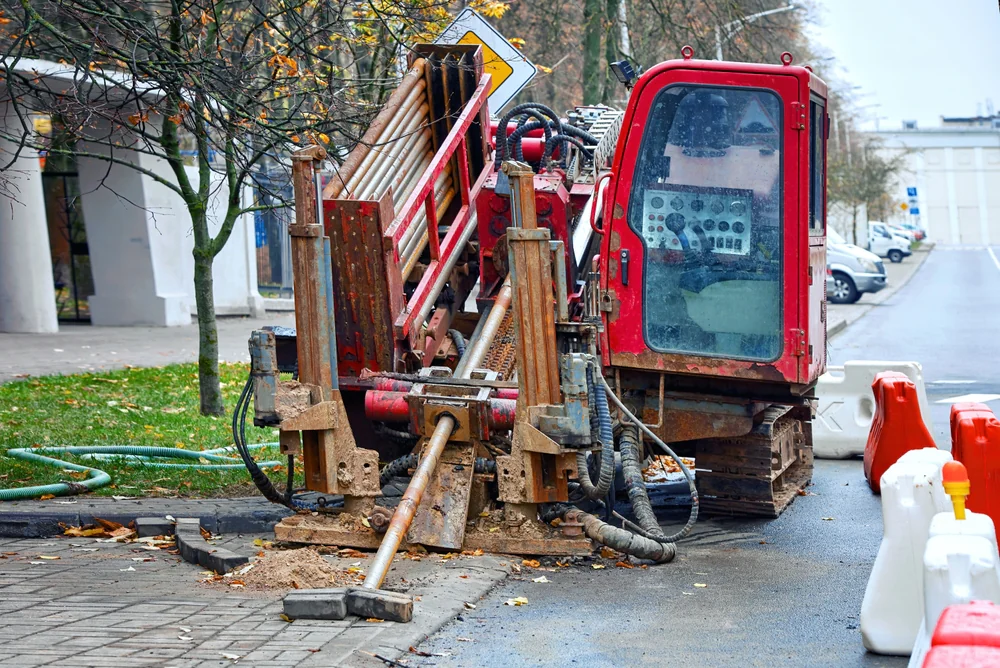
The directional drilling equipment itself includes tracking technology that shows the drill head’s exact position in real-time. The operator can see the depth, trajectory, and location throughout the entire bore path. If we encounter an unexpected obstacle or existing utility that wasn’t properly marked, we can stop, adjust the path, or even pull back and re-drill along a different route.
That said, utility strikes are rare with experienced directional drilling contractors who follow proper locating procedures. The risk is actually higher with traditional excavation, where a backhoe operator might not see a line until the bucket hits it. With directional drilling, you have constant awareness of where the drill head is positioned relative to existing utilities. For Uniondale properties with decades of underground infrastructure, this precision matters. You’re not gambling on what might be buried three feet down—you’re working with accurate information and real-time tracking throughout the installation.
Uniondale sits in Nassau County where soil conditions vary from sandy loam to heavier clay deposits, and directional drilling adapts to both. The equipment and technique adjust based on what we’re drilling through, but the method works across the soil types you’ll find in this area.
Sandy soils drill easily but require attention to bore stability—the hole can collapse if not properly managed. Clay soils are more stable but require more powerful equipment and slower drilling speeds. Rocky conditions need specialized drill heads and sometimes pre-drilling or alternate routing. The key is having the right equipment and the experience to recognize what you’re dealing with as the drilling progresses.
What doesn’t work well is trying to force directional drilling in situations where it’s genuinely not the right solution. If you’re dealing with extremely shallow utility installations where there’s not enough depth to establish a proper bore path, or if the distance is so short that the setup time exceeds the actual drilling time, traditional methods might make more sense. But for the vast majority of utility installations in Uniondale—water lines, gas lines, sewer connections, electrical conduit—directional drilling handles the local soil conditions without issue. We’ve been doing this work in Nassau County for over 40 years, and we know what works in these specific ground conditions.
The drill path is planned to avoid major tree roots and existing irrigation systems whenever possible. During the initial site assessment, we identify mature trees and map out likely root zones. The bore path gets routed to minimize root interference, typically by drilling deeper or adjusting the entry and exit points.
When some root contact is unavoidable, the drilling process cuts through smaller roots cleanly rather than tearing them out like excavation would. Trees can tolerate losing some smaller roots, especially when the main root structure stays intact. It’s far less damaging than digging a trench that exposes and destroys major portions of the root system.
For irrigation systems, the same locating process that identifies utility lines also maps out irrigation lines. If your system is properly documented or can be traced, we route around it. If we do encounter an irrigation line during drilling, repairs are straightforward—you’re fixing one intersection point, not replacing an entire zone of irrigation that got destroyed by trenching equipment. Most Uniondale properties with mature landscaping and established irrigation systems see this as a significant advantage. You’re protecting decades of landscape investment rather than accepting that everything in the trench path gets destroyed and needs replacement.
Other Services we provide in Uniondale