
Hear from Our Customers
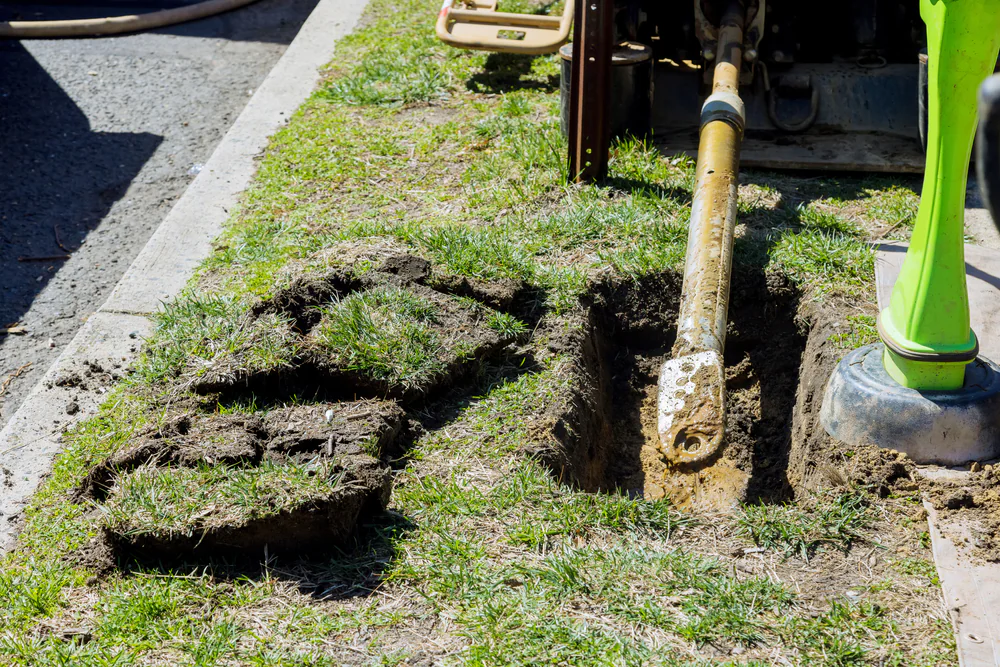
You’re looking at a utility installation project. The old way means tearing up your driveway, ripping through landscaping, blocking access to your property for days, and then paying to restore everything afterward.
Trenchless directional drilling in Garden City South, NY changes that equation completely. The boring equipment goes underground while your property stays untouched above ground. Your lawn doesn’t get destroyed. Your driveway stays intact. Your daily routine continues without major disruption.
The cost difference becomes clear when you factor in what you’re not paying for. No landscape restoration. No driveway repair. No replacing sprinkler systems or decorative features. The installation happens below the surface, and when it’s done, you’d barely know we were there.
This matters especially in Garden City South, where properties are established and landscaping represents real investment. Horizontal directional drilling protects that investment while still getting your water line, sewer connection, gas service, or electrical conduit exactly where it needs to go.
We’ve been handling trenchless directional drilling services across Nassau and Suffolk Counties since 1983. That’s over 40 years of working in Garden City South and surrounding communities, understanding local soil conditions, navigating around existing utilities, and dealing with the specific challenges Long Island properties present.
We’re family-owned, which means the people running the company have actual skin in the game. Our reputation in this area isn’t built on marketing—it’s built on installations that work, properties that stay intact, and customers who don’t get surprised by hidden costs or sloppy work.
Garden City has invested over $21 million in water system infrastructure improvements in recent years. That kind of investment signals what property owners here already know: utility infrastructure matters, and doing it right the first time saves money and headaches down the road.
The process starts with locating existing utilities. Before any drilling happens, we identify what’s already underground so we can navigate around it. This step prevents damage to existing infrastructure and keeps your project from turning into a bigger problem.
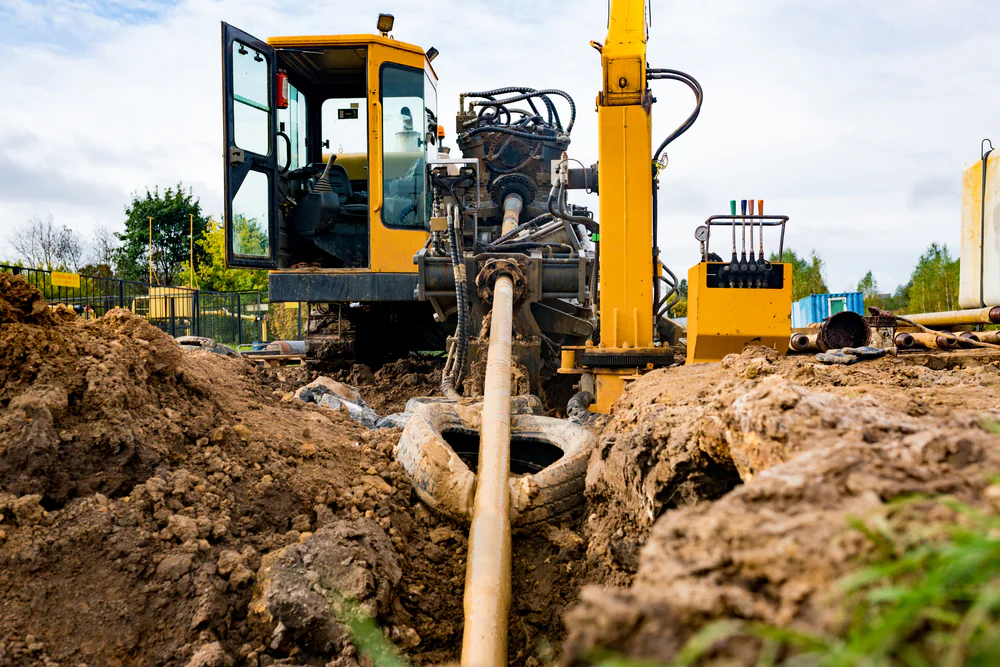
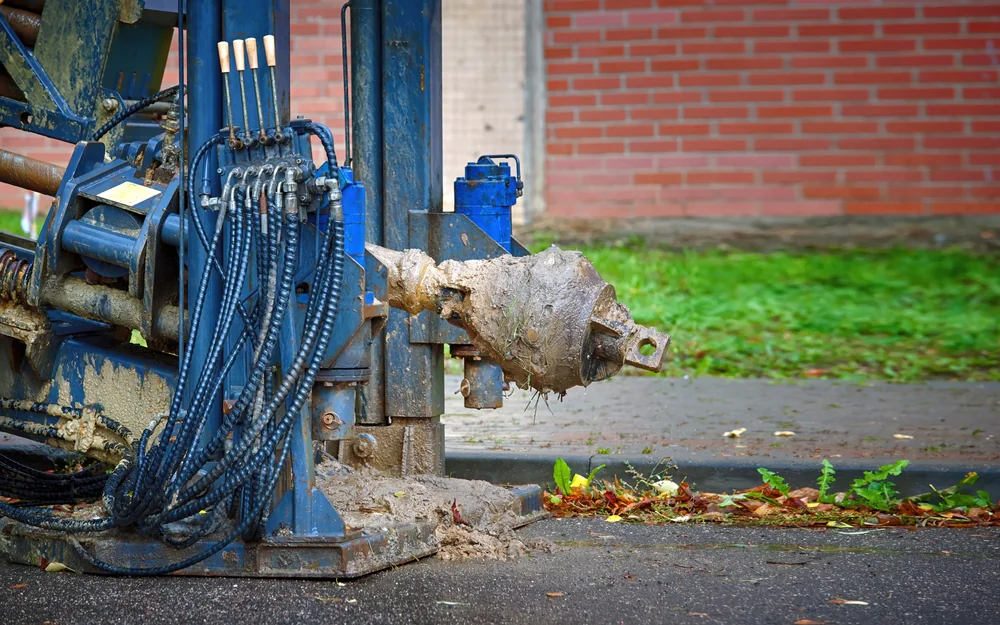
Next comes the pilot bore. We use a specialized boring head that creates a small diameter path underground, guided by locating equipment that tells us exactly where the drill head is at all times. This isn’t guesswork—it’s precision navigation through soil, allowing us to steer around obstacles, avoid tree roots, and hit the exact exit point on the other side.
Once the pilot bore is complete, we pull the new utility line through the path we just created. Depending on what you’re installing—water line directional drilling, trenchless gas line installation, electrical conduit, or sewer connections—the equipment adapts to handle different pipe materials and diameters. The boring head gets swapped for a reamer that enlarges the hole to the size needed, and the new pipe gets pulled into place in one continuous run.
The entry and exit points require small access pits, but we’re talking about minimal excavation compared to traditional trenching. Most installations in Garden City South, NY can be completed in a day or two, depending on distance and complexity. When we’re done, those small access points get backfilled and restored, leaving your property largely undisturbed.
Ready to get started?
Water line directional drilling handles new service connections or replacements without tearing up driveways or landscaping. If your existing water line is failing or you need to install water line without digging up driveway access, directional drilling creates a new path underground while your property stays functional above ground.
Trenchless gas line installation follows the same principle but with stricter safety protocols. Gas lines require precise depth, proper bedding, and careful handling. The directional drilling process accommodates these requirements while avoiding the disruption traditional installation methods create.
Electrical conduit installations benefit from directional drilling when you need to run power to a detached structure, pool equipment, or outdoor lighting without surface disruption. The conduit gets pulled through in one continuous run, reducing connection points and potential failure spots.
Sewer and drain connections round out the common applications. Whether you’re connecting to municipal sewer systems or installing new drainage infrastructure, horizontal directional drilling in Garden City South, NY provides a path that doesn’t require ripping up established properties.
Garden City maintains 104 miles of water mains across the community. As that infrastructure ages and properties need new connections or replacements, trenchless methods become increasingly relevant. You’re not just avoiding mess—you’re choosing a method that’s becoming standard practice for underground utility work in established residential areas.
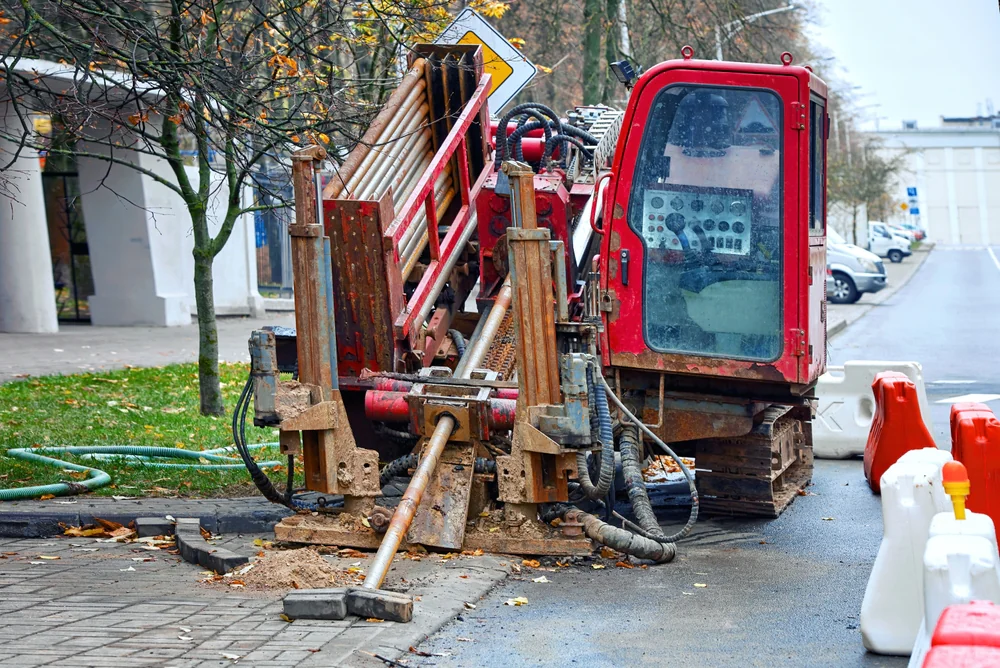
The equipment and specialized labor for directional drilling typically cost more upfront than traditional trenching. But that’s only part of the equation.
Traditional excavation means you’re paying for the dig, the utility installation, and then all the restoration work. That includes repaving driveways, replacing landscaping, repairing sprinkler systems, and restoring any hardscaping that got destroyed in the process. Those restoration costs add up quickly and often exceed the original installation estimate.
Trenchless directional drilling in Garden City South, NY eliminates most restoration costs. You’re paying for the installation itself, with minimal surface repair needed at entry and exit points. For many properties—especially those with established landscaping, decorative driveways, or limited access—the total project cost ends up comparable or even lower than traditional methods when you account for everything.
The other cost factor people overlook is time. Traditional excavation might take a week or more when you include restoration. Directional drilling often completes in one to two days, meaning less disruption to your daily routine and, for commercial properties, less impact on business operations.
Directional drilling works in most soil conditions, but some situations present more challenges than others. Sandy soil, which is common across Long Island, actually works well for directional drilling because it’s easier to navigate and creates stable boreholes.
Clay soil requires more force and different boring head configurations, but it’s still manageable. Rocky conditions are where things get complicated. Small rocks and gravel can be pushed aside, but large bedrock or extensive rock layers may require alternative approaches or make traditional excavation more practical.
The other consideration is distance and depth. Directional drilling excels at runs between 50 and 500 feet. Shorter distances might not justify the equipment setup, and extremely long runs require more sophisticated equipment and planning. Depth matters too—most residential installations happen between 3 and 8 feet deep, which is the sweet spot for directional drilling equipment.
Property access is the final factor. We need room to set up the drilling rig and stage equipment. Tight spaces, extremely sloped terrain, or properties with limited access points can complicate setup. That said, we’ve completed installations in challenging Garden City South properties where traditional excavation would have been even more difficult. It comes down to evaluating your specific situation.
Most residential directional drilling projects in Garden City South, NY complete in one to two days. That includes site preparation, locating existing utilities, completing the bore, pulling the new line through, and cleaning up the small access points.
Simple installations—like running a water line 100 feet from the street to your house—often finish in a single day. More complex projects take longer. If you’re installing multiple utility lines, navigating around numerous existing underground obstacles, or dealing with challenging soil conditions, the timeline extends.
Commercial and municipal projects operate on a different scale. Running electrical conduit 300 feet across a property, or installing large-diameter sewer connections, requires more time for setup, drilling, and quality verification. These projects might take several days, but that’s still dramatically faster than traditional excavation methods for the same scope.
Weather impacts the timeline too. Heavy rain can make soil conditions difficult and affect the boring process. We’d rather delay a day and do the job right than push through and risk a failed installation or damage to your property.
The key difference from traditional methods is that your property remains functional during the work. You can still access your driveway, your landscaping stays intact, and daily routines continue mostly uninterrupted.
Preventing utility strikes is why the process starts with thorough utility locating. Before any drilling happens, we identify existing water lines, sewer pipes, gas mains, electrical conduit, cable, and phone lines in the work area. This involves calling 811 for public utility marking and often using private locating services for lines that aren’t part of public systems.
The drilling equipment includes locating technology that tracks the boring head’s position in real-time. We know exactly where the drill is underground, how deep it’s running, and what direction it’s heading. This allows us to navigate around existing utilities rather than hoping we miss them.
If we encounter an unexpected obstacle underground—whether it’s an unmarked utility, a large rock, or old construction debris—the equipment provides feedback. The drill operator can feel resistance changes and adjust accordingly. In most cases, we can steer around the obstacle or stop the bore before causing damage.
The reality is that utility strikes are rare with experienced directional drilling operators, but they’re not impossible. That’s why we carry comprehensive insurance and have been doing this work across Nassau County for over 40 years. We know what’s typically underground in Garden City South properties, we follow proper locating procedures, and we have the experience to handle unexpected situations when they arise.
This is exactly what directional drilling was designed for. If your water service line runs under your driveway and needs replacement, or you’re installing a new connection that crosses under paved surfaces, trenchless methods avoid tearing up and repaving.
The process creates entry and exit pits on either side of the driveway—typically in lawn areas or other soft surfaces. The bore path goes underneath the driveway at the required depth (usually 4-6 feet for water lines in this area), and the new water line gets pulled through without touching the pavement above.
This approach works for concrete driveways, asphalt driveways, paver driveways, and any other surface you want to preserve. It also works under sidewalks, patios, pool decks, and landscaped areas. The only surface disturbance happens at the entry and exit points, which are strategically located where restoration is simple and inexpensive.
Garden City South properties often feature established driveways and extensive hardscaping. Replacing these surfaces costs thousands of dollars and creates weeks of disruption. Directional drilling eliminates both problems. The water line gets installed properly, at the correct depth, with proper bedding, and your driveway never gets touched.
The same principle applies to sewer lines, gas lines, and electrical conduit. If the path crosses under surfaces you want to preserve, trenchless directional drilling provides a solution that traditional excavation can’t match.
The decision comes down to what you’re trying to preserve and what makes practical sense for your specific situation. If your utility installation path crosses under driveways, established landscaping, mature trees, or other features you want to protect, directional drilling makes sense. If the path is open lawn with no obstacles and easy access, traditional trenching might be simpler and less expensive.
Distance matters. Very short runs—say, 20 feet or less—often don’t justify the directional drilling equipment setup. Very long runs, especially those exceeding 300-400 feet for residential equipment, might require specialized rigs or multiple bore sections.
Property access is another factor. Directional drilling equipment needs space to set up and operate. If your property has extremely limited access, steep slopes, or other physical constraints, we evaluate whether the equipment can work effectively in that space.
The depth and type of utility being installed also influence the decision. Water lines, gas lines, electrical conduit, and sewer connections all have specific depth requirements and installation standards. Directional drilling accommodates these requirements in most situations, but some installations have unique factors that make traditional methods more appropriate.
The best approach is a site evaluation. We look at your property, understand what you’re trying to install, identify potential obstacles and challenges, and recommend the method that makes the most sense for your situation. Sometimes that’s directional drilling. Sometimes it’s traditional excavation. And sometimes it’s a combination—using directional drilling for the sections that cross under driveways or landscaping, and traditional methods for open areas where trenching is straightforward.
Other Services we provide in Garden City South