
Hear from Our Customers
Traditional sewer line replacement means tearing up your driveway, destroying mature landscaping, and dealing with a construction zone for days. You’re looking at restoration costs that often exceed the actual pipe work—new pavers, reseeded lawns, replanted shrubs, repaired sprinkler systems.
Trenchless pipe bursting in North Hills, NY changes that equation completely. We access your damaged sewer line through two small pits at entry and exit points. A hydraulic bursting head breaks apart the old pipe while simultaneously pulling new, seamless polyethylene pipe into place. Your driveway stays intact. Your landscaping survives. Most residential projects finish in a single day.
The new pipe is joint-free, which means no weak points for tree roots to exploit. No seams for chemicals to degrade. Nassau County properties deal with aggressive root systems from mature trees—oak, maple, willow—that seek out moisture in sewer lines. A seamless pipe eliminates that vulnerability entirely. You’re looking at a 50 to 100-year lifespan on the replacement, compared to the 40 to 60 years you’d get from traditional methods.
We’ve handled plumbing and environmental services across Nassau and Suffolk Counties since 1983. We’re a family-owned operation, which means owner John Marra answers his phone when you call. No call centers. No runaround.
North Hills properties—whether single-family homes near the country club or multi-unit buildings along Shelter Rock Road—face the same infrastructure reality. Much of Nassau County’s sewer system dates back 70-plus years. Clay and cast iron pipes crack, shift, and collapse. When that happens in January and the ground is frozen solid, traditional excavation becomes exponentially more expensive and time-consuming.
We’ve built our reputation on trenchless solutions because they make sense for Long Island properties. You’re protecting significant real estate investments—median home values in North Hills exceed $650,000—and you need repairs that don’t compromise that value. Our 5-year guarantee on alteration work backs up what we install.
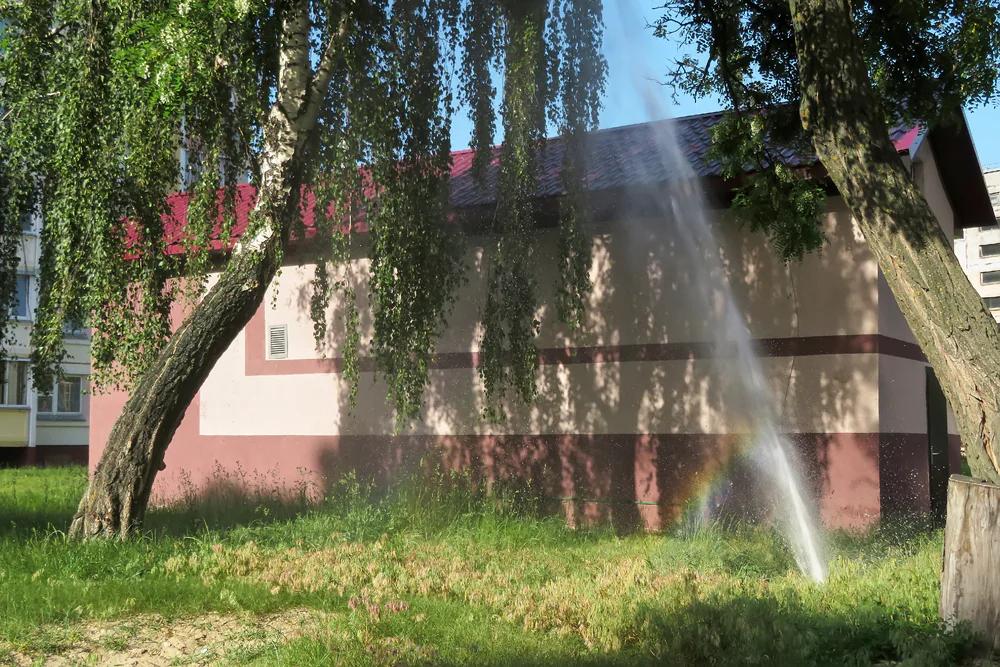
We start with a camera inspection to map your sewer line and identify exactly where the damage exists. You see what we see—cracks, root intrusion, collapsed sections. No guesswork.
Next, we dig two small access pits: one at the start of the damaged section, one at the end. These pits are typically 3 feet by 3 feet—just large enough to work. We insert a cone-shaped bursting head into the old pipe at the entry point. This head is slightly larger than your existing pipe diameter.
A hydraulic pulling system draws the bursting head through the old pipe. As it moves, hardened steel blades fracture the old pipe—whether it’s clay, cast iron, concrete, or PVC—and push the fragments into the surrounding soil. Immediately behind the bursting head, we’re pulling new high-density polyethylene pipe into the space. The new pipe is seamless, flexible, and rated for a century of use.
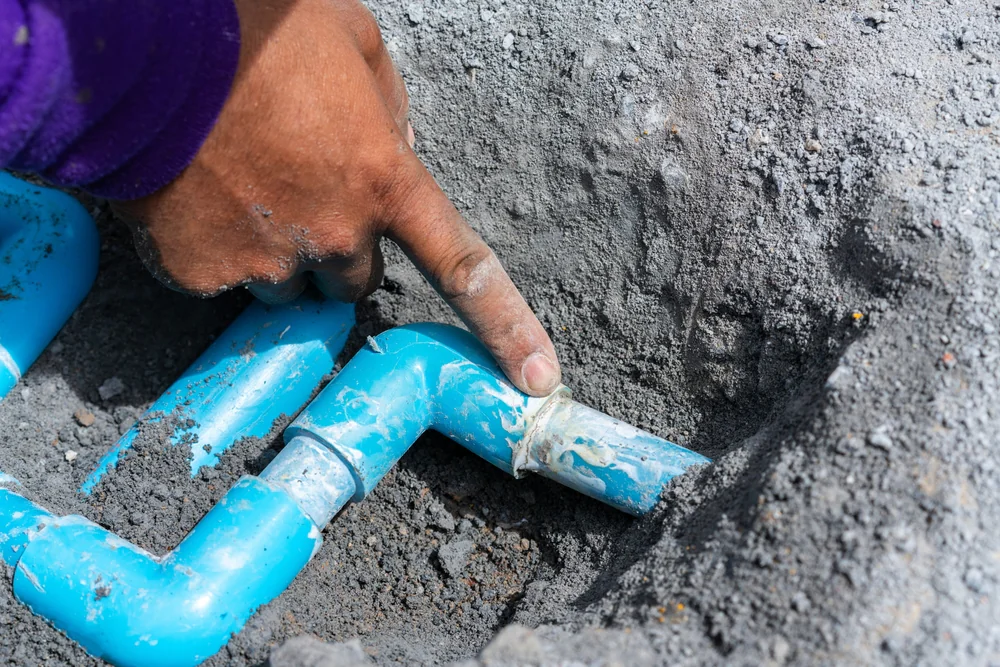
Once the bursting head reaches the exit pit, we connect the new pipe to your existing system at both ends. We backfill the access pits, compact the soil, and restore the surface. For most North Hills residential properties, the entire process—inspection through final connection—takes 5 to 8 hours. You’re back to normal operation the same day.
Ready to get started?
Every trenchless sewer line replacement in North Hills, NY includes a full video inspection before and after the work. You see the problem, then you see the solution. The inspection identifies not just obvious failures but early-stage issues—hairline cracks, minor root intrusion, joint separation—that will become major problems if left alone.
The new pipe we install is seamless HDPE (high-density polyethylene), which resists corrosion, root penetration, and chemical degradation. Traditional pipe materials—especially the clay pipe common in older Nassau County properties—develop joints every few feet. Each joint is a potential failure point. HDPE pipe comes in continuous lengths, eliminating those vulnerabilities.
You’re also getting increased flow capacity. When we burst the old pipe, we can upsize to a larger diameter if your property needs it. A 4-inch line becomes a 6-inch line without additional excavation. That matters for properties that have added bathrooms, installed high-efficiency fixtures, or simply need better drainage performance.
The work includes all permits, inspections, and coordination with local authorities. Nassau County requires specific protocols for sewer work. We handle that process. You don’t chase paperwork or wait for inspector availability. Our 5-year guarantee on new alteration work and 2-year guarantee on plumbing work covers the installation and materials.
You’ll typically save 30 to 50 percent on total project costs with trenchless pipe bursting in North Hills, NY compared to traditional excavation. That savings comes from eliminated restoration work—no driveway replacement, no landscape reconstruction, no sprinkler system repairs.
Traditional excavation requires a 4 to 6-foot trench across your property. If that trench crosses a paver driveway, you’re looking at $15 to $30 per square foot just for paver replacement. A 50-foot trench through a driveway can add $3,000 to $6,000 in restoration costs alone. Landscaping restoration—reseeding, topsoil, replanting shrubs—adds another $2,000 to $5,000 depending on what gets destroyed.
Trenchless pipe bursting eliminates most of that expense. You’re paying for two small access pits instead of a full-length trench. The pipe work itself costs roughly the same either way, but the total project cost drops significantly because restoration is minimal. For a typical 50-foot residential sewer line replacement in North Hills, you’re looking at $8,000 to $12,000 for trenchless versus $15,000 to $25,000 for traditional excavation when you factor in all restoration costs.
Yes. Trenchless pipe bursting works in frozen ground conditions that would make traditional excavation extremely difficult and expensive. Nassau County’s frost line reaches 3-plus feet deep during winter months, turning soil into concrete-hard ground that destroys equipment and slows progress dramatically.
Traditional excavation in frozen conditions requires specialized equipment—trenchers with carbide teeth that can cost $450 per day just in replacement cutting teeth. Crews work slower. Equipment breaks more frequently. Many contractors simply won’t take on winter excavation jobs, or they charge 200 to 300 percent premiums to cover the added difficulty and risk.
Pipe bursting requires only two small access pits instead of a full trench. We can excavate those pits even in frozen conditions because the total volume of soil we’re moving is minimal. The bursting process itself—breaking the old pipe and installing the new one—happens underground and isn’t affected by surface conditions. That means when your sewer line fails during a January cold snap in North Hills, you’re not waiting until spring thaw for repairs. We can respond immediately and complete the work in the same timeframe as a summer job.
Trenchless pipe bursting works on clay, cast iron, concrete, and PVC pipes—basically every pipe material you’ll find in North Hills residential and commercial properties. The bursting head is designed to fracture brittle materials like clay and concrete, and it can split ductile materials like cast iron and PVC.
Clay pipe is extremely common in older Nassau County properties. It was the standard for sewer lines from the 1940s through the 1970s. Clay is durable in many ways, but it’s also brittle and develops cracks over time. Those cracks let roots in, and once roots establish themselves, they expand and accelerate the deterioration. Clay pipe is ideal for pipe bursting because it fractures cleanly.
Cast iron was another popular choice for sewer lines, especially in commercial buildings and multi-unit residential properties. Cast iron corrodes from the inside out, developing rough surfaces that catch debris and slow drainage. The bursting process splits cast iron pipe and replaces it with smooth HDPE that won’t corrode. Even PVC pipe—which is relatively modern—can be burst and replaced if it’s been damaged by ground shifting, improper installation, or root intrusion. The only limitation is severely collapsed pipe where there’s no pathway for the bursting head to travel. In those cases, we’d need to excavate a short section to create access.
The HDPE pipe we install during trenchless pipe bursting has a rated lifespan of 50 to 100 years. That’s not marketing language—that’s based on material testing and real-world performance data from installations dating back to the 1960s when HDPE was first used for municipal water and sewer applications.
The longevity comes from the material properties. HDPE doesn’t corrode like metal pipes. It doesn’t crack like clay or concrete. It’s flexible enough to handle ground movement without fracturing. And because it’s installed as a seamless, joint-free pipe, there are no weak points where roots can penetrate or sections can separate.
Traditional pipe replacement using clay or PVC gives you a 40 to 60-year lifespan under ideal conditions. But those materials have joints every few feet, and each joint is a potential failure point. Tree roots find those joints. Ground shifting stresses those joints. Over decades, joints separate and create leaks. HDPE eliminates that vulnerability entirely. For North Hills properties with mature trees and active root systems, that difference matters. You’re making a one-time fix that outlasts you, not a temporary solution that your kids will have to address in 30 years.
Trenchless pipe bursting requires two small access pits—typically 3 feet by 3 feet—at the entry and exit points of your damaged sewer line. If those pits happen to fall in landscaped areas, you’re looking at minimal disturbance that recovers quickly. If one pit needs to go through a paved surface, we cut a small section, complete the work, and patch it properly.
Compare that to traditional excavation, which requires a continuous 4 to 6-foot-wide trench from your house to the street connection or septic system. If your sewer line runs under your driveway—which is common in North Hills properties—that’s the entire width of your driveway torn up. If it runs through your backyard, that’s a 50 to 100-foot scar through your landscaping.
The access pits for pipe bursting are small enough that we can often position them strategically to minimize impact. We locate the damaged section with camera inspection first, so we know exactly where to dig. Once the new pipe is installed, we backfill the pits, compact the soil properly, and restore the surface. For paved surfaces, we use cold patch asphalt as a temporary fix and coordinate with paving contractors for permanent restoration if needed. For landscaped areas, we replace topsoil and reseed. Within weeks, you won’t see evidence of the work. That’s not possible with traditional excavation, where you’re looking at months of recovery time for grass to fill in and years for landscaping to mature.
It depends on the severity of the collapse. If the pipe has partially collapsed but still maintains some open pathway, we can often use pipe bursting to complete the repair. The bursting head is powerful enough to fracture and displace even severely damaged pipe sections.
If the pipe has completely collapsed and closed off—meaning there’s no pathway for the bursting head to travel—we’ll need to excavate a short section to create access. But even in those cases, we’re only digging where absolutely necessary. If you have a 60-foot sewer line with a 10-foot collapsed section, we excavate that 10-foot section and use pipe bursting for the remaining 50 feet. You’re still avoiding the full-length trench that traditional methods require.
The camera inspection we do before any work tells us exactly what we’re dealing with. We can see partial collapses, complete collapses, offset joints, and root masses. That inspection determines whether pipe bursting is viable for your specific situation. In most cases—even with significant damage—pipe bursting works. The exceptions are rare and usually involve pipe that’s been crushed by heavy equipment or extreme ground shifting. For typical age-related deterioration, root damage, and even partial collapses, pipe bursting handles the job without tearing up your North Hills property.
Other Services we provide in North Hills