
Hear from Our Customers
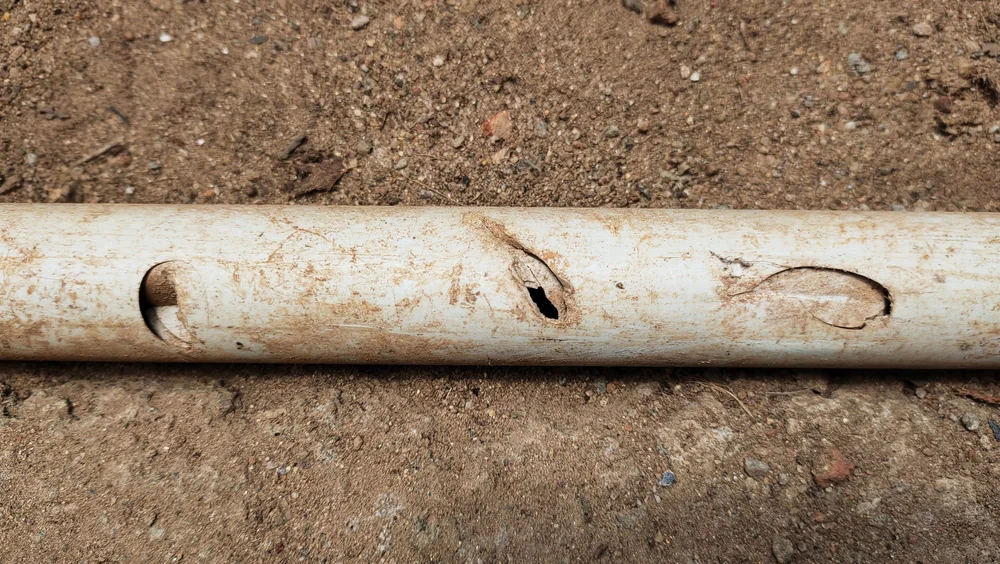
You’re dealing with a broken sewer line in Mill Neck, and the last thing you want is a construction zone tearing through your property. Traditional excavation means ripping up driveways, mature landscaping, and hardscaping that took years to establish. Then you’re left paying twice—once for the pipe, once to restore everything we destroyed.
Trenchless pipe bursting in Mill Neck, NY changes that equation entirely. We access your damaged pipe through small entry and exit pits, then pull a bursting head through the old line while simultaneously installing new, seamless polyethylene pipe behind it. Your lawn stays green. Your driveway stays whole. Most residential projects finish in a single day.
The new pipe is root-proof, chemical-resistant, and rated for 50 to 100 years. That’s not marketing speak—that’s the actual lifespan of high-density polyethylene pipe installed correctly. You’re not just fixing a problem. You’re eliminating it for the rest of the time you own this home.
We’ve operated across Nassau and Suffolk Counties since 1983. We’re not a franchise or a national chain that showed up last year. We’re a family-owned company with four locations on Long Island, and our crews know exactly what Mill Neck properties face—aging galvanized steel pipes, aggressive tree roots, and soil conditions that accelerate corrosion.
Most homes in Mill Neck were built in the 1950s and 1960s. If your sewer line hasn’t been replaced yet, you’re likely running on borrowed time. We’ve replaced hundreds of lines in older Nassau County neighborhoods, and we understand what’s at stake when you’re protecting a property of this value.
You’ll work with licensed professionals who’ve seen every pipe configuration and every complication. We’re not learning on your property.
We start with a camera inspection to confirm the condition and location of your existing sewer line. You’ll see the same footage we see—cracks, root intrusion, corrosion, whatever’s causing the problem. No guessing, no upselling.
Once we’ve mapped the line, we dig two small access pits: one where the old pipe starts, one where it exits your property. These pits are typically three feet by four feet—nothing like the trenches required for traditional replacement. We insert a cone-shaped bursting head into the old pipe, attached to a heavy-duty cable on one end and new polyethylene pipe on the other.
As we pull the bursting head through, it fractures the old pipe outward into the surrounding soil. The new pipe feeds directly into the space left behind, creating a seamless replacement in one continuous pull. We connect the new line, backfill the pits, and run a final camera check to confirm everything’s seated correctly. Most Mill Neck projects finish in three to five hours.
Ready to get started?
You’re getting a full sewer line replacement using Schedule 40 or SDR-35 high-density polyethylene pipe, depending on your property’s specifications. The new line is chemically inert, meaning Long Island’s aggressive water chemistry won’t corrode it the way it did your old galvanized steel or cast iron. It’s also manufactured in continuous lengths, so there are no joints for roots to penetrate.
Mill Neck sits in a flood zone with mature oak and maple trees throughout the neighborhood. Both conditions destroy traditional pipe materials over time. Trenchless pipe bursting in Mill Neck, NY solves both problems—the new pipe flexes slightly during ground shifts instead of cracking, and the seamless construction keeps roots outside where they belong.
You’ll also get a ten-year unconditional guarantee on the replacement itself. The pipe is rated for up to 100 years, but we back the installation for a decade because we control that part. If something goes wrong with how we installed it, we fix it at no cost to you.
Every job includes pre- and post-installation camera documentation. You’ll have a record of what the old line looked like and proof that the new one was installed correctly. That documentation also helps if you ever sell the property—buyers and inspectors want to see that major systems have been updated.
Most residential trenchless sewer line replacements in Mill Neck run between $8,000 and $15,000, depending on the length of the run, depth of the line, and site conditions. That’s typically 30% to 50% less than traditional excavation once you factor in restoration costs—repaving driveways, replacing sod, rebuilding landscaping beds, and repairing irrigation systems that get destroyed during trenching.
The price includes the full replacement, camera inspections before and after, permits, and backfill of the access pits. If your line runs under a driveway or patio, you’re still only paying to patch two small sections instead of replacing the entire surface. If you’ve got mature landscaping or hardscaping, the cost difference becomes even more significant.
Winter pricing doesn’t spike the way it does with excavation, either. Frozen ground can double or triple the cost of traditional digging, but trenchless pipe bursting in Mill Neck, NY works year-round without weather penalties. We’re working mostly underground through existing access points, so frost depth doesn’t impact the job the way it would if we were trenching through your yard in January.
Yes. Trenchless pipe replacement under a foundation is one of the main reasons this method exists. If your sewer line runs beneath your home, garage, or any other structure, traditional excavation means jackhammering through concrete, digging under the foundation, and then rebuilding everything afterward. It’s invasive, expensive, and risky.
Pipe bursting accesses the line from outside the structure and pulls the new pipe through the existing path. We’re not disturbing your foundation at all. The bursting head fractures the old pipe in place while the new polyethylene line follows directly behind it. As long as the old pipe is still somewhat intact—not completely collapsed—we can replace it without touching your foundation.
This is especially common in older Mill Neck homes where the original sewer line enters through the basement or crawl space. You’re not tearing up finished basements or risking foundation integrity. We handle the replacement from outside, and you’re left with a new line that’ll outlast the house itself.
Most residential jobs in Mill Neck finish in one day. The actual pipe bursting process takes three to five hours once the access pits are dug and the equipment is staged. If your property has complications—like a line that runs under a pool, through heavily wooded areas, or at unusual depth—it might extend into a second day, but that’s rare.
You’ll have water service interrupted during the work, but we’re not talking about a week-long project. We schedule the job, show up in the morning, and you’re back to normal by late afternoon in most cases. Compare that to traditional excavation, which can take three to five days once you account for trenching, pipe installation, inspection, backfill, and compaction.
The timeline also doesn’t get derailed by weather the way excavation does. Rain turns trenches into mud pits and delays everything. Frozen ground in winter makes digging nearly impossible without expensive equipment. Trenchless work continues regardless because we’re working underground through controlled access points. If we schedule your broken sewer line replacement in Mill Neck, NY for Tuesday, it’s happening Tuesday.
Collapsed sewer pipe repair depends on how much of the line has failed. If you’ve got a full collapse where the pipe has completely caved in and there’s no longer a pathway for the bursting head to travel through, pipe bursting won’t work. In those cases, we’d need to use pipe lining or, in extreme situations, limited excavation to rebuild that section.
But most “collapsed” pipes aren’t fully collapsed—they’re severely cracked, offset at the joints, or partially caved in. As long as there’s still a pathway we can navigate with a camera and cable, we can usually burst through it. The bursting head is designed to fracture compromised pipe, and the hydraulic pulling force is strong enough to push through obstructions that would stop other methods.
We’ll know for certain after the camera inspection. If your line is burstable, that’s the route we’ll recommend because it’s faster and less disruptive. If it’s not, we’ll explain exactly why and what the alternative is. You’re not getting a sales pitch—you’re getting an honest assessment based on what the camera shows us.
You’ll have two small pits where we access the pipe—typically three feet by four feet each. One is usually near your foundation where the sewer line exits the house, and the other is near the street or your property line where the line connects to the municipal system. Everything in between stays untouched.
If the access points happen to fall on your driveway, we’ll cut and remove those small sections, complete the work, and patch them with new concrete or asphalt. You’re looking at two patches, not a full driveway replacement. If they’re in your lawn, we’ll backfill with clean soil and restore the sod. You’ll see where we worked for a few weeks until the grass fills in, but it’s nothing compared to a 100-foot trench running across your property.
Mill Neck properties often have mature trees, stone walls, and high-end landscaping that would cost tens of thousands to replace if you trenched through them. That’s the whole point of trenchless sewer line replacement in Mill Neck, NY—you keep what you’ve built. We’re not in the business of destroying your property to fix a pipe. We’re fixing the pipe while leaving your property alone.
You’ll usually notice slow drains throughout the house, not just in one fixture. If your kitchen sink, bathroom drains, and toilets are all sluggish, that’s a mainline issue. You might also hear gurgling sounds when you flush or run water, which means air is trapped in the line because water isn’t flowing freely.
Sewage backups are the obvious red flag—if you’ve got wastewater coming up through basement drains or toilets, your line is either blocked or broken. Persistent sewage odors in your yard, especially near where the line runs, usually mean the pipe has cracked and waste is leaking into the soil. You might also see patches of grass that are unusually green or soggy even when it hasn’t rained, which indicates a leak is fertilizing that area.
Most Mill Neck homes were built between 1950 and 1970, and the original sewer lines were typically cast iron, clay, or galvanized steel. All three materials have a lifespan of 50 to 70 years under ideal conditions—and Long Island’s soil and water chemistry are far from ideal. If your line hasn’t been replaced and you’re experiencing any of the symptoms above, you’re likely looking at a failure that’s already started. A camera inspection will show exactly what’s happening and whether you need a full replacement or if a repair will buy you time.
Other Services we provide in Mill Neck