
Hear from Our Customers
Here’s what makes trenchless pipe bursting in Kismet, NY different: the work happens underground through existing access points. No trenches carved through your yard. No torn-up driveways or destroyed flower beds.
You’re looking at a 3-5 hour job instead of a multi-week excavation project. The new pipe gets pulled through the old one while simultaneously breaking it apart. What you end up with is a brand-new, seamless pipe system that’s designed to last 50-100 years.
And because there’s no massive dig site to restore afterward, you avoid the typical $10,000-$20,000 in landscaping and hardscaping repairs that come with traditional sewer line replacement. Your property looks the same when we leave as it did when we arrived—except your sewer system actually works.
We’ve been handling sewer and drain emergencies across Suffolk County since 1983. That’s over 40 years of responding to collapsed pipes, root intrusions, and aging infrastructure—including the unique challenges Fire Island communities like Kismet face.
We’re family-owned, which means when you call, you’re talking to people who’ve built their reputation on showing up and doing the work right. We use advanced camera technology to inspect your line before and after the job, so you see exactly what’s happening underground.
Kismet properties deal with sandy soil conditions, saltwater exposure, and aging systems that weren’t designed for year-round use. We’ve seen it all, and we know how to handle broken sewer line replacement in Kismet, NY without turning your property into a construction zone.
First, we run a camera through your existing sewer line to pinpoint the damage. You’ll see the footage—roots, cracks, collapses, whatever’s causing the problem. No guessing.
Once we’ve mapped the line, we dig two small access points: one where the pipe starts, one where it ends. Then we feed a bursting head through the old pipe. As it moves through, it breaks apart the damaged pipe while simultaneously pulling new, heavy-duty polyethylene pipe into place behind it.
The new pipe is seamless, root-resistant, and code-compliant with up to a 100-year lifespan. The entire process takes 3-5 hours for most residential jobs. When we’re done, we backfill the two small access holes, and your sewer system is fully operational. No waiting for landscapers. No weeks of restoration work.
Ready to get started?
Trenchless sewer replacement in Kismet, NY works for PVC, concrete, cast iron, and clay pipes. If your line is collapsing, cracked, or completely blocked by roots, this method handles it. We can even install a larger diameter pipe than what you currently have if your system needs more capacity.
The new polyethylene pipe is built to handle Long Island’s soil conditions—the freeze-thaw cycles, the ground movement, the high clay content that causes traditional pipes to shift and crack. It’s also impervious to root intrusion, which is critical in areas with mature trees.
You’re not patching the problem. You’re getting a completely new pipe system installed with modern materials that are designed to outlast you. And because the work happens underground with minimal surface disruption, you can replace sewer line without digging up yard in Kismet, NY and avoid the nightmare of coordinating landscapers, pavers, and contractors to put everything back together.
You’re typically looking at 30-50% savings on total project costs when you factor in restoration. Traditional excavation might seem cheaper upfront, but then you’re paying $10,000-$20,000 to replace your driveway, re-landscape your yard, and repair any hardscaping that got destroyed.
Trenchless pipe bursting in Kismet, NY eliminates almost all of that restoration cost. You’re paying for the pipe replacement itself, not for rebuilding your property afterward. The two small access points we dig are easy to backfill and restore—nothing like the massive trenches required for traditional methods.
Emergency repairs during storm season or winter can push costs even higher with traditional excavation because you’re competing with other homeowners for the same contractors. Trenchless methods work regardless of weather, which means you’re not paying premium rates for emergency service during the worst possible time.
Yes. That’s actually one of the biggest advantages of this method. If your sewer line runs under your foundation, driveway, or patio, traditional excavation would require tearing all of that up to access the pipe.
With trenchless pipe bursting, we access the line from two points—usually where it exits your home and where it connects to the main sewer or septic system. The bursting head travels underground through the existing pipe path, so whatever’s above ground stays untouched.
This is especially useful for Kismet properties where sewer lines often run under decks, walkways, or landscaped areas that would be expensive or impossible to fully restore. You get a brand-new pipe system without disturbing any of the structures above it.
Most residential jobs take 3-5 hours from start to finish. That includes the camera inspection, setting up the equipment, bursting the old pipe, installing the new one, and backfilling the access points.
Compare that to traditional excavation, which can take days or even weeks depending on how much digging is required and how long restoration takes. You’re not waiting for trenches to be dug, pipes to be laid section by section, and then everything to be filled back in and repaired.
Weather doesn’t slow us down either. Because the work happens underground through existing access points, we can complete trenchless pipe bursting in Kismet, NY even during winter or wet conditions when traditional excavation would be delayed or impossible.
Age is the biggest factor. Many Kismet properties have sewer lines that were installed decades ago using clay or cast iron—materials that crack and corrode over time. Freeze-thaw cycles during winter create pressure that accelerates the damage, especially in older pipes.
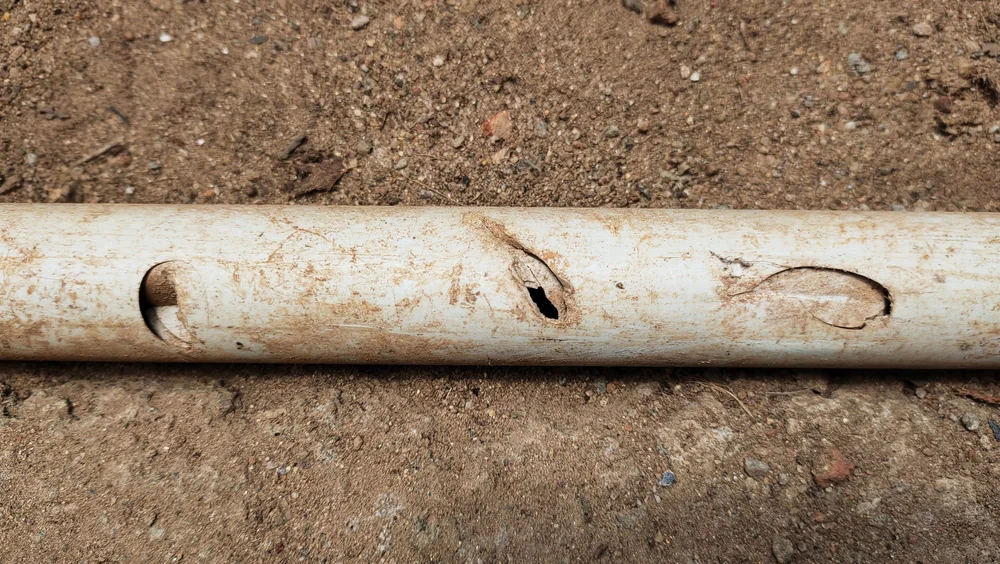
Tree roots are the other major culprit. Roots seek out moisture and will infiltrate even the smallest crack in your sewer line. Once they’re inside, they grow and expand until they create a complete blockage or cause the pipe to collapse entirely.
Saltwater exposure and sandy soil conditions also contribute to pipe deterioration on Fire Island. Pipes shift as the ground moves, joints separate, and corrosion happens faster in coastal environments. If your home was built before the 1990s and you’ve never replaced your sewer line, there’s a good chance it’s failing or close to it.
Significantly longer. The heavy-duty polyethylene pipe we install during trenchless sewer line replacement in Kismet, NY has a 100-year life expectancy. It’s seamless, which means no joints for roots to penetrate. It’s also flexible enough to handle ground movement without cracking.
Compare that to clay pipes, which typically last 50-60 years, or cast iron, which corrodes and fails after 50-75 years. PVC is better, but it’s still vulnerable to root intrusion at the joints and can crack under pressure.
The new pipe is also code-compliant and designed specifically to handle modern wastewater demands. If your old system was undersized or struggling to keep up, we can install a larger diameter pipe during the bursting process to future-proof your plumbing infrastructure.
Yes. We run a camera through your sewer line before we start any work so you can see exactly what’s wrong—whether it’s roots, cracks, collapses, or blockages. You’re not taking our word for it. You’re seeing the footage yourself.
After we complete the pipe bursting and install the new line, we run the camera through again to document the finished work. You’ll see a completely smooth, seamless pipe with no obstructions or damage. It’s proof that the job was done right.
This before-and-after documentation is especially useful if you’re dealing with insurance claims or if you ever need to show future buyers that your sewer system was professionally replaced. You get a clear record of the condition of your line and the quality of the repair.
Other Services we provide in Kismet